Q-Learning Advances Routing in Satellite-Terrestrial Networks
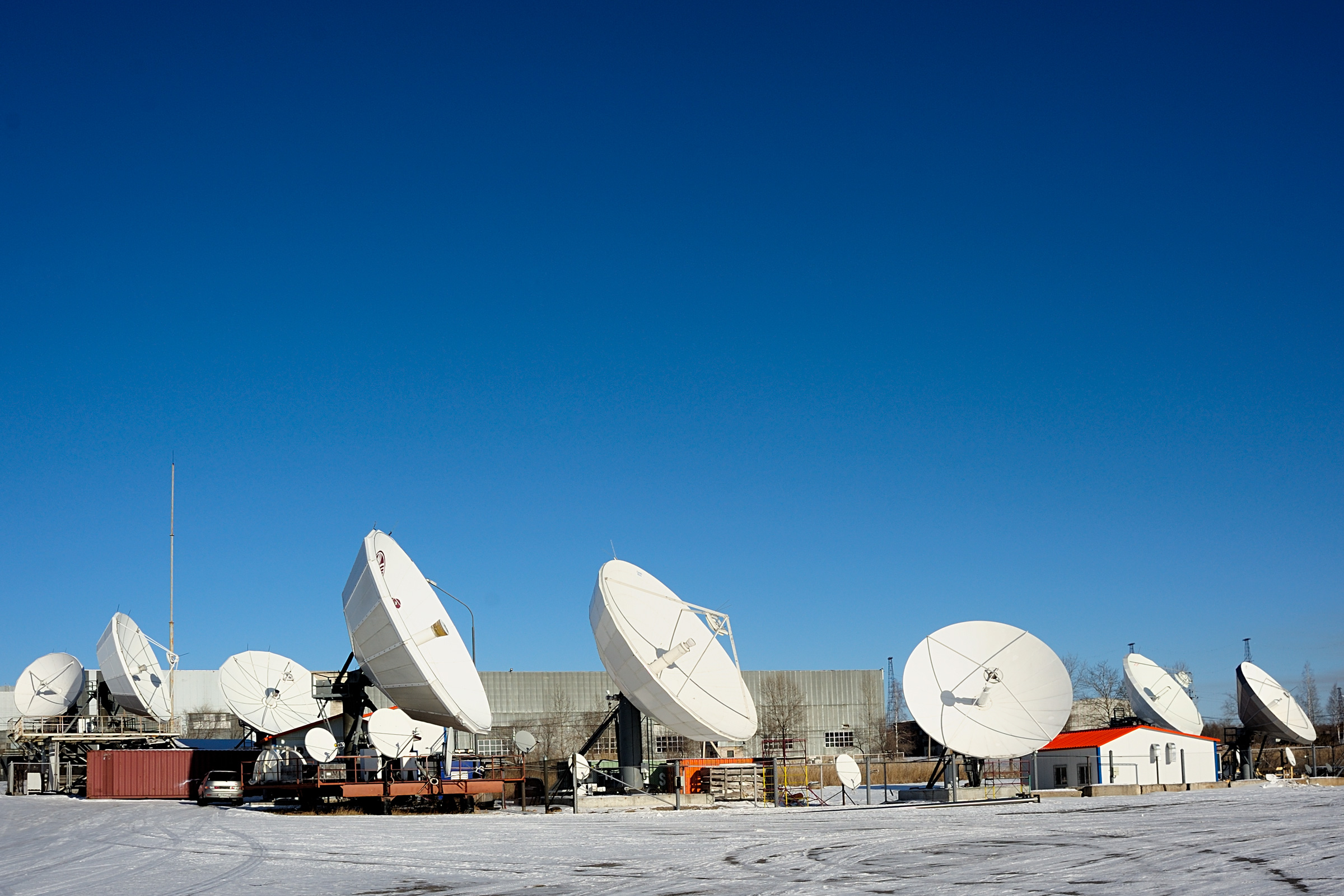
Satellite-terrestrial integrated networks (STINs) are emerging as a critical backbone for the Next Generation Internet, offering expansive coverage, adaptability, and uninterrupted communication services. By leveraging satellite links to connect users beyond the reach of terrestrial infrastructure, STINs enable data exchange across remote, maritime, and disaster-stricken regions. Yet, routing within these hybrid networks presents unique challenges. Conventional satellite routing algorithms often neglect two vital factors: the specific resource demands of users and the real-time operational state of the satellite network. This oversight can precipitate congestion, degrading service quality long before capacity limits are reached.

Researchers at Wuhan University and the Zhengzhou Institute of Finance and Economics approached this problem by reframing satellite routing as a finite-state Markov decision process. This mathematical model captures the probabilistic transitions between network states, allowing routing decisions to be treated as a combinatorial optimization problem. The team introduced a Q-learning-based routing algorithm (QLRA) designed to maximize user utility by dynamically selecting optimal paths in response to changing network conditions.
Q-learning, a reinforcement learning technique, enables each network node to iteratively refine its routing policy based on feedback from prior decisions. In the context of STINs, this means that satellites and ground stations can learn to route traffic in ways that balance throughput, latency, and error rates over time. However, the researchers noted that QLRA’s convergence—the speed at which it settles on an optimal routing policy—was hampered by phenomena such as routing loops and the ping-pong effect, where data packets oscillate between nodes without progressing toward their destination.
To address these inefficiencies, the team devised a split-based speed-up convergence strategy. This method partitions the routing decision space, reducing the complexity of each learning iteration and mitigating the risk of loops. Building on this, they developed the Speed-up Q-learning-based Routing Algorithm (SQLRA), which incorporates a distinctive back-to-front Q-value update mechanism. By updating the learned value of each node starting from the destination and working backward through the path, SQLRA accelerates convergence, enabling the network to adapt more rapidly to fluctuating conditions.
Experimental evaluations underscored the performance gains. Compared to traditional routing algorithms, SQLRA delivered higher throughput, reduced end-to-end delay, and lowered bit error rates. These improvements are particularly significant in satellite networks, where long propagation delays and limited link capacities amplify the impact of routing inefficiencies. The results suggest that reinforcement learning, when tailored to the structural and operational nuances of STINs, can substantially enhance service quality.
The work aligns with broader trends in aerospace and telecommunications engineering, where machine learning is increasingly applied to optimize complex, dynamic systems. In satellite communications, adaptive routing is essential not only for efficiency but also for resilience. As satellites in low Earth orbit move rapidly relative to the ground, link availability changes on the order of minutes. Algorithms capable of learning and adjusting in near real-time can maintain connectivity without manual intervention.
From an engineering perspective, the split-based strategy and back-to-front updates represent notable contributions. They address the core challenge of reinforcement learning in networking: balancing exploration of new routes with exploitation of known good paths, all within stringent performance constraints. Such techniques could be extended beyond STINs to other domains where topology changes frequently, such as unmanned aerial vehicle swarms or mobile ad hoc networks.
The researchers emphasized that their algorithms were tested under simulated conditions representative of real-world satellite-terrestrial environments. While the simulation data are available upon request, the underlying principles—state-aware routing, accelerated convergence, and utility maximization—are broadly applicable. As STINs continue to integrate into global communication infrastructure, these advances in routing intelligence may play a pivotal role in ensuring that coverage remains both wide-reaching and efficient.