AI and Complexity Drive Semiconductor Software Growth
The global semiconductor fabrication software market is projected to expand by USD 984.91 million between 2024 and 2028, according to Technavio, with a compound annual growth rate approaching 2.77%. This growth is propelled by the increasing complexity of semiconductor device designs and a rising demand for advanced memory technologies. The market remains fragmented, with numerous players competing across specialized niches, yet Asia-Pacific accounts for 52% of the overall contribution, underscoring its role as a manufacturing hub.

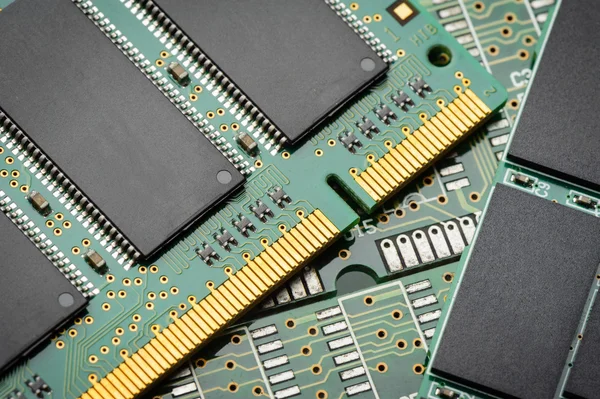
Demand for semiconductor memory devices such as 3D NAND and DRAM is reshaping production priorities. Original equipment manufacturers have shifted from hard disk drives to flash memory in consumer electronics, citing HDD vulnerabilities to vibration, susceptibility to data corruption, and risk of data loss. Precision in fabrication for these advanced devices depends heavily on robust software solutions, making semiconductor fabrication software indispensable in modern production lines.
Artificial intelligence is emerging as a transformative force in this sector. AI-driven tools are influencing product pricing strategies, industry coverage, and competitive positioning. Companies are leveraging AI for design verification, simulation, and optimization, reducing time-to-market while improving yield. Positive changes include greater scalability, innovation in digital manufacturing, and enhanced sustainability practices. However, fragmentation remains a dominant characteristic, with consolidation through mergers and acquisitions seen as a path to greater market share.
Political and social factors exert significant influence. Geopolitical tensions, trade policy shifts, and evolving consumer preferences toward ethical and sustainable manufacturing create both risks and opportunities. Political instability in key manufacturing regions can disrupt supply chains, while regulatory compliance requirements are becoming more stringent. The ongoing global chip shortage adds further pressure, with lead times for orders often exceeding 28 weeks, impacting sectors from automotive to consumer electronics and driving up costs.
Key industry participants include Advanced Micro Devices, Agnisys, Aldec, ANSYS, Applied Materials, Cadence Design Systems, KLA, Lam Research, Onto Innovation, PDF Solutions, Sasken Technologies, Siemens, Synopsys, The PEER Group, Thermo Fisher Scientific, Zuken, Cantier Systems, Fabmatics, Mindteck India, and Tismo Technology Solutions. These companies are pursuing strategies centered on product innovation, scalability, and targeted industry coverage. The Ace Matrix framework identifies Forefront, Pathfinder, and niche players such as Vital and Accumulation as gaining traction through differentiated offerings.
Computer-Aided Engineering (CAE) tools form a critical segment of the market, supporting integrated circuit, printed circuit board, and multi-chip module design. CAE encompasses electronic system level simulators, register transfer level simulators, hardware-assisted verification, synthesis, analog and mixed-signal simulators, and formal verification tools. These solutions address complex mathematical modeling, algorithm development, and simulation tasks. Electronic Design Automation software translates CAE models into manufacturing instructions for numerically controlled equipment. While the CAE segment is expected to grow slowly due to saturation in EDA licenses, system-level design and verification tools continue to deliver cost and time efficiencies.
Digital manufacturing is gaining prominence, integrating design and production through software-controlled processes. Leaders such as Applied Materials, Cadence, Mentor Graphics, and Synopsys are investing in cutting-edge solutions that streamline workflows and enhance product quality. Specialized tools like Pathfinder offer advanced features for design and manufacturing optimization, while niche solutions such as Accumulation target high-reliability applications in aerospace and defense.
The market’s competitive dynamics are shaped by the interplay of technology advancement, pricing strategies, and regulatory landscapes. Companies that excel in scalability, innovation, and strategic industry coverage are positioned to capture growth opportunities. As AI and IoT adoption accelerate, semiconductor fabrication software will remain central to enabling the production of increasingly complex and miniaturized devices, meeting the evolving demands of global electronics markets.