Blue Origin Marks Milestones on 22nd New Shepard Flight
Blue Origin’s New Shepard program has reached another benchmark with the completion of its 22nd mission and sixth human spaceflight. The NS-22 launch carried six astronauts: Coby Cotton, Mário Ferreira, Vanessa O’Brien, Clint Kelly III, Sara Sabry, and Steve Young. This diverse crew brought a series of historic achievements to the flight, underscoring the company’s expanding role in commercial space travel.

Sara Sabry became the first person from Egypt to fly to space, a milestone that resonated across the Middle East and Africa. Vanessa O’Brien achieved a feat recognized by Guinness World Records as the Explorers’ Extreme Trifecta—becoming the first woman to reach the highest point on land, Mt. Everest, the deepest point in the ocean, Challenger Deep, and cross the Kármán line into space. Mário Ferreira marked another national first as the first Portuguese astronaut.
Phil Joyce, Senior Vice President for New Shepard, emphasized the broader vision driving these missions. “It’s an honor for our team to provide our customers with a life-changing shift in perspective of our fragile planet,” Joyce said. He noted that in just over a year since New Shepard’s first human flight, the program has flown 31 individuals above the Kármán line. Joyce credited these early participants with helping realize Blue Origin’s long-term goal of enabling millions to live and work in space for Earth’s benefit.
The mission followed a thorough Launch Readiness Evaluation, with the operations and maintenance team giving the “Go” for liftoff on August 4. This procedural step reflects the rigorous safety and operational protocols that have become standard in the industry, ensuring each flight meets both engineering and human factors requirements before proceeding.
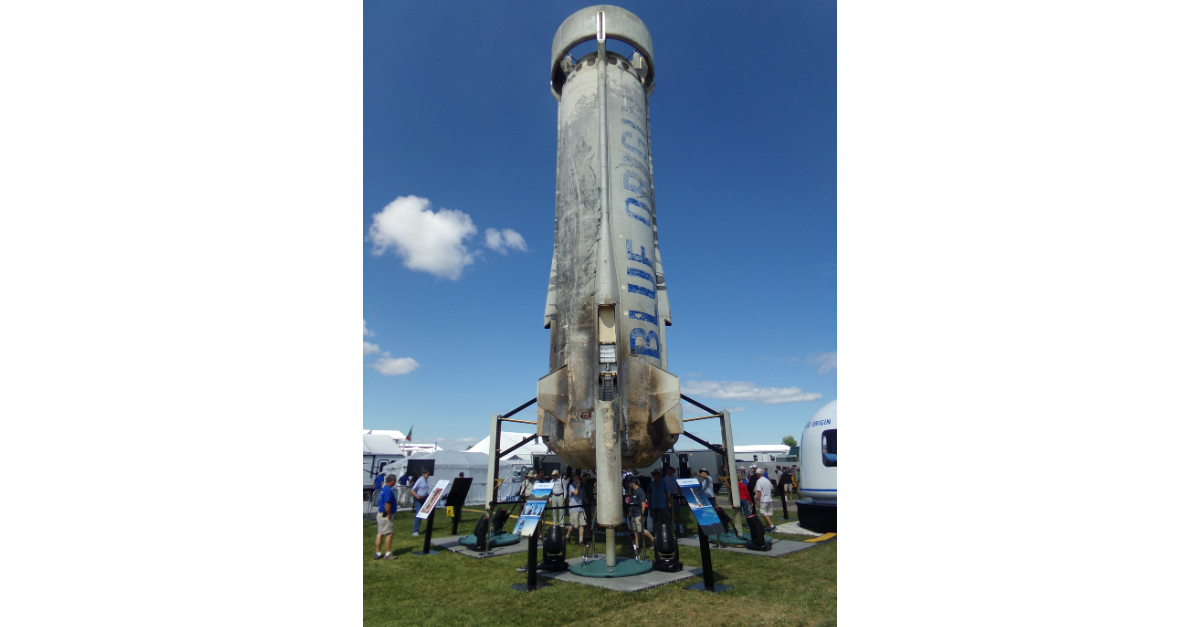
New Shepard’s design supports both crewed and payload missions, offering a reusable suborbital platform that can carry experiments, technology demonstrations, and passengers. Its vertical takeoff and landing system reduces turnaround time between flights, a critical factor in lowering costs and increasing accessibility. The spacecraft’s propulsion module and crew capsule operate independently, with the capsule equipped with large windows to maximize the view for passengers during the brief period above the Kármán line.
The Kármán line, set at 100 kilometers above Earth’s surface, is widely recognized as the boundary of space. Crossing it provides passengers with several minutes of microgravity and a panoramic view of Earth’s curvature. For engineers and researchers, such flights offer opportunities to test materials, sensors, and biological experiments in a microgravity environment without the expense of orbital missions.
Blue Origin’s emphasis on reusability mirrors trends across the aerospace sector, where minimizing waste and maximizing efficiency are central to sustainable space operations. By recovering and refurbishing both the booster and capsule, the company reduces the environmental impact and operational costs associated with each launch.
The NS-22 mission also reflects the growing role of private companies in expanding human access to space. Beyond national space agencies, commercial operators are now regularly flying individuals from a wide range of backgrounds, enabling achievements that blend exploration, science, and cultural significance. The inclusion of astronauts from Egypt and Portugal, along with O’Brien’s record-setting accomplishment, demonstrates how suborbital flights can serve as platforms for both personal milestones and broader national pride.
While the mission’s primary focus was human spaceflight, the New Shepard system continues to attract interest from researchers and technology developers. Its payload capabilities allow for experiments in fluid dynamics, combustion, and materials science under microgravity conditions, contributing to advancements that can benefit industries on Earth.
Blue Origin’s trajectory suggests a future where suborbital flights become increasingly routine, serving not only as gateways for human exploration but also as testbeds for engineering innovation. The NS-22 flight stands as a testament to the technical maturity of the New Shepard system and the expanding possibilities of commercial space travel.