Washington’s EV Surge Defies National Slowdown
While national headlines have suggested a cooling in electric vehicle momentum, Washington’s numbers tell a sharply different story. In 2023, the state recorded its highest-ever sales of electric and plug-in hybrid vehicles, with industry and manufacturer data placing them at roughly 20% of all new vehicle sales. That figure is more than double the U.S. average of 9.5%, underscoring the West Coast’s leadership in zero-emission transportation. Washington ranked second in the nation for EV and plug-in hybrid adoption, trailing only California, with Oregon close behind.

The Alliance for Automotive Innovation reported that 18.8% of Washington’s new vehicle sales in 2023 were electric or plug-in hybrid, up from 13% in 2022. Manufacturer delivery data submitted to the Department of Ecology indicated an even higher share—22%—reflecting the time lag between dealership deliveries and final customer purchases. Registration data from the Department of Licensing showed a leap from 118,050 EVs and plug-ins in January 2023 to 168,850 by year’s end, a 43% increase.
“Momentum for zero-emission cars and trucks has been slowly building for years,” said Joel Creswell, manager of the Washington Department of Ecology’s Climate Pollution Reduction program. “But 2023 is when all the pieces came together and car buyers in our state showed they were ready to trade the gas pump for the electric plug.”
Creswell oversees the state’s zero-emission vehicle (ZEV) standard, which mandates that by 2035, all new passenger vehicles and light-duty trucks sold in Washington must be zero-emission. This includes battery electric, hydrogen fuel cell, and plug-in hybrids with at least 50 miles of electric range. Although the standard begins with model year 2025 vehicles—requiring 8% of new sales to meet ZEV criteria—Washington’s consumers have already surpassed that threshold.
Several factors converged to make 2023 a turning point. Federal incentives of up to $7,500 from the Inflation Reduction Act, paired with state rebates of up to $4,000, significantly lowered purchase costs. Model diversity expanded to over 110 unique EV offerings, covering segments from full-size pickups like the Ford Lightning, Rivian R1T, Chevrolet Silverado EV, and Tesla Cybertruck to seven-passenger SUVs from Kia, Tesla, Rivian, Mercedes, and Vinfast. Price competition intensified as Tesla cut prices on its Model 3 and Model Y, prompting similar moves by rivals. Ecology’s early credit policy for 2023 and 2024 ZEV sales encouraged manufacturers to bring more models to Washington ahead of the formal mandate.
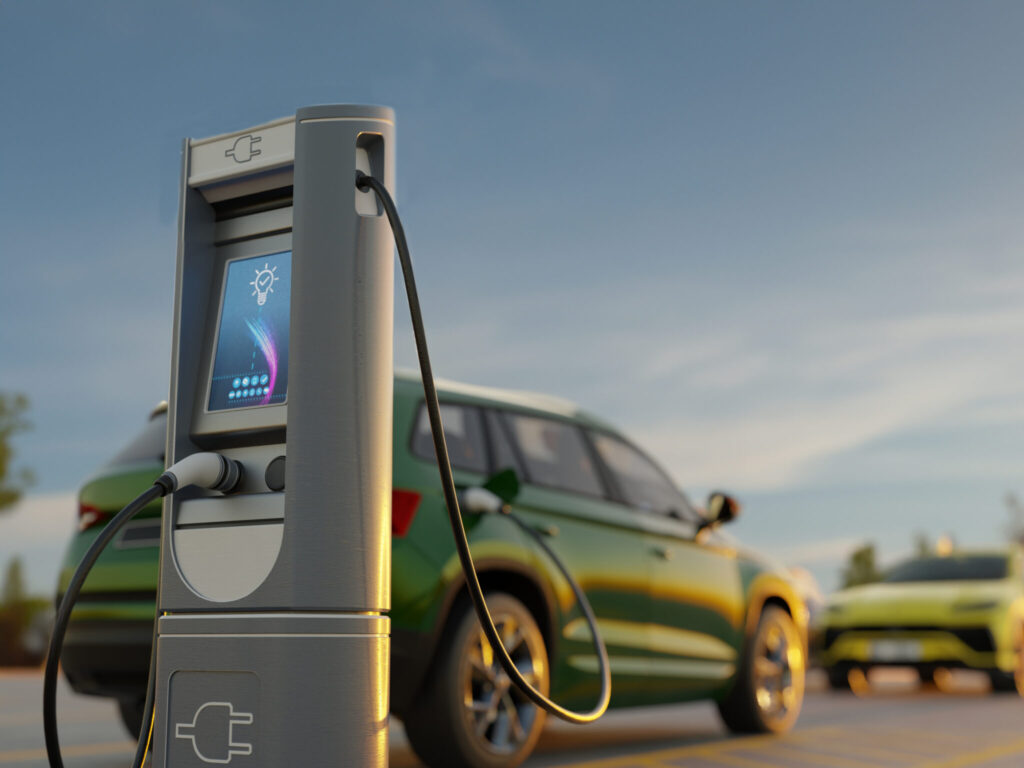
The ZEV standard’s ramp-up is steep: 35% of new sales must qualify by 2026, with the requirement rising to 100% by 2035. Early credits are intended to smooth this trajectory, ensuring broader consumer choice sooner. Infrastructure development is keeping pace. The Climate Commitment Act and Clean Fuel Standard are channeling funds into charging access, with nearly 5,000 new community charging stations planned. These efforts target gaps such as apartment dwellers and public charging needs, removing barriers for those without private charging capability.
Washington’s Transportation Electrification Strategy coordinates state agencies to direct funding strategically, anticipate challenges, and identify opportunities. Nationally, the Inflation Reduction Act is also investing heavily in charging networks, while Tesla’s decision to open its Supercharger network to other automakers expands high-speed charging availability.
For drivers, the ZEV standard applies to manufacturers, not individuals, and does not affect used vehicle sales. Those not ready to switch may still benefit indirectly, as reduced gasoline demand from EV adoption can exert downward pressure on fuel prices. Currently, about 175,000 EVs and plug-ins make up 3% of Washington’s total vehicle fleet, a share expected to grow steadily.
Plug-in hybrids with extended electric range remain part of the transition. Stellantis, for example, announced its 2025 Ram 1500 Ramcharger will offer 145 miles of electric range, nearly 700 miles total range, 663 horsepower, and a 14,000-pound towing capacity. “Every month that goes by, we’re seeing more zero-emission choices offered in Washington,” Creswell said. “Prices are falling and performance is climbing – the future is looking very bright for ZEVs.”