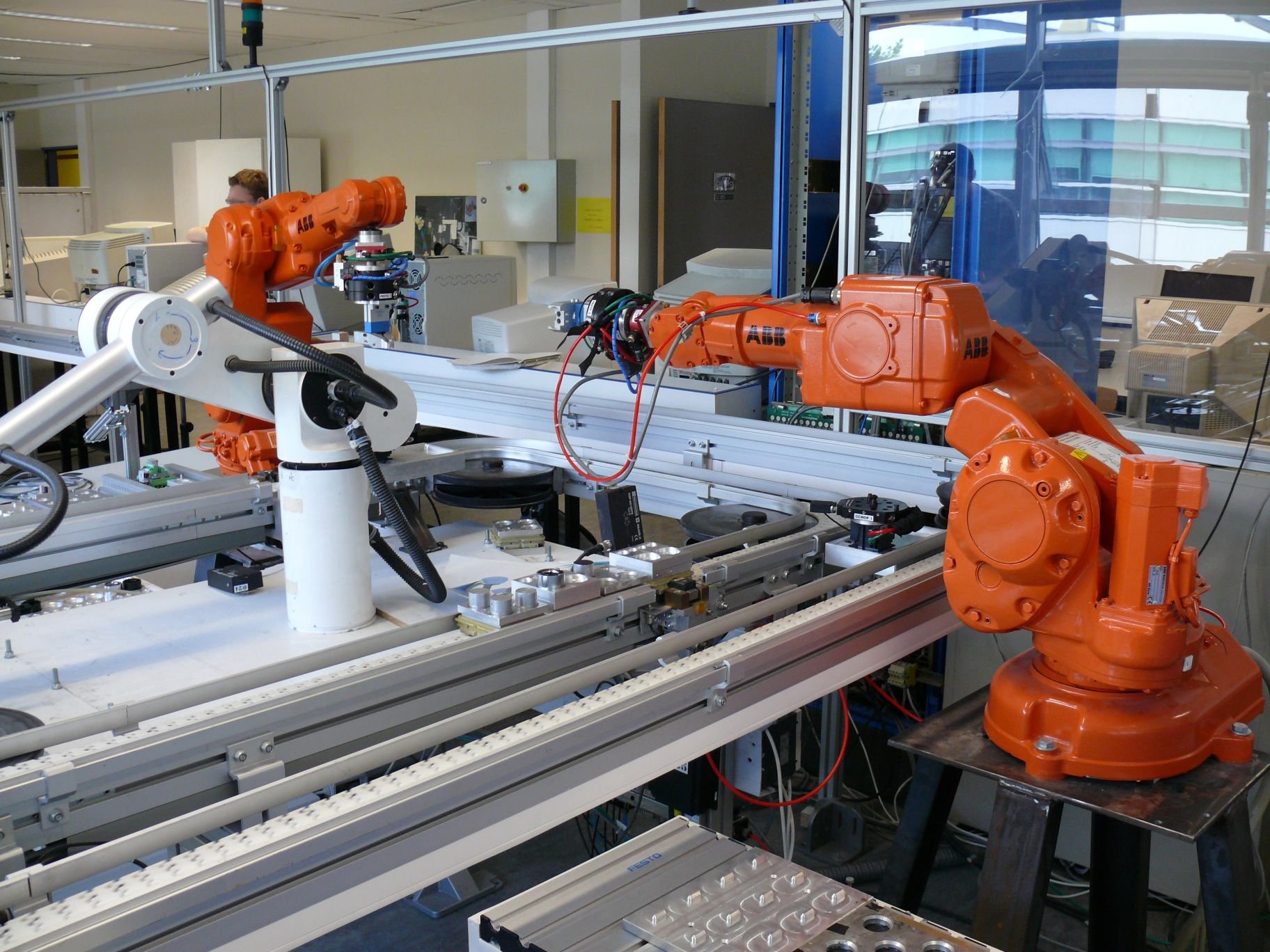
Industrial Robot Installations Surge Past Half-Million Units
The International Federation of Robotics’ World Robotics 2025 report reveals a striking transformation in global manufacturing automation over the past decade. In 2024, factories worldwide installed 542,000 industrial robots—more than double the figure from ten years earlier. This marks the fourth consecutive year that annual installations exceeded 500,000 units. Asia dominated the market, accounting for 74% of deployments, while Europe held 16% and the Americas 9%.

Takayuki Ito, President of the International Federation of Robotics, noted, “The new World Robotics statistics show 2024 the second highest annual installation count of industrial robots in history – only 2% lower than the all-time-high two years ago.” He emphasized that the shift toward digital and automated manufacturing has driven a sustained surge in demand. The global operational stock reached 4,664,000 units in 2024, representing a 9% increase over the previous year.
China’s position as the world’s largest industrial robot market strengthened further. With 295,000 units installed in 2024, it set a new record, representing 54% of global installations. Domestic manufacturers achieved a milestone by surpassing foreign suppliers in sales within China, capturing 57% of the market compared to about 28% a decade earlier. The country’s operational stock exceeded 2 million units, the largest worldwide. Industry analysts see continued potential for average annual growth of around 10% through 2028, fueled by expanding applications in manufacturing sectors.
Japan remained the second-largest market, installing 44,500 units in 2024, a modest 4% decline from the previous year. Its operational stock grew to 450,500 units, up 3%. Forecasts indicate slight growth in 2025, followed by acceleration to medium single-digit rates in subsequent years. The Republic of Korea, ranked fourth globally in annual installations, recorded 30,600 units—down 3%—continuing a stable trend near 31,000 units annually since 2019.
India’s industrial robot market expanded with a record 9,100 units installed in 2024, up 7%. The automotive sector accounted for 45% of this demand. India now ranks sixth globally in annual installations, moving ahead of Germany.
Europe’s installations fell 8% to 85,000 units, still the second-highest annual total in the region’s history. The European Union represented 80% of these, with 67,800 units. Nearshoring trends supported demand, producing an average annual growth rate of 3% from 2019 to 2024. Germany led Europe with 26,982 units installed, down 5% from its 2023 record, yet maintaining a 32% share of the regional total. Italy saw a sharper 16% decline to 8,783 units, while Spain rose to third place with 5,100 units, driven by automotive industry orders. France dropped to fourth with 4,900 units, a 24% decrease. The UK experienced a steep 35% fall to 2,500 units, following the end of the “super-deduction” tax credit program in early 2023.
In the Americas, installations totaled 50,100 units in 2024, marking the fourth consecutive year above 50,000 but down 10% from 2023. The United States accounted for 68% of this volume, with 34,200 units installed, a 9% decline. Most U.S. robots are imported from Japan and Europe, though domestic system integrators play a significant role in deploying automation solutions. Mexico installed 5,600 units, down 4%, with the automotive sector representing 63% of demand. Canada’s installations fell 12% to 3,800 units, closely tied to automotive investment cycles.
Global economic forecasts from the OECD and IMF project growth between 2.9% and 3.0% in 2025, and up to 3.1% in 2026. Geopolitical tensions, conflicts in Eastern Europe and the Middle East, and trade disruptions continue to weigh on industrial activity. Nevertheless, the robotics sector maintains a positive trajectory. Worldwide installations are expected to rise by 6% to 575,000 units in 2025, with projections surpassing 700,000 units by 2028.