Atlas V Launches 27 Amazon Leo Satellites in Predawn Florida Liftoff
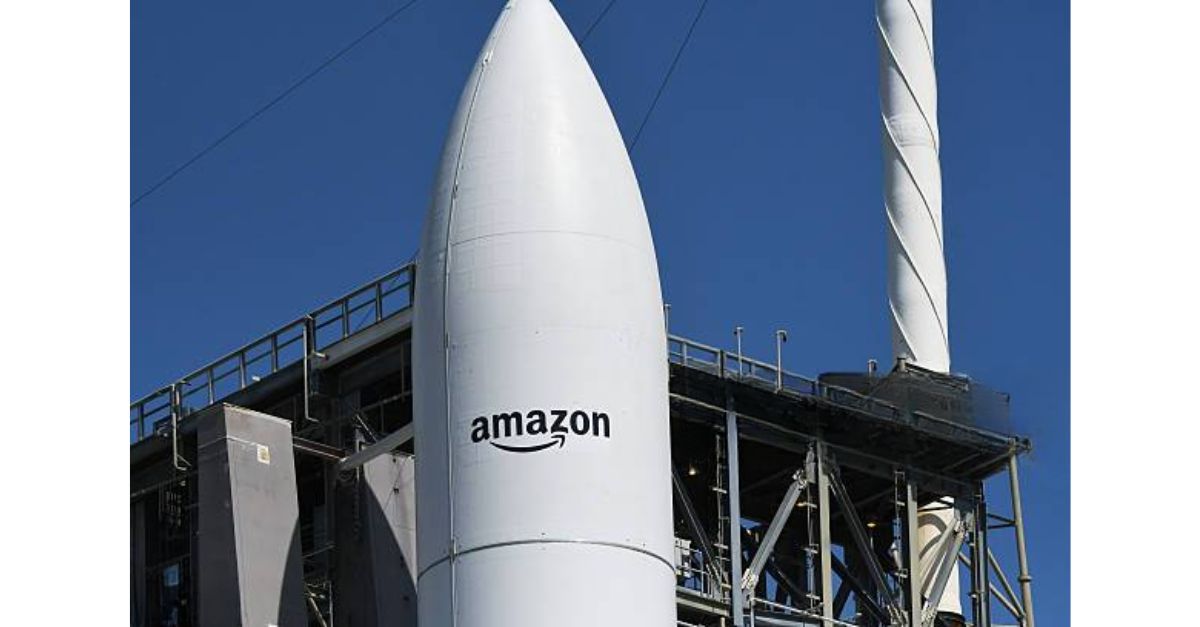
A rocket that has launched probes towards Mars, an expeditionary spacecraft towards Jupiter, and the U.S. military into space now finds itself launching a mission for a Bezos company that plans to disrupt the satellite internet empire owned by rival entrepreneur Elon Musk. In the early morning hours of Dec. 16, the Atlas V rocket launched 27 satellites for the newly re-named Leo satellite internet constellation built by Amazon.

The rocket’s debut flight was labeled Amazon Leo 4 (LA-04), and it lifted off from Space Launch Complex 41 at Cape Canaveral Space Force Station at 3:28 a.m. EST on the opening of the 29-minute window. In the Atlas V 551 configuration, the spacecraft utilized the single RD-180 engine and five strap-on solid rocket boosters that together developed more than 10 MN of thrust and propelled the 205-foot-tall rocket on a northeasterly course. The strap-on boosters dropped away about 1 minute 45 seconds into the mission followed by booster shutdown and separation at T-4.5 minutes. The RL10C-1-1 engine of the Centaur III Upper Stage fired on for about 13 minutes before entering the 15-minute deployment phase of the satellites. A final Centaur burn ensured the spacecraft would re-enter the specified debris region.
This mission marks the end of ULA’s launch manifest for 2025 and represents another milestone for Amazon Leo, also known as Project Kuiper, which boasts a total of 180 operational satellites after seven launches this year via four Atlas V and three Falcon 9 rockets. The Amazon satellite constellation, which is slated to comprise 3,200 satellites in total, has been mandated by the Federal Communications Commission (FCC) to launch half the total, that is 1,600 satellites, by July 31, 2026, although an extension is possible. The satellites are assembled in Kirkland, Washington, and processed for launch at NASA’s Kennedy Space Center and subsequently shipped to their respective launch locations.
The Atlas V, launched in 2002 under the Evolved Expendable Launch Vehicle program for the United States Air Force, is nearing the end of its service life. Only 15 launches are left for ULA, and those are already contracted and include Amazon and the Boeing Starliner program. The production of the first stage of the Atlas V at Decatur, Alabama, has ceased, and the company is moving on to the Vulcan Centaur, which has already had three launches. The retirement of Atlas V means the curtain call for theRD-180 rocket engine, made by Russia’s Energomash, and will be supplanted in the Vulcan by the BE-4 engines from Blue Origin.
Amazon’s Leo satellite constellation launches into a highly contested environment with SpaceX’s Starlink system now comprising 8,393 satellites and approved by the FCC for 12,000 in its first-phase deployment as of September. Starlink’s rapid deployment—3,000 satellites in 2025—has been facilitated by their own Falcon 9 rockets and extended into direct-to-cellular networks through collaborations with T-Mobile, Rogers Communications, and KDDI networks. Amazon, on the other hand, has secured launches not only with ULA but with Arianespace’s Ariane 6 and Blue Origin’s New Glenn and even SpaceX’s Falcon 9 rockets.
Alongside a brand makeover from ‘Project Kuiper’ to ‘Amazon Leo’ in November, a new Ultra gigabit-speed user terminal was launched, marketed at business and public sector users. The ambitions for the constellation do not end at home internet, with plans to provide in-flight internet access – JetBlue will start flying Leo internet operations on selected aircraft in 2027 – to a market where Starlink already has Virgin Atlantic, United Airlines, and Air France as clients. The overall market for providing broadband communication services on low Earth orbits is witnessing significant growth. According to Goldman Sachs research, worldwide telcos intend to deploy 70,000 satellites on LEO orbits from 2025 to 2031. This is due to the expected development of 6G communication technology.
The gap in internet availability is vast as 2.5 billion people lack internet access. Amazon’s development in 2025 from prototype development to 180 operational satellites manifests the launch of a long-term mission to satisfy official requirements and gain their niche in the marketplace against rival companies. With Atlas V, every launch for Kuiper adds to a string of 101 successful missions that range from weather satellites to interplanetary probes. With this mission, LA-04, it also marks perhaps the tail end of this particular rocket’s operational life as it helps to define its contribution to the transition of ULA into its next chapter of launch services with its new Vulcan Centaur vehicle.