


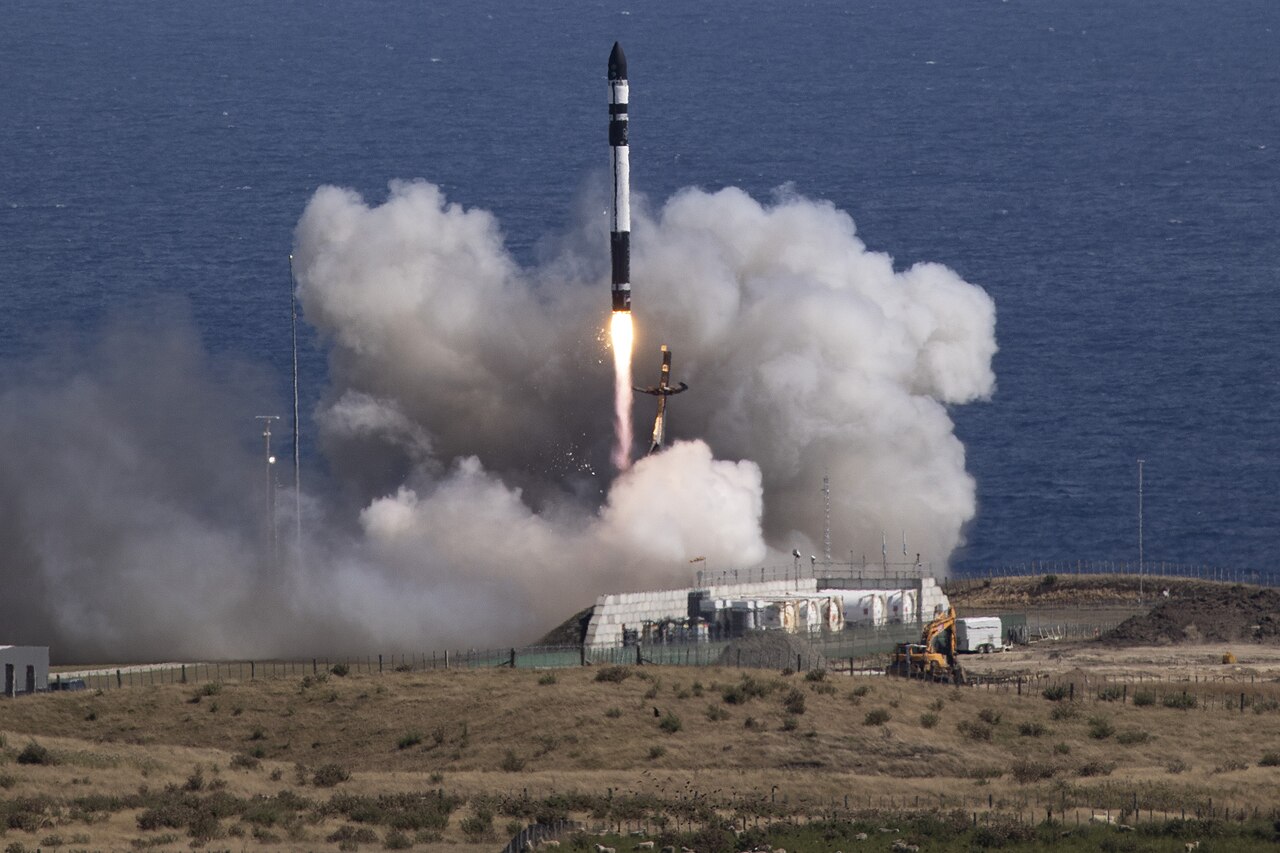
Rocket Lab Accelerates U.S. Space Force STP-S30 Electron Launch
How often does a private space company push the launch date up in a military program? Also noteworthy in relation to the urgency already highlighted in terms of the importance of the upcoming launch of the company’s Electron rocket into orbit for the US Space Force’s Space Systems Command is the fact that it will be accelerating its next launch. Nicknamed in the company’s usual delightfully quirky manner as “Don’t Be Such A Square”, the mission will deploy the STP-S30 payload comprising four DiskSats into a circular low orbit at an altitude of 550 kilometers.

The STP-S30 is a part of the Space Test Program, which has been a long-running initiative of the U.S. Space Force to analyze novel space technology solutions in space orbits. This case is a notable instance of a multi-agency-supported space venture, as it is a joint initiative between NASA and Aerospace Corporation. In the case of Rocket Lab, this push to accelerate the launch schedule is more than a logistical move; it is an indication of their growing involvement in the military-related space services.
Rocket Lab’s partnership with the United States military has also broadened greatly in recent years. Earlier in 2025, Rocket Lab gained access to the Enterprise-Wide Agile Acquisition Contract, or EWAAC, with the United States Air Force, which has an overall worth of $46 billion. Indefinite delivery indefinite quantity contracts like this one are intended to facilitate faster purchases involving new technologies. This particular deal’s total worth is staggering, with Rocket Lab being one of 297 contractors allowed to compete for contracts. Even with this in mind, this should still bring in significant funds for Rocket Lab, possibly in excess of tens of millions of dollars annually.
Side by side, Rocket Lab has been contracted by the United Kingdom’s Ministry of Defence to support the Hypersonic Technologies & Capability Development Framework (HTCDF). The HTCDF project has a £1 billion budget. The company can now place a bid to support the United Kingdom’s High-speed Flight Technology Development, which uses the Hypersonic Accelerator Suborbital Test Electron (HASTE) rocket. The HASTE rocket is a variant of the Electron rocket, which has a payload capacity of 700 kilograms. It has the capability to deliver technologies at a velocity of over 7.5 kilometers/second. It can support the test of air-breathing, glide, and ballistic payloads, and re-entry systems.
In a statement from the company’s founder and CEO, Sir Peter Beck, the importance of these partnerships with the defense sector is made plain: “The ability to contribute toward the collective security of the United States and the United Kingdom across both of these important programs is a proud moment for the HASTE team, and a demonstration of Rocket Lab’s commitment to lead from the front when it comes to innovative and unique solutions for hypersonic technology development.” These quotes show the importance ofRocket Lab’s themes of affordability and rapid access to space.
Also indicative of the faster STP-S30 satellite launch is the current trend of U.S. military satellite launching strategies. The Space Force realizes the importance of increasing its dependence on commercial satellite launching firms to expedite the launching of satellites and lower costs, especially with small satellites. Through partnering with new players such as Rocket Lab, the military advantageously receives quicker access to satellite launches and experience with orbit insertion. For investors and defense experts, Rocket Lab’s two-pronged expansion plan to grow its satellite deployment business while forging defense partnerships provides a compelling example of agile aerospace companies positioning themselves within a defense sector that is measured in billions of dollars.
Its agility to undertake missions for both civilian and defense clients, and often on a tight schedule, cements its competitive position among larger aerospace firms. The “Don’t Be Such A Square” mission could have a colorful motto, but the implications are very serious a meeting of experimental satellite launch, cooperation among government agencies, and the need for defense, accomplished by a company that wants to get past low Earth orbit.


