

“Assured access to space is a core function of the Space Force and a critical element of national security,” Brig. Gen. Kristin L Panzenhagen remarked within a statement on launch-provider certification that nowadays stretches further than the rockets to the ground infrastructure that should keep up with them.

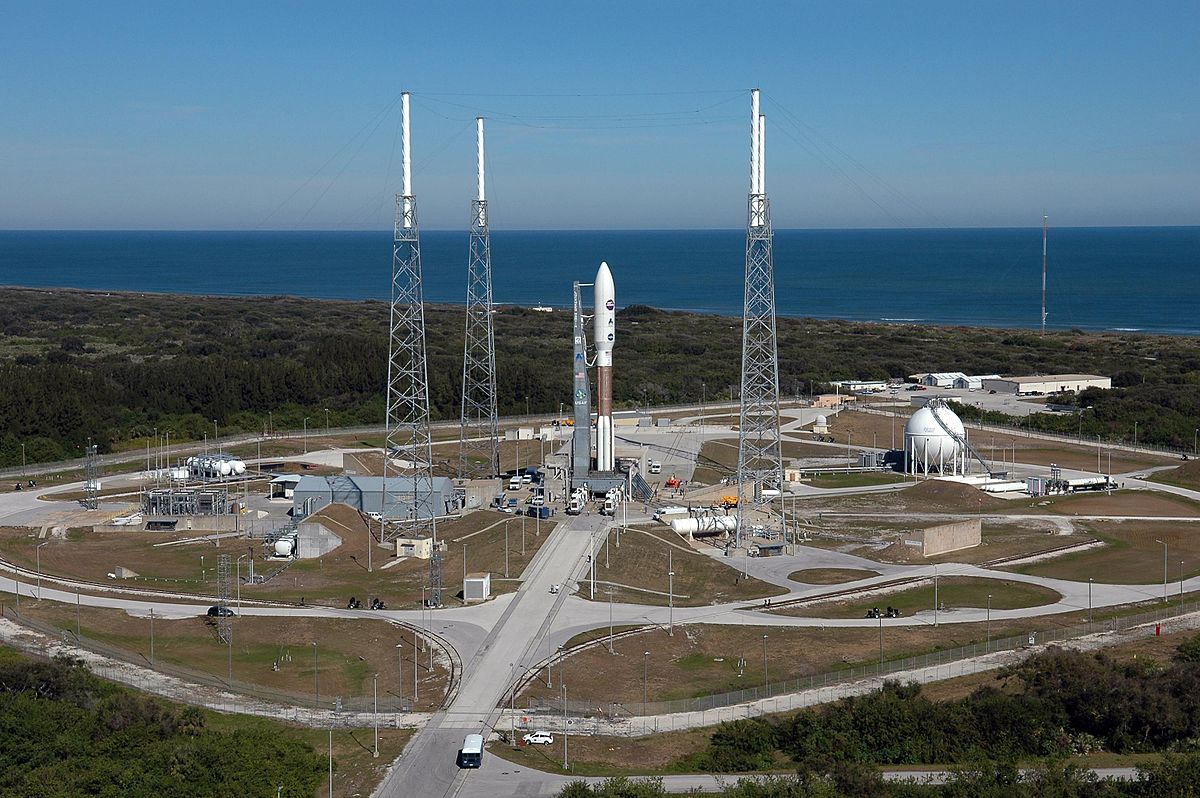
The same infrastructural issue is entrenched in the Department of the Air Force choice to open bidding on Space Launch Complex 14 (SLC-14) at Vandenberg Space Force Base, a location with a long history in the West Coast range and a new niche with the unabated increase in launch demand. To aerospace and mechanical stakeholders, the meaning is not necessarily a particular mission but one in which the re-defined capacity, cadence and integration is being transformed on both costs.
Meanwhile, the National Security Space Launch (NSSL) enterprise is leveling off into Phase 3 in the two-lane approach, Lane 2 of which is dedicated to the more performance-intensive, more integrated missions. The second year of the program of Phase 3 Lane 2 had seven missions being allocated a total of $1,142 trillion: five missions to SpaceX valued at $714 million and two to United Launch Alliance valued at $428 million. The first launches will not start before FY27 and the assignment mix just reminds that an engineering system-of-systems problem is “assured access” a problem vehicles, payload interfaces, processing facilities, range availability, and the real-world throughput limits of pads.
One interesting fact to mechanical planners is that the missions in this tranche will be supposedly heavily reliant on Falcon Heavy. Lt. Col. Kristina Stewart, SSC hardware head of the NSSL Integration Division, said, “All assigned SpaceX missions in OY2 require a Falcon Heavy, except for USSF-149, which requires a Falcon 9.” Such heavy-lift needs are more likely to stretch out integration schedules, keyboard-ground-support-equipment needs, and finer coordination of the flows-factors that directly contribute to the reasons why previously-slumbering or underutilized complexes such as SLC-14 become again strategic.
The two missions ULA will fly will be on the Vulcan which passed the gateways of the NSSL mission that follows a long certification program. Such certification is important in that it standardizes the common level of flight-worthiness assessments and minimizes the uncertainty to downstream payload teams who must rely on the constant interface behavior. Vulcan was said to have passed certification by the Space Force as having certified 52 criteria certification, including widespread audits and payload-interface checks. To range and pad operators, certification is also an indicator: a rocket ceases to be a “development flow” but a working one and its effect is to model manifests, spares and staffing in a different way.
The fact that Blue Origin is not involved in the specific Lane 2 contracts is not necessarily a competitive decision, but a procedural fact which is related to certification. The Space Force still views New Glenn as a kind of an on-ramp to more space after the vehicle has gone through the promised flight-and-data milestones. Space Systems Command has characterized the route of New Glenn as a certification program with set flight parameters, the four successful approach to orbital flights chosen by Blue Origin and accepted by the government. That strategy highlights a greater fact of operation about launch: the limit is hardly ever propulsion; it is the coming-of-age of production, processing, and repeatability, on the factory floor, on the pad, and in range operations.
The payload side of Lane 2 portfolio explains the reason the government continues to focus on reliability and integration discipline. There are a number of missions which are deliberately classified, although there are two publicly identified payloads that reflect the engineering diversity. WGS-12, the twelfth Wideband Global SATCOM satellite is set to be launched on USSF-206, a Boeing-built satellite contracted at a price of 439.6 million. The heritage and mission of the spacecraft is an ability to withstand and be characterized by high capacity military communications through its Ka band (1500+) which is “over 1,500 individually steerable, shapeable beams in the Ka band,” as Boeing executive Michelle Parker said in March 202$439.6 million.4. Another mission, USSF-88, is expected to carry GPS IIIF-4, part of the next production block of GPS spacecraft under a $7.2 billion contract for 22 satellites awarded to Lockheed Martin in 2018.
Although these specific missions will take off the Eastern Range, the launch demand is becoming bi-coastal. The Space Force has recorded a dramatic increase in range activity, 16launches in 2017 up to 144 launches in 2024, with larger figures expected as commercial and government manifestations coincide. It is the acceleration that has compelled to put increased emphasis on range modernization programs, pad throughput and availability of facilities that can absorb new vehicles, new payload classes and new safety cases without causing single-point bottlenecks.
On that note, making SLC-14 biddable is industrial capacity reform rather than a real-estate one. The final contest that is run in the area of a Vandenberg launch complex is whether industry could supply capital, the discipline of modernization, and pace to a limited coastline–and fulfilled the security, safety, and integration requirements involved with government and dual-use operations. In a sector with an increased yearly cadence, keyboard payloads and a strong interrelation of space vehicles with ground networks, the mute labor of pads and processing buildings is emerging as the noisiest constraint.