Rough Seas Still Defeat Drones Smart Decks May Change That
If an unmanned system can navigate an oil refinery and map a refinery, then why can it not get down within the last few feet from the deck of the ship? While this is a good question, the problem is less in the flight capability of drones and more in their synchronization with changing parameters. When landing on the ground, one does not have to worry about changes in the surface location and other factors that can occur when operating in maritime conditions. This limitation is the reason for the underutilization of drone technology in the maritime environment despite technological advancement in aircraft, sensors, and autonomy systems.
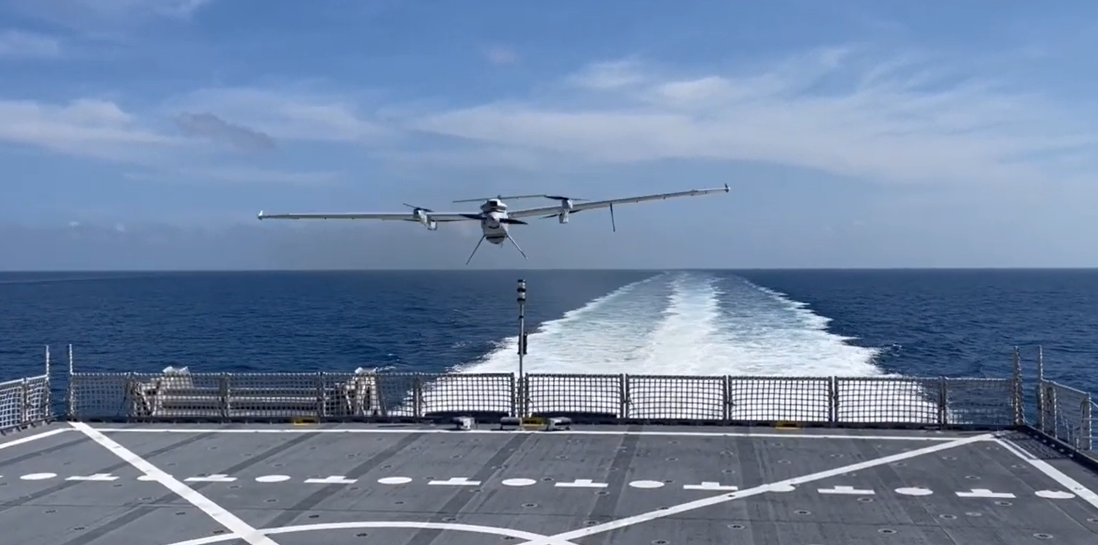
With its solution, Waives Robotics addresses that problem directly. The company proposes a novel approach to landing a drone by creating a stable deck system that helps land a vertical take-off and landing aircraft automatically, secure it on landing, and release it for further operations. The importance of the solution lies in the fact that the process of recovering an unmanned vehicle is much harder than sending it from the platform into action.
The concept is indicative of an important trend in maritime robotic engineering. Ships do not behave according to predictable patterns; they move in a non-periodic fashion, which poses additional challenges to the creation of landing solutions. One autonomous marine robotics startup has demonstrated the ability to make fully automatic drone landings on moving platforms at up to 30 km/h with excellent results in Sea State 4. Meanwhile, Norwegian developers at STABLE have been working on a maritime platform for drones with a take-off weight of 200–300 kilograms based on heave compensation techniques used in cranes. All in all, those examples illustrate the growing tendency towards infrastructure automation on maritime vessels.
It also explains why compatibility with standard vertical take-off and landing systems plays such a vital role. If a system allows for creating landing stations out of standard ships without any special modifications, the technology will prove invaluable for coast guards, oil companies, survey firms, and even for maritime security purposes. With its minimum size limit of just 10 meters, Waives invention makes a huge step towards creating floating autonomous air nodes.
From the technological standpoint, the concept resembles the one used by SpaceX to create drone ships for its Falcon rockets. Both spacecraft and drones face difficulties related to unpredictable behavior of maritime infrastructure. However, the moment the landing station becomes autonomous, the vehicle does not need to solve all the problems alone.
This innovation brings multiple benefits to maritime operations. For instance, routine offshore inspections become easier since they are possible in harsh weather conditions. Shipping of medical supplies to the destination requires less specialization from the crew. Search and rescue as well as surveillance operations become persistent since there is always a place to land in a convenient spot. Moreover, environmental monitoring can become more efficient due to increased flexibility of the operation schedule.
Of course, durability remains a critical issue. Salt, vibrations, unpredictable movements, and repetitive usage can cause unexpected problems very fast. However, the trend is already clear. Automation in the maritime environment moves from improvements in drones to infrastructure optimization.