NASA’s Psyche Probe Skims Mars in High-Stakes Course Change
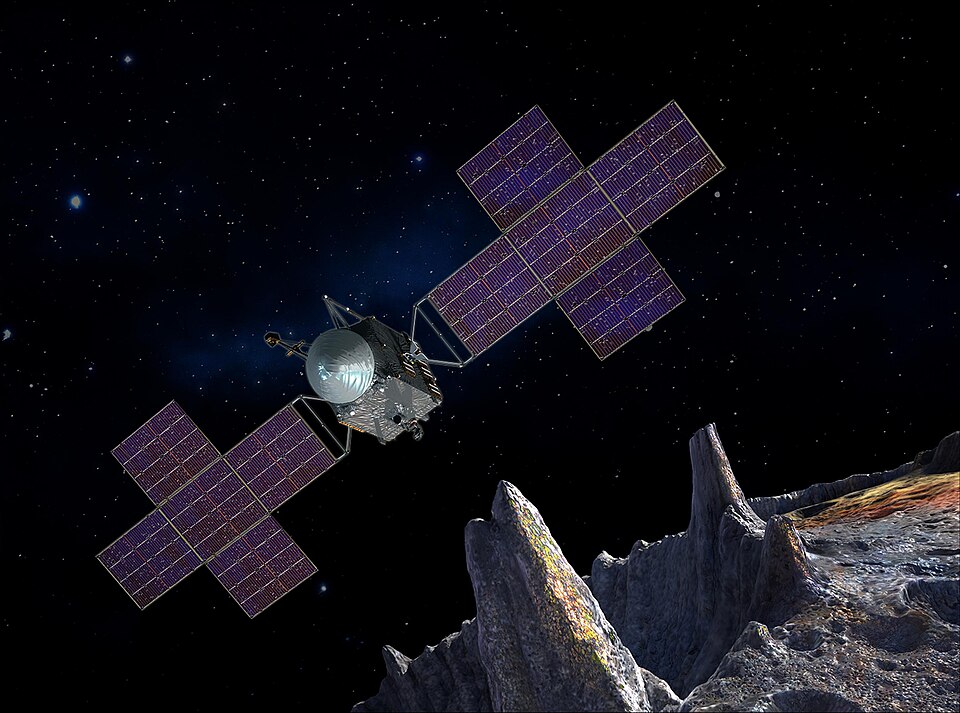
Deep space missions hardly ever have the luxury of a second attempt when a major correction is necessary. And this is why Psyche passing by Mars is significant beyond some cool pictures. According to reports, NASA’s Psyche spacecraft will use the Red Planet as a kind of gravitational catapult to change the spacecraft’s course, allowing the probe to gather more speed and move toward the main-belt asteroid, 16 Psyche. Specifically, Psyche will make its way past Mars, reaching the planet within around 2,800 miles from its surface. The point is that Mars should help increase the speed and change the course of the spacecraft while preserving enough xenon fuel for its solar electric propulsion with Hall thrusters.

Firstly, the encounter isn’t solely about altering the trajectory. For Psyche to arrive at the destination successfully, the Mars approach will serve as a full-fledged practice run of the mission. In particular, the spacecraft was sent into space back in October 2023 and is expected to orbit the asteroid starting in 2029 for about two years. NASA has stated that 16 Psyche consists of both rock and metal components, with metals making up about 30% to 60% of the asteroid’s volume. This discovery alone made the scientific part of the mission more intriguing since the mission’s initial idea was to check whether the asteroid was mostly comprised of metals or not.
During the approach to Mars, Psyche’s multispectral imager will gather thousands of observations of the Red Planet to calibrate the optical device for the later use. Additionally, Psyche will use the onboard magnetometer and gamma-ray and neutron spectrometer for analyzing the planet during the mission’s first full use of all available science instruments. According to Sarah Bairstow, the mission planning lead at NASA’s Jet Propulsion Laboratory in Southern California, “We are now exactly on target for the flyby, and we’ve programmed the flight computer with everything that the spacecraft will do throughout May.” “This is our first opportunity in flight to calibrate Psyche’s imager with something bigger than a few pixels, and we’ll also make observations with the mission’s other science instruments.”
The early approach imagery revealed a crescent-shaped Mars taken from a distance of about 3 million miles. Importantly, it gave the spacecraft team a chance to test how the instrument operates in case of unusual conditions such as observing something as bright as the Red Planet through a thick atmosphere. As a result, Mars’ shape appeared elongated thanks to its dusty atmosphere. Such a picture is crucial for preparing the cameras and the whole mission for future challenges. Indeed, scientists know very little about the actual shape and appearance of 16 Psyche. At the moment, researchers are working on its model based on radar and optical imaging.
Finally, it is worth mentioning that NASA also keeps an eye on the low xenon pressure in the fuel lines. As stated by the team members, a temporary halt of the mission could allow them to fix the problem and continue thrusting via the backup line. In this light, the upcoming approach to Mars means a lot not only in terms of changing the trajectory but also for testing the instruments and the overall spacecraft readiness.