A four-door Mustang may finally make sense and it won’t be just gas
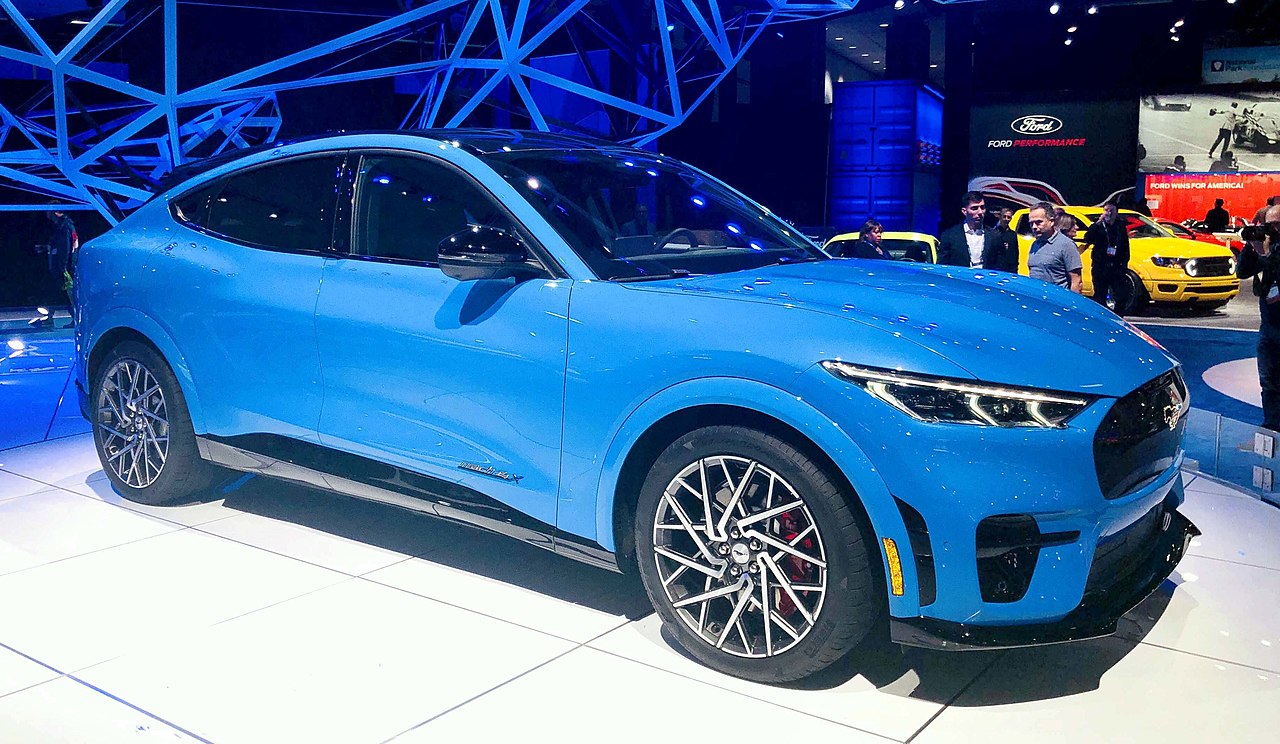
The next car push that Ford is doing as “affordable” is bumping up against one nameplate that does very little to be subtle: Mustang. The outcome is a classic internet lightning rod, four doors on the long-running pony car in America, now re-emerging with a twist that makes it more convincing than it was the last time it made the rounds.

The hook is easy: Ford management has discussed openly going back to cheaper cars, and the first candidate in that space is a high-performance, rear-wheel-drive sedan. Such a figure corresponds to the long-debated concept of turning Mustang into something beyond a two-door coupe an undertaking that already resulted in the Mustang Mach-E and showed that Ford will go as far with the badge as the business case justifies.
In 2026, that business case will be different than it was during the period when rumors were floating about an alleged set of sketches and dealership-only renderings of a Mustang-flavored sedan. The tale back then was backlash by traditionalists. At this point, the engineering and manufacturing strategy is the narrative- since Ford has been re-modeling its EV construction and the way it funds them. The firm has recognized significant EV financial pain, and the way ahead has been a focus on reducing the number of parts, assembly, and batteries, which are not only selected based on their cost architecture but also chemistry. That is to say, when a Mustang sedan comes up, it is probably the math of manufacturing that has driven its existence rather than design aspiration.
The new platform work of the company is one of the indications. Ford has also outlined a clean-sheet strategy with its California-based team, and has indicated that its next architecture would build around “trucks, cars, and everything in between,” built upon changes that reduce complexity at the foundation. A platform which consumes 20 percent less total parts, 25 percent fewer fasteners is not merely an EV story; it is a margin story. And Ford has said that it also has stopped 40% of process workstations versus existing production, such factory simplification as turns “affordable” into a slide-deck term.
The choice of battery can be the same logic. Ford has used lithium iron phosphate as a leverage since batteries are the primary cause of mass and cost and has also indicated that batteries constitute over 40% of the overall vehicle price and approximately 25% of the total weight. That is important should Ford desire a Mustang-branded sedan to feel fast without having to carry a disproportionately large pack-and should it wish to sell in actual volume rather than to the early adopters.
The second, less apparent thread is that the Mustang may not have to go entirely electric to expand its product range. Another flow of reporting is an S650 Mustang hybrid development program, of which they have prototypes under testing, referred to internally as “S650E.” The strategy would retain the identity of the coupe but allow Ford to apply the electrification where it would make the most sense, namely, launch torque, driving experience and efficiency, without compelling the tradition-heavy customers of the brand to overnight go battery-only.
In the case of Ford, it is not the controversy about whether the Mustang badge can be stretched it has been stretched already. The question to ask remains open: will the next stretch be a product experiment or an industrial system: less parts, easier assembly, and electrification that matches what the driver is experiencing behind the wheel?