Military 3D Printing Accelerates Defense Manufacturing
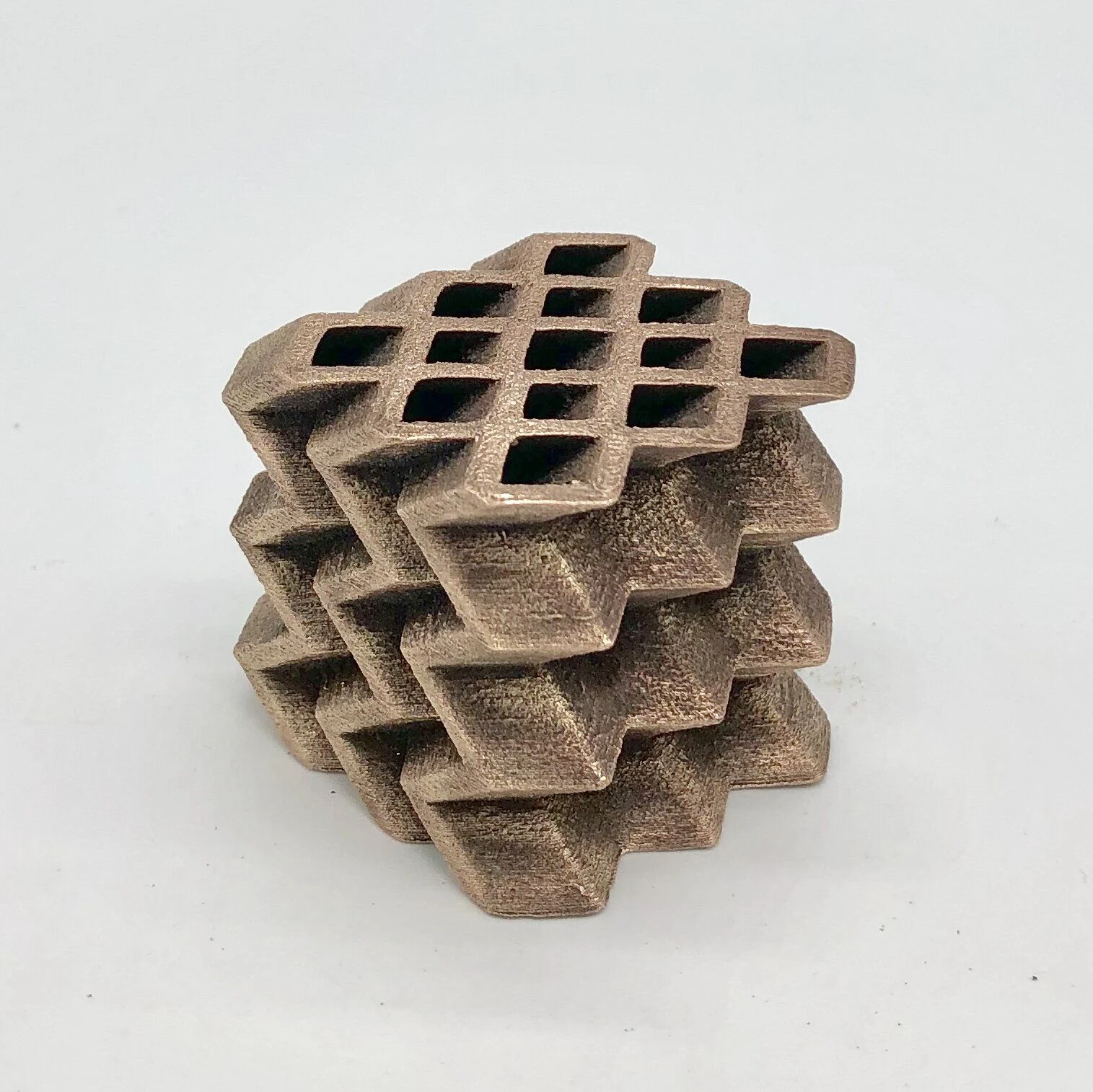
The global military 3D printing market, valued at USD 0.88 billion in 2021, is projected to reach USD 7.5 billion by 2031, registering a CAGR of 24.8% from 2022 to 2031. Additive manufacturing, the technical term for 3D printing, builds components layer by layer from digital CAD models, eliminating the need for molds or cutting tools. This process enables rapid prototyping and cost-effective production of complex geometries, using materials ranging from polymers and ceramics to high-performance metals such as titanium, aluminum, and steel. In defense applications, these materials are often supplied in granular form, supporting the production of lightweight yet durable parts for aviation and other military systems.

Adoption in the defense sector is driven by several factors: expanding military applications, increased investment by armed forces, and the pursuit of lightweight, high-efficiency components. However, challenges remain, including complex hardware and software design requirements and the absence of standardized processes. Despite these hurdles, technological advancements are opening new opportunities, with innovations in fused deposition modeling, electron beam melting, and portable 3D printing systems gaining traction.
North America leads the market, with the U.S. military actively integrating 3D printing to shorten development cycles and improve weapon system efficiency. Contracts awarded to research institutions and industry players underscore this trend. In 2021, Rice University received USD 1.3 million from the Office of Naval Research to develop the world’s first printable military “smart helmet” using industrial-grade printers. In 2019, 3D Systems secured USD 15 million from the Army Research Laboratory to advance next-generation metal printing capabilities, bolstering national security and competitiveness.
Canada’s market is expanding through academic and research collaboration. The University of Waterloo partnered with the National Research Council of Canada in January 2021 to explore metal additive manufacturing, focusing on foundational technology understanding.
In Europe, rising defense budgets and self-reliance initiatives are fueling growth. France’s 2020 defense budget reached USD 52.7 billion, a 2.9% increase over 2019. The French Army has deployed Prodway P1000 printers to produce spare parts in-house, enhancing operational readiness. The UK’s defense sector benefits from the presence of major additive manufacturing firms such as Stratasys Limited and Renishaw PLC, which are developing complex military structures while meeting stringent quality standards.
Asia-Pacific is expected to post the highest CAGR at 26.1% during the forecast period, driven by modernization programs in countries including China, Japan, India, and South Korea. Military organizations in these nations are integrating advanced printing technologies to improve the performance of weapons systems and logistical support equipment.
Key industry participants—3D Systems, Autodesk, Dassault Systèmes, ExOne, General Electric, Markforged, Materialise, Optomec, Proto Labs, Stratasys, and Ultimaker—are pursuing strategies such as product launches, partnerships, and acquisitions. Notably, in February 2021, ExOne developed a portable 3D printing factory housed in a shipping container for the U.S. Department of Defense, collaborating with partners possessing specialized engineering expertise.
Lightweight component adoption is a significant driver, as armed forces seek equipment with improved performance and reduced mass. Advances in simulation and optimization software allow materials such as carbon fiber composites and custom textiles to be engineered for minimal weight without compromising strength. This reduces failure-prone mechanisms and lowers manufacturing costs.
Despite the promise, the sector faces constraints. The lack of multi-material printers, slow production speeds, limited availability of smart materials, and questions over long-term reliability of printed parts hinder broader deployment. Standardization remains a critical gap, with defense applications requiring consistent quality and interoperability.
Operational examples highlight the technology’s impact. The U.S. Air Force has incorporated 3D and 4D printed components into C-5 Galaxy transport aircraft, including overhead panels, light covers, and window reveals, with plans to add 20 more components made from advanced polymers and metals. Additive manufacturing also supports maintenance by enabling production of obsolete or hard-to-source parts, enhancing fleet sustainability.
As military forces worldwide invest in modernization and seek rapid, adaptable manufacturing solutions, 3D printing is emerging as a pivotal capability in defense engineering, offering both strategic and logistical advantages.