Perseverance Carbon Discovery Raises the Stakes for Mars Sample Return
The Perseverance rover has provided an important new data point to the debate about life on Mars, but the engineering lesson from it is more prosaic than you’d imagine. The rover discovered complex carbon in two mudstone samples collected from the Bright Angel rock formation in Jezero Crater, and hundreds of organic detections the most robust organic detection ever recorded in Jezero, and, to the team’s knowledge, the first detection of macromolecular carbon on a natural rock surface on Mars.

It is critical since carbon chemistry is necessary for known life, but it is not a definite proof of its presence on Mars, as the source of such complex organic carbon can be meteorites, cosmic dust, abiological hydrothermal reactions or biological processes. Right now, Perseverance has the capacity to map and identify chemistry on the Martian surface, but it does not provide enough information to find out what specific process formed it.
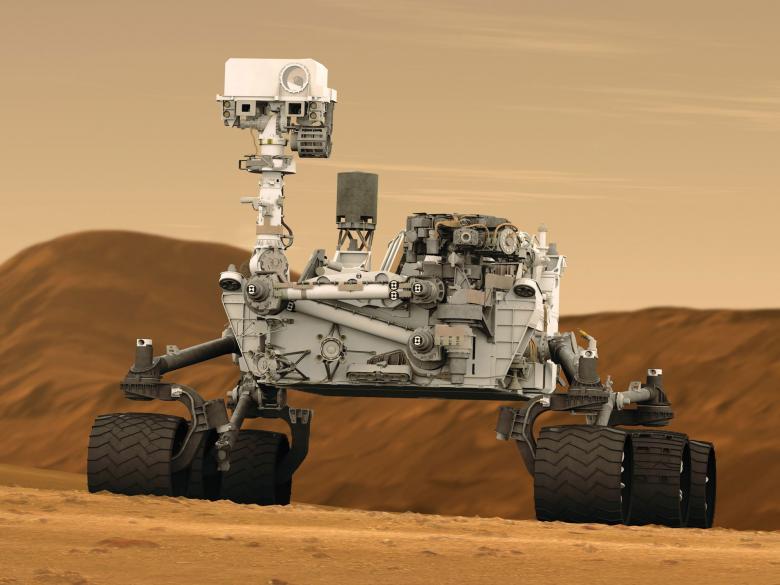
It is where the instrument suite of the rover becomes a pivotal part of the discovery. Researchers used Perseverance’s SHERLOC instrument, a deep-UV Raman and fluorescence spectrometer mounted on the rover’s robotic arm, to map where carbon appeared within the rock samples. This type of analysis is a perfect task for rovers, as it allows identifying promising samples, mapping chemical compounds’ geology, and preserving the context before taking any samples. On the contrary, this type of analysis is not suitable for high sensitivity studies and laboratory experiments needed to differentiate biological materials from abiological ones.
It is also worth considering the mineral context of the organic carbon detected by Perseverance. One of the mudstones contains organic carbon within a primary silicate-dominated matrix, while the second contains organic carbon in association with secondary carbonate and sulfate minerals. It means that the carbon detected appears in different contexts related either to the original composition of the rock or alteration in its history. From the viewpoint of planetary science, this fact increases the scientific value of the cache, as it concerns both the preservation and history of formation of the rock.
The researchers noted that the carbon in the rocks did not undergo heavy weathering. It may indicate either recent exposure to the Martian surface or radiation and oxidation resistance of the material. Both facts increase the scientific value of the samples and raise questions about the capabilities of the Earth-based equipment to analyze them in order to determine the structure and chemical composition of organic materials.
The bigger picture starts looking more consistent rather than more conclusive, as earlier this year NASA’s Curiosity rover discovered the previously unseen organic molecules in the Gale Crater about 2,000 miles away from Jezero. Curiosity had also previously discovered carbon signatures in powdered rock samples in Gale Crater. The missions taken together strengthen the hypothesis that organic chemistry was not a unique peculiarity of ancient Mars. However, organic materials do not mean life; they prove that organic chemistry can exist and persist on Mars. It is quite a different story.
What is equally important is the fact that the new Jezero discovery was made in the same area as the previous evidence of ancient microbial life found by Perseverance rover. It increases the scientific importance of the cached samples. If there is one area with potentially interesting textures, mineral associations and organic carbon, it increases the priority of the material return mission. In that case, the mission will not only bring valuable material from Mars back to Earth but also become the simplest and most efficient way to find out whether all these signals share the common origin or just exist in the same habitable environment.
This is the moment when Mars Sample Return project becomes crucial. The project has been significantly changed after NASA decided to adopt two lower-cost concepts for implementing it: a sky crane or a commercial lander for collecting the samples already cached by Perseverance. A possible time frame of the project implementation was cited somewhere in the range between 2035 and 2039. The architecture of the project still remains critical as every design decision affects contamination control, samples’ collection, transfer reliability and preservation of the geologic context of the specimen needed to make it scientifically valuable.
If you want to learn more about the findings, you can check out the research published in Science Advances. To sum up, Perseverance has found the stronger carbon signal, not the answer. The rover performs precisely what it was intended to do identify the promising samples, characterize its geologic context and cache it. The judgment on the biological versus abiological origin of the material can only be based on the samples’ return to Earth. Discoveries like this only increase the engineering value of the mission.
By David Whitaker — Associate editor for AMI’s aerospace and drone systems desk, translating flight systems, aircraft programs, spaceflight, and UAV developments into accessible technical stories.