Robotics Funding Faces Sharp Decline Amid Sector Shifts
Between 2019 and 2023, approximately 1,500 robotics startups secured a combined $90 billion in funding, with 20 achieving unicorn status—valuations exceeding $1 billion. Yet the latest data from F-Prime, the venture capital arm of Fidelity Investments, reveals a stark reversal in momentum. After peaking in 2021, robotics investment has fallen to its lowest point in five years.

In 2021, fueled by low interest rates and pandemic-era stimulus, robotics startups raised $18.1 billion. The following year saw a contraction to $12.4 billion, and in 2023, funding dropped again to $7.4 billion. Report authors Sanjay Aggarwal and Betsy Mulé note, “The venture capital markets experienced a significant correction in 2023, with investments returning to levels last seen in 2020 and the depths of the pandemic. Robotics was no exception, though the pullback was even more pronounced as funding in the AV [autonomous vehicle] sector—which had historically been a driver of robotics investment—continued the rapid decline we’ve seen over the last two years.”
The autonomous vehicle segment illustrates the severity of the downturn. Investment in AV startups fell from $9.7 billion in 2021 to $2.2 billion in 2023. Passenger vehicle self-driving ventures, once dominant, are losing ground to trucking and delivery applications. Four of the five largest AV funding rounds in the past two years targeted these logistics-focused solutions. Cruise, majority-owned by General Motors, stands out as an exception, securing $2.1 billion in financing despite the broader contraction.
Factors contributing to the decline include persistent inflation, supply chain disruptions, and geopolitical instability. Negative publicity and regulatory hurdles have also weighed heavily, with high-profile cases such as Tesla’s long-promised but still incomplete self-driving capabilities dampening investor confidence.
Within robotics, vertical-specific systems attracted the largest share of 2023 investment. Defense and logistics led the field, accounting for most of the $4.1 billion directed toward vertical applications. Medical robotics followed, while construction and mining robots captured only 3% of sector funding. These trends reflect a shift toward mission-driven deployments with clear operational value, particularly in environments where automation can address labor shortages or enhance safety.
Exits in the robotics industry have mirrored the funding slump. In 2021, 36 deals worth about $44 billion marked a high point. By 2022, exit value dropped to $26 billion, and in 2023, it collapsed to under $2 billion. IPO activity was virtually absent, and the brief surge in SPAC-based public listings has dissipated.
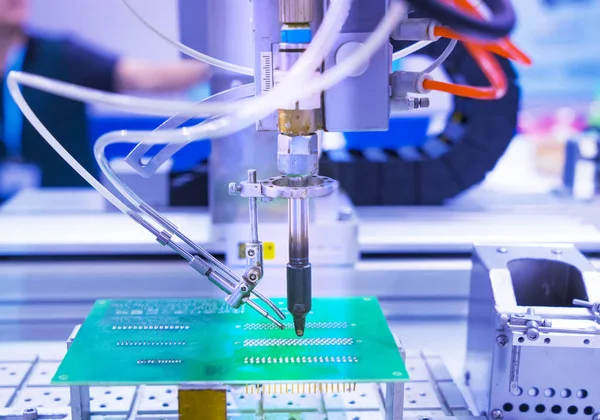
Despite the downturn, enabling technologies remain a vibrant area of development. Robotics systems require advanced sensing, computation, communication, and actuation capabilities. Industries producing LiDAR units, specialized sensors, high-performance chips, and precision motors continue to attract interest, as these components underpin progress across diverse robotic applications.
Aggarwal and Mulé emphasize the cyclical nature of capital flows: “Hype-driven investment cycles inevitably come to an end. Those focused on business fundamentals endure.” This sentiment underscores the resilience of companies grounded in solid engineering and market viability, even as speculative enthusiasm wanes.
Geographic distribution of investment offers another point of optimism for Western economies. The report indicates that the U.S., Europe, and Israel accounted for 70% of total robotics funding between 2019 and 2023. For regions seeking to rebuild domestic manufacturing capacity, this concentration could signal strategic opportunities to integrate automation into home-shored production lines.
As automation continues to expand in industrial, medical, and logistics contexts, the robotics sector’s long-term trajectory remains tied to technological advancement and operational necessity. While recent years have brought a pronounced slowdown in funding, the underlying demand for capable, reliable machines—and the systems that enable them—persists.