SpaceX Positions Starship for Upcoming Flight Test
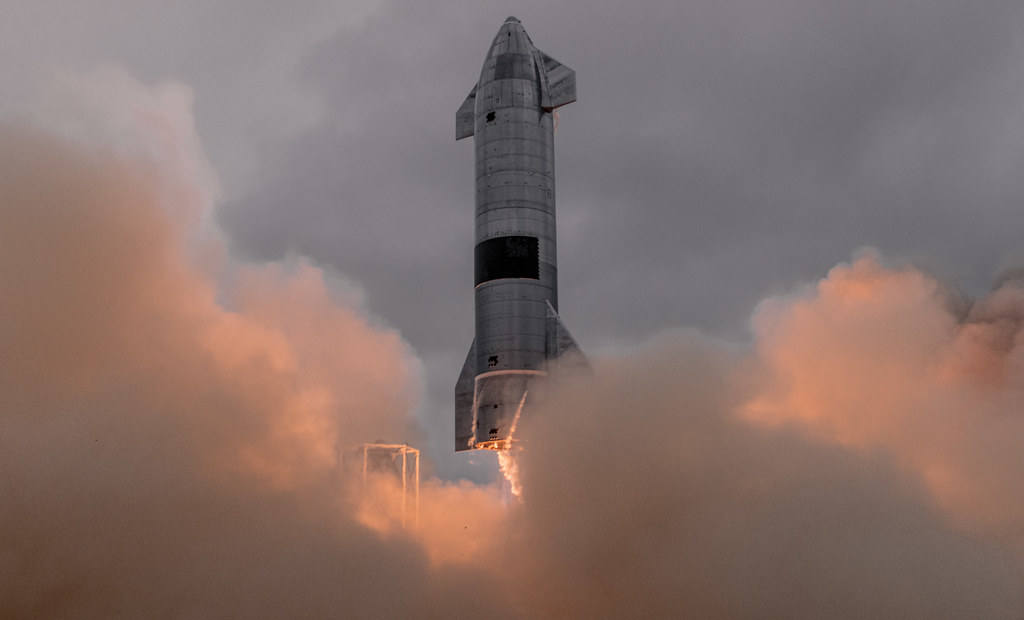
SpaceX has taken a significant step toward its next Starship launch, moving the upper stage of the massive rocket to the launch pad at its Starbase facility in South Texas. The relocation, shared in a series of photos on Sept. 17 via social media, follows a recent test of the Super Heavy booster, the lower stage of the system. The company is preparing for what will be the 11th overall demonstration of the vehicle since flight testing began in April 2023.

The upper stage, known simply as Starship, stands 171 feet tall and was seen being transported under cover of night before being secured by the towering mechanical arms of the launch tower, referred to as “chopsticks.” At this stage, the spacecraft has not yet been integrated with the 232-foot Super Heavy booster.
Although no launch date has been announced for flight 11, Elon Musk has previously expressed his ambition to increase Starship’s flight cadence to one or more launches per month. Regulatory developments may help enable that goal. In May, the Federal Aviation Administration authorized SpaceX to conduct up to 25 Starship test flights annually. In August, President Donald Trump signed an executive order aimed at reducing federal regulatory burdens on commercial spaceflight companies, underscoring the importance of private sector participation in U.S. space ambitions.
The most recent Starship flight, conducted on Aug. 26, marked the fourth test of 2025 and was considered the year’s most successful. The upper stage separated from Super Heavy about three minutes after liftoff, achieving two notable milestones: the deployment of eight mock Starlink satellites and the reignition of a Raptor engine in space for the second time ever. These capabilities are essential for future orbital missions and controlled landings.
Following reentry over the Indian Ocean, Starship attempted a controlled vertical landing on the ocean’s surface west of Australia. The vehicle ultimately exploded after touchdown, but the maneuver provided valuable data. Super Heavy completed its own mission objectives, performing a planned water landing in the Gulf of America after conducting in-flight experiments.
When fully stacked, Starship reaches 403 feet in height, making it the largest and most powerful launch vehicle ever developed. The Super Heavy booster is equipped with 33 Raptor engines, delivering the thrust required to lift the system off the pad. The upper stage carries six Raptor engines, designed for orbital operations and deep-space missions. SpaceX’s long-term vision for Starship is a fully reusable transportation system capable of carrying crew and cargo to destinations including the moon and Mars.
NASA has selected Starship to play a critical role in the Artemis program, with plans to use it to transport astronauts from lunar orbit to the surface during Artemis III, targeted for as early as 2027. Musk has also stated his intention to send the first uncrewed Starship to Mars in 2026, positioning the vehicle as central to both commercial and governmental exploration goals.
Starbase, located about 23 miles from Brownsville near the U.S.-Mexico border, serves as SpaceX’s headquarters and primary launch site for Starship. In May 2025, Cameron County voters approved a measure to designate Starbase as an official city, complete with a mayor and city council. This change has been seen as potentially increasing local control over the facility’s operations, a point of interest given Musk’s history of disputes with regulatory authorities.
With the upper stage now at the pad and the Super Heavy booster recently tested, preparations for flight 11 appear to be advancing quickly. Each test, whether ending in success or failure, continues to refine the engineering and operational knowledge required to make Starship a cornerstone of future space transportation.