FAA Investigates Marine One-Jet Coordination Near Reagan National; Paths Did Not Converge
The Federal Aviation Administration is investigating how Marine One and a departing Envoy Air passenger jet were coordinated near Ronald Reagan Washington National Airport on Aug. 4. The agency said the aircraft did not appear to be converging in a dangerous close call. Both completed their flights safely, and no official determination of cause, fault or a procedural violation has been reported.

The available timeline nevertheless gives investigators several distinct questions to resolve. Air-traffic control audio indicates that the Marine One crew announced its planned departure from the White House Ellipse at least three times. A Reagan National controller described one transmission as “broken and unreadable,” later asked whether the helicopter was proceeding as briefed and warned its crew about the regional jet taking off.
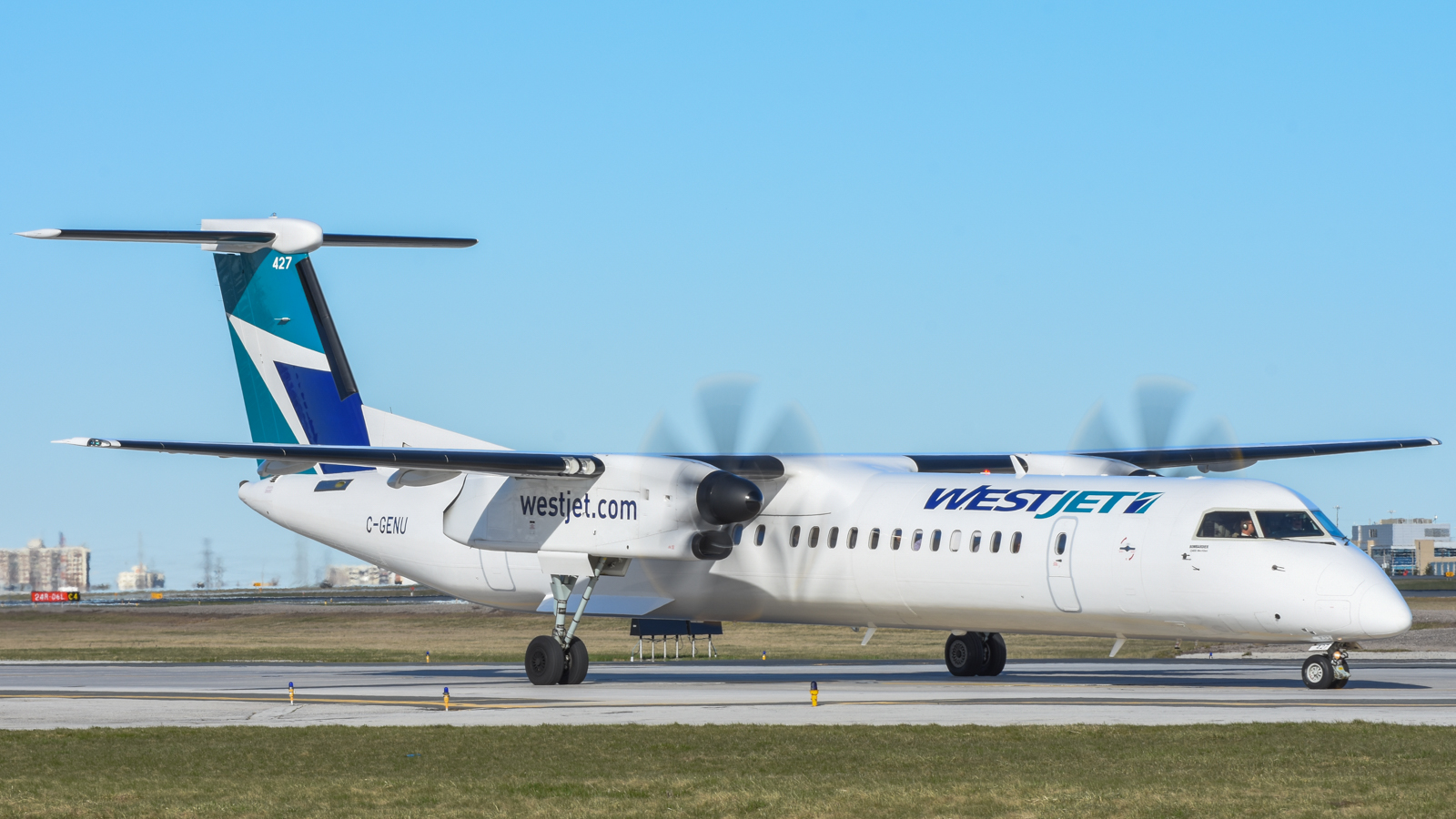
Marine One’s pilots reported seeing the jet and held their position before continuing to Joint Base Andrews. A pool report placed the helicopter’s liftoff at about 2:33 p.m. Envoy Air Flight 3742, an Embraer E170 bound for Pensacola, departed at 2:34 p.m. Envoy Air is a wholly owned subsidiary of American Airlines.
Radio readability is only one part of the coordination chain
A transmission described as unreadable does not, by itself, establish why the event occurred or whether safety requirements were breached. The investigation will need to clarify what information the tower successfully received, what departure plan had already been briefed, and how the controller and helicopter crew understood the status of that plan at each point.
That distinction matters because air-traffic coordination is not simply a matter of one radio call being sent. The operational chain includes a clear transmission, correct reception, acknowledgment, a shared understanding of the clearance or briefed procedure, traffic information and confirmation that the aircraft will follow the expected path. The recorded question, “Marine One, you said you are proceeding as briefed?” indicates that the controller sought clarification, but it does not establish whether an earlier instruction was missed or misunderstood.
The Marine Corps characterized the flight as routine and said the tower did not delay the crew, instruct it to hold or otherwise alter its flight profile. That statement and the controller audio will require reconciliation with the precise procedures governing presidential helicopter departures near active airline traffic. The crew’s reported decision to hold after seeing the jet is a confirmed operational response, not proof that the aircraft had already entered an unsafe convergence.
Distance alone cannot establish a separation violation
Flight tracking showed the Envoy jet passing within 1.5 miles of the Ellipse. That number is useful for locating the two operations geographically, but it cannot independently establish whether required separation was lost. Investigators must consider altitude, timing, headings, applicable airspace rules, controller instructions and the specific procedure in effect. The FAA has expressly said the flight paths apparently were not converging.
Two people told Reuters that commercial departures were not halted under a policy adopted after the fatal January 2025 collision near Reagan National. That remains an attributed claim rather than an FAA finding. Authoritative clarification is needed on whether that policy applied to this departure, when any traffic restriction should have begun, which operations it covered and who was responsible for initiating it.
The procedural question is especially important because the FAA has already changed how controllers separate helicopters and airplanes in busy terminal areas. Under a measure announced in March 2026, controllers in specified airspace are to use radar-defined lateral or vertical spacing when helicopters cross airport arrival or departure paths, rather than relying on pilots to maintain visual separation. The FAA said the change could delay helicopter traffic or disrupt airline operations when priority helicopter missions require protected access.
It has not been officially established how that nationwide measure or any Washington-specific presidential-flight policy governed the Aug. 4 operation. Nor does the crew’s visual acquisition of the Envoy jet settle whether radar separation, a traffic hold or another precaution was required beforehand.
The passenger-airport consequence is procedural certainty
For airline passengers and crews, the immediate result was limited: Flight 3742 departed and landed safely, while Marine One continued to Joint Base Andrews. The broader operational issue is whether controllers had an unambiguous process for protecting a special helicopter departure without creating uncertainty for commercial traffic in constrained Washington airspace.
The National Transportation Safety Board said in July that many actions associated with its 50 recommendations following the 2025 Reagan National collision remained unfinished. That history does not establish a cause or safety trend in the Marine One event, but it raises the importance of a precise FAA account of which precautions were active and whether they worked as designed.
The investigation’s most consequential result will therefore be a documented answer to three linked questions: what was clearly communicated, what traffic restrictions and separation standards applied, and when each aircraft was authorized to proceed. Until the FAA supplies those answers, the event remains a coordination incident under review, not a proven near-collision or rule violation.
By Thomas Caldwell — AMI’s senior editor for mechanical and mobility engineering, covering vehicle electronics, systems integration, electrification, chassis systems, propulsion, and safety policy.