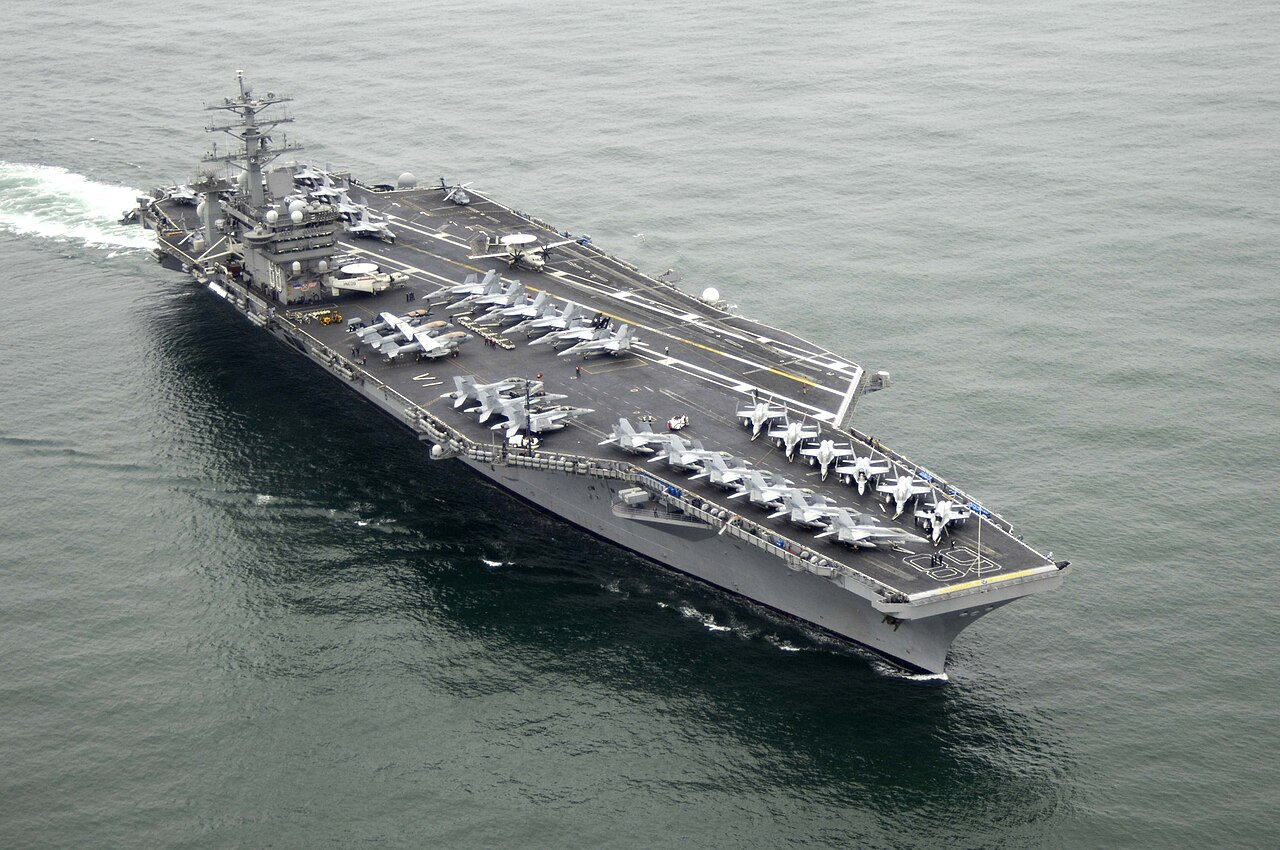
Navy Keeps USS Nimitz Until 2027 as Delayed Replacement Raises Maintenance Pressure
The Navy is extending the service of USS Nimitz until its scheduled deactivation in 2027 because the carrier intended to replace it, USS John F. Kennedy, has been delayed. The decision helps preserve the fleet’s carrier count, but it shifts more maintenance pressure onto the Navy’s oldest aircraft carrier after the ship has already passed its planned 50-year service life.

Kennedy recently completed acceptance sea trials ahead of an expected 2027 delivery, an important step that still does not make the second Ford-class carrier immediately ready for operational tasking. The ship must be delivered, enter service and move through additional training and predeployment work before it can provide the capability the Navy needs from an active carrier.
A legal floor meets an availability problem
The timing is constrained by more than fleet planning. Federal law requires the Navy to maintain at least 11 operational aircraft carriers. Retiring Nimitz before Kennedy enters service could leave the force below that statutory floor unless Congress authorizes an exception.
That requirement should not be confused with having 11 carriers ready to deploy at once. The law counts a carrier as operational even when it is temporarily unavailable for worldwide deployment because of routine or scheduled maintenance or repair. Carriers also spend time in trials, training and predeployment workups. The official inventory therefore measures fleet structure, not the number of flight decks immediately available for missions.
This distinction is central to the Nimitz extension. Keeping the ship on the rolls protects the near-term carrier count, but its practical contribution depends on maintenance condition, crew preparation and where it sits in the operating cycle. A one-for-one exchange on paper does not occur the moment a new carrier finishes sea trials.
Extra service carries an engineering cost
USS Nimitz was designed around a 50-year service life and has now moved beyond that planning benchmark. Continued operation does not automatically make the ship unsafe or unusable, but age changes the maintenance equation. Demands rise as equipment accumulates service time, while obsolete components can become more difficult to obtain, repair or replace.
Those issues place added weight on shipyards, suppliers and maintainers already supporting a carrier force with long overhaul cycles. Nuclear-powered aircraft carriers are among the Navy’s most complex assets: preserving one for additional service requires more than postponing a retirement ceremony. The ship must remain supportable through inspections, repairs, parts sourcing and the training needed to sustain its crew and aviation operations.
The burden also extends beyond Nimitz. The Ford-class construction schedule has not created a smooth replacement pipeline. USS Enterprise, the next carrier in the class after Kennedy, is anticipated around 2030 and is described as approximately 34 months behind schedule. That leaves less room to absorb another disruption without extending older ships, accepting a temporary numerical shortfall or seeking legislative relief.
New construction does not deliver instant availability
Kennedy’s completion of sea trials is tangible progress, but trials and delivery are milestones rather than the end of the transition. A new carrier must establish trained crews, complete required evaluations and work through the broader process that turns a delivered hull into a deployable naval aviation platform. Delays anywhere in that chain can separate the date a ship joins the inventory from the date it can replace an older carrier’s operational contribution.
Proposals have also been reported to reconsider steam catapults and relocate the island on future Ford-class carriers. Those directions have not been independently documented as approved design changes. Either concept, if formally pursued, would require substantial engineering assessment and redesign rather than a simple production adjustment, adding another potential schedule consideration for later ships.
For now, the Navy’s bridge between carrier generations remains USS Nimitz. Extending it to 2027 reduces the immediate risk of dropping below 11 carriers, but the schedule leaves little slack: Kennedy must move from completed sea trials through delivery and toward useful operational availability while maintainers keep a carrier commissioned in 1975 supportable for one more year.
| More aerospace and engineering stories, right in your MSN feed. Follow AMI on MSN |
By David Whitaker — Associate editor for AMI’s aerospace and drone systems desk, translating flight systems, aircraft programs, spaceflight, and UAV developments into accessible technical stories.