Navy’s Next Generation of Submarine Builders Is Still in Middle School
The Navy’s submarine replacement challenge extends well beyond budgets and shipyard capacity. Its plans also depend on finding enough welders, machinists, pipe fitters and engineers to build and maintain the boats. A Pentagon industrial-base official estimates that defense manufacturers already have about 400,000 unfilled skilled-trade jobs a shortage that could grow to 2.5 million over the next decade.

The warning reaches unusually far into the workforce pipeline. Michael Cadenazzi, assistant secretary for industrial base policy, told lawmakers that the people expected to become the next generation of submarine builders are still in middle school. That puts the Navy’s production problem on a timeline that a shipbuilding contract alone cannot compress: recruiting must start years before those workers can enter defense manufacturing.
“Our next generation of submarine builders is in middle school today,” Cadenazzi said during a Sept. 4 field hearing of the House Appropriations Committee’s defense subcommittee. He argued that students need to become interested in skilled trades before finishing high school, when education and career decisions may already be taking shape.
A fleet plan needs a labor plan
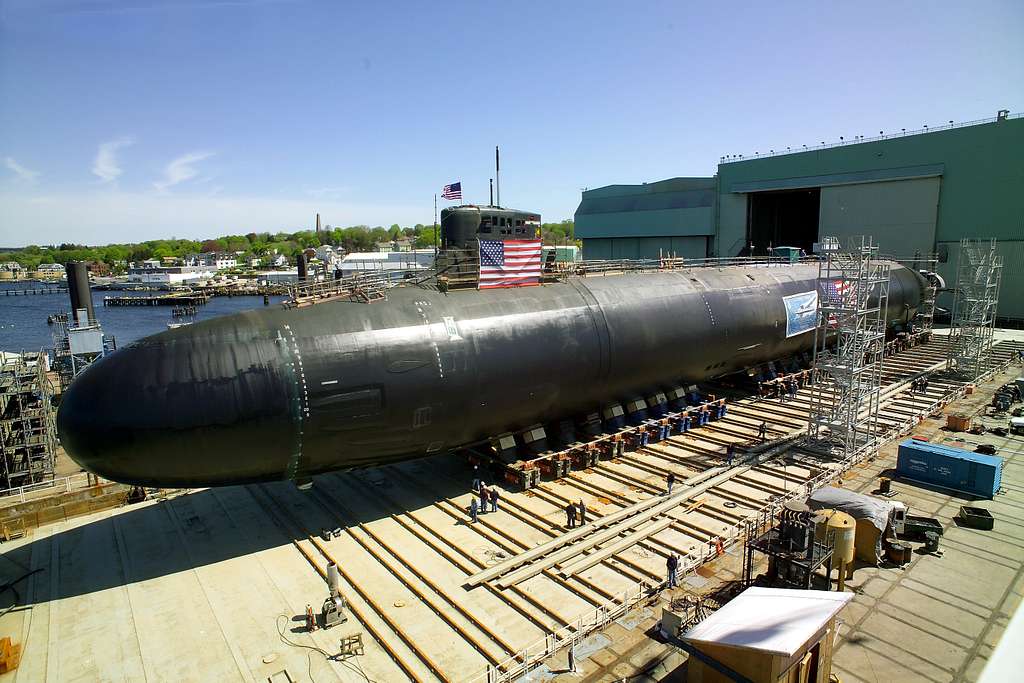
The timing matters because the Navy is simultaneously managing two demanding nuclear-submarine programs. Virginia-class attack submarines and Columbia-class ballistic-missile submarines draw on overlapping shipyards and suppliers, while Columbia remains the Navy’s top acquisition priority. The same industrial network must therefore expand Virginia output without compromising the service’s highest-priority shipbuilding program.
Virginia deliveries are running at approximately 1.3 submarines annually, and production is not expected to reach the Navy’s target of two per year until around 2032. That gap is often described through yard capacity, supplier performance and funding. The workforce estimate shows that those constraints ultimately converge on people: additional facilities and equipment do not produce submarines unless qualified employees are available to operate them and execute the work.
The Navy is already committing substantial money. A July 29 award provided $42.1 billion for nine Block VI Virginia submarines and material for a tenth. Because that package includes previously awarded material and productivity investments, it cannot be divided into a clean per-submarine price. More importantly, its size demonstrates the limit of viewing funding as the sole measure of progress. An order finances hulls and industrial improvements, but it does not instantly create an experienced production workforce.
This is a pipeline problem rather than a conventional hiring round. The estimated 400,000 vacancies span the wider defense industrial base, not submarine construction alone, so shipyards compete within a much larger demand pool. The occupations Cadenazzi identified also cover different parts of production: engineers support design and technical work, while machinists, welders and pipe fitters turn that engineering into finished hardware. A shortage in any one segment can constrain work elsewhere in the build sequence.
The replacement schedule exposes the constraint
On Aug. 3, the Navy designated 19 planned Virginia submarines equipped with the Virginia Payload Module as guided-missile submarines. They are intended to succeed four converted Ohio-class guided-missile boats entering retirement. The first designated Virginia, the future USS Arizona, is estimated for delivery in fiscal 2029, with the other 18 planned through fiscal 2038.
The Virginia design distributes the mission across more hulls. A module-equipped Virginia has an official maximum of 40 Tomahawk positions, including 28 added by the payload module, while each converted Ohio boat can accommodate up to 154. That capacity difference is relevant, but the more immediate production issue is that designating 19 replacements does not accelerate their construction. The Navy still has to move each submarine through a labor- and supplier-intensive industrial system already carrying the Columbia workload.
The Pentagon has launched the Build Freedom Initiative as a national hiring, training and awareness campaign, bringing more than 70 federally supported workforce projects under one effort. It began in Texas, Michigan and Pennsylvania, with nationwide expansion planned. The initiative is intended to connect prospective workers with scholarships, training, credentials and job opportunities while making skilled trades more visible to students and parents.
Its success will be measured over a much longer horizon than a single contract award. The Navy’s replacement submarines are funded and designated now, but some of the workers needed to sustain their production through the 2030s have not yet entered high school.
| More aerospace and engineering stories, right in your MSN feed. Follow AMI on MSN |
By David Whitaker — Associate editor for AMI’s aerospace and drone systems desk, translating flight systems, aircraft programs, spaceflight, and UAV developments into accessible technical stories.