Pentagon Awards X-Bow $11 Million for Sub-$750,000 Interceptor Test by 2027
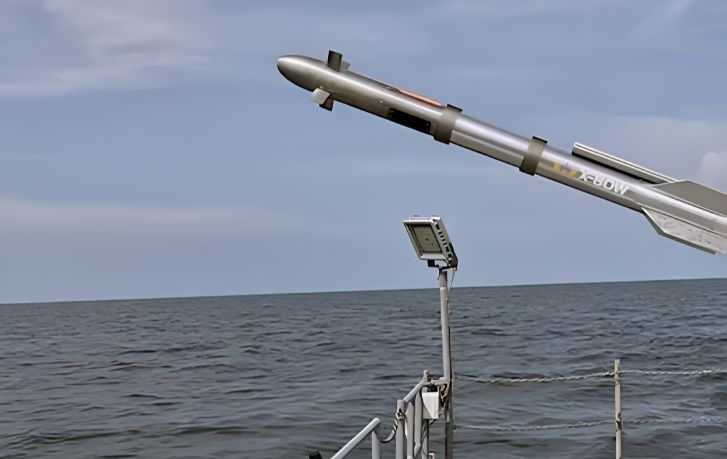
The Pentagon has awarded X-Bow Systems nearly $11 million to develop a modular anti-ballistic interceptor designed to cost less than $750,000 per shot. Under the Phase 2 agreement, the New Mexico rocket manufacturer must produce a prototype for a flight demonstration by late 2027, according to details of the contract.
That deadline marks a development milestone, not delivery of an operational weapon or a fielded replacement for Patriot or Terminal High Altitude Area Defense systems. The cost goal is nonetheless significant: A Patriot replacement interceptor costs roughly $3.9 million, more than five times X-Bow’s target. The contract is also intended to broaden the domestic supplier base for solid rocket motors, a market now led by Northrop Grumman and L3Harris’ Aerojet Rocketdyne.
The contract buys a test, not a finished interceptor
The central unanswered question is whether the Pentagon can purchase credible missile-defense capacity at a fraction of today’s unit cost. The X-Bow award funds further motor development and a first flight test, giving the government an opportunity to evaluate the company’s approach without committing to large-scale procurement.
A successful flight would not by itself make the interceptor battle-tested or ready for deployment. Development would still have to advance through additional testing, qualification and production decisions before the system could enter service. The contract does not establish a procurement quantity, operational date, sustained factory output or final production price.
That distinction matters because the advertised ceiling is a design target. Prototype economics do not automatically carry into production, particularly when later requirements, testing work and manufacturing controls are included. X-Bow must show not only that its interceptor can fly, but that its design and production method can support the affordability objective as the program matures.
A different approach to missile-defense capacity
The Pentagon’s Low-Cost Interceptor effort is aimed at ballistic and hypersonic threats while holding each interceptor below $750,000. The broader strategy is not simply to replace premium systems with cheaper ones. It is to create a wider mix in which lower-cost weapons can add capacity while established interceptors remain available for the missions they were designed to handle.
That potential division of labor cannot be assumed before testing defines what the new design can reliably do. Patriot and THAAD are mature systems backed by established production, integration and support structures. X-Bow’s prototype remains at the demonstration stage, so the available information does not support a direct conclusion about equivalent performance or operational coverage.
The supplier question may be just as consequential as the interceptor design. The Pentagon said the contract addresses reliance on two primary solid-rocket-motor manufacturers. X-Bow produces its motors and propellant in-house using its own manufacturing approach, giving the government another potential source for one of an interceptor’s fundamental components.
A new entrant could improve competition and create another route for future production, but an award of this size does not prove that a new supplier can deliver at military scale. Factory throughput, quality control, repeatability and funded orders will ultimately determine whether the program changes the industrial base rather than merely demonstrating another prototype.
Lower unit cost does not remove the funding constraint
The public-cost argument is straightforward. At the stated targets, five $750,000 interceptors would cost slightly less than one $3.9 million Patriot replacement interceptor. That comparison illustrates why the Pentagon is pursuing a broader affordability mix, but it is not an exchange-rate guarantee: the systems may not provide identical capabilities, and X-Bow has not yet demonstrated its final cost.
The project arrives as the Pentagon presses manufacturers to accelerate munitions production. Estimates from the Center for Strategic and International Studies place Patriot inventory at 759 to 827 after recent fighting, down at least 65% from an estimated pre-conflict level of 2,330. CSIS estimated that THAAD inventory remained at least 38% below its earlier level. Those are outside estimates, not official Pentagon counts.
Reduced inventories could force U.S. personnel and allied forces to conserve interceptors and accept more risk, according to CSIS. Yet neither a prototype award nor an industry expansion plan replenishes those inventories. Large production gains would still require successful development, physical manufacturing capacity, Pentagon contracts and congressional funding.
The decisive evidence will come no earlier than the late-2027 flight demonstration. Until then, X-Bow’s contract is best understood as a Pentagon-funded attempt to test whether a new motor supplier and modular design can alter missile-defense economics not as a replacement already on its way to the field.
| More aerospace and engineering stories, right in your MSN feed. Follow AMI on MSN |
By David Whitaker — Associate editor for AMI’s aerospace and drone systems desk, translating flight systems, aircraft programs, spaceflight, and UAV developments into accessible technical stories.