Airbus Contains A321neo Defect Affecting 500 Jets, Including 250 Already Flying
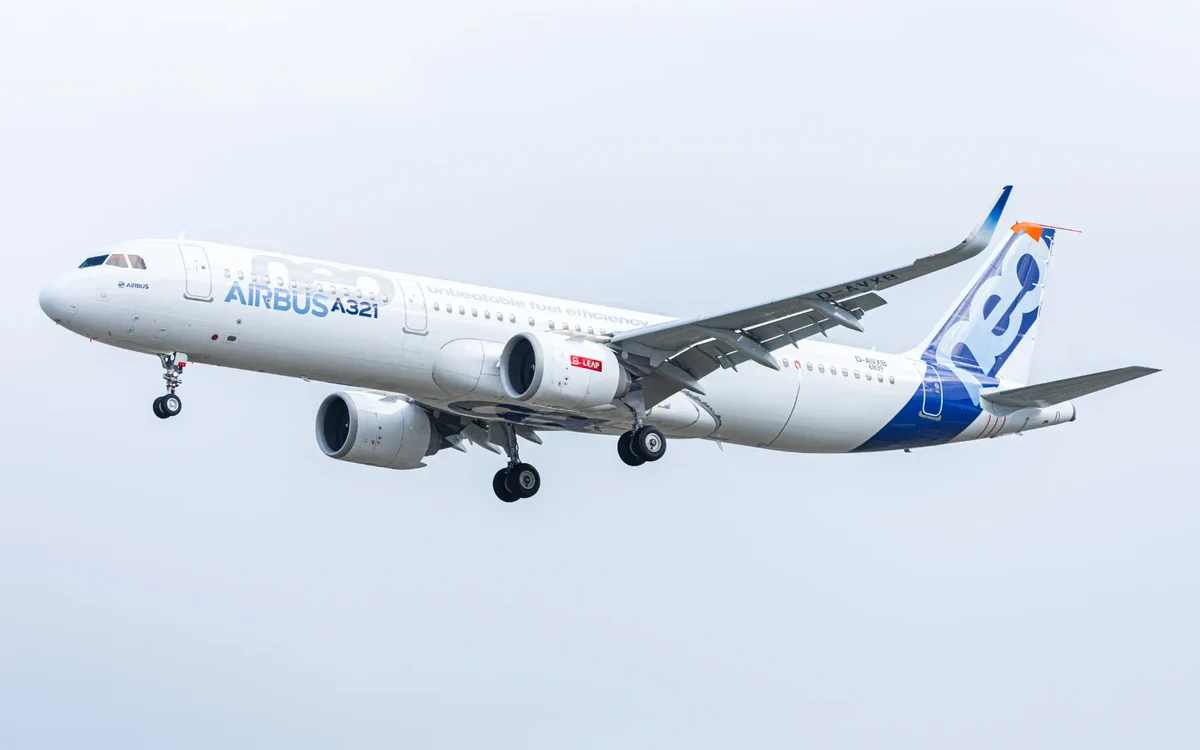
About 500 Airbus A321neo passenger jets are estimated to be affected by a protective-coating defect in their fuselage structures, including roughly 250 aircraft already in service. Airbus says it has identified and contained the source, has a remedy available and considers the aircraft safe to keep flying.
The issue, first reported on September 24 by The Air Current, involves the surface protection applied to stringers in the lower forward fuselage. A person familiar with the matter estimated that the affected population is divided roughly evenly between aircraft in operation and jets moving through production.
Stringers are structural reinforcements running lengthwise along the fuselage. Together with the frames that encircle it, they stiffen the aircraft’s skin and help the fuselage carry loads. The deviation concerns the coating intended to protect those components from corrosion, rather than the basic shape or assembly of the stringers themselves.
That distinction explains why a defect can warrant fleet-wide attention without creating an immediate grounding condition. Airbus described the discrepancy as a quality issue, not a safety issue, and said affected aircraft can continue operating. The company found it while parts were already undergoing standard production-line rework, and newly coated stringers now meet its requirements.
A contained defect can still create extensive work
Containment stops additional nonconforming parts from entering the production system, but it does not eliminate the work attached to the approximately 500 aircraft already affected. Jets still in factories may need rework as they progress toward delivery. Aircraft already with airlines may eventually require inspections and corrective work coordinated with maintenance schedules.
Airbus says the remedy does not require the stringers to be disassembled. Once the rework is completed, the aircraft is considered restored to its nominal design condition. However, no public operator-by-operator or aircraft-serial-number list has been identified, and Airbus has not specified a standard amount of time needed to complete the work on each jet.
Customers are continuing to accept deliveries without requiring the remedy to be completed first, according to the person familiar with the matter. Airbus has also advised that there is no immediate repair requirement. Those points are important operational boundaries: the defect has not produced a fleet grounding, and it has not been established that it has delayed current deliveries.
Regulatory treatment remains the main unresolved variable. No airworthiness directive covering this coating issue had been published when the matter emerged, but European regulators could later require repairs within a defined compliance period. Such a directive would establish when operators must act, potentially converting a manufacturer-managed quality campaign into a mandatory fleet program.
Delta Air Lines, which operates the A321neo, said it remains in contact with manufacturers and would “always take action to meet or exceed operator recommendations and regulator directives.” The response reflects the two-track process airlines follow in cases like this: manufacturer instructions can guide maintenance before, or independently of, a binding regulatory requirement.
Production pressure raises the practical stakes
The issue arrives while Airbus is trying to increase narrow-body output from about 60 aircraft per month to 75. At that scale, even a contained deviation can consume engineering reviews, factory positions, labor and maintenance capacity across hundreds of airframes. The practical exposure depends not only on whether a remedy exists, but also on how quickly it can be incorporated without disrupting other production and delivery work.
A separate fuselage-panel quality problem reported in December 2025 contributed to months of delivery delays, despite also initially being described by Airbus as having no safety implications. That earlier case involved panel-thickness deviations and should not be treated as the same defect or as proof that the stringer-coating issue will produce similar delays. It does, however, show how structural rework can affect factory flow even when aircraft are not immediately unsafe.
The longer-range A321XLR is not affected, according to the person familiar with the matter. For the approximately 250 standard A321neos already flying, continued operation remains permitted; the next consequential development will be whether regulators leave the remedy under Airbus and operator maintenance planning or impose a defined repair deadline across the affected fleet.
| More aerospace and engineering stories, right in your MSN feed. Follow AMI on MSN |
By Thomas Caldwell — AMI’s senior editor for mechanical and mobility engineering, covering vehicle electronics, systems integration, electrification, chassis systems, propulsion, and safety policy.