Utilities Unite for Nationwide EV Fast-Charging Network
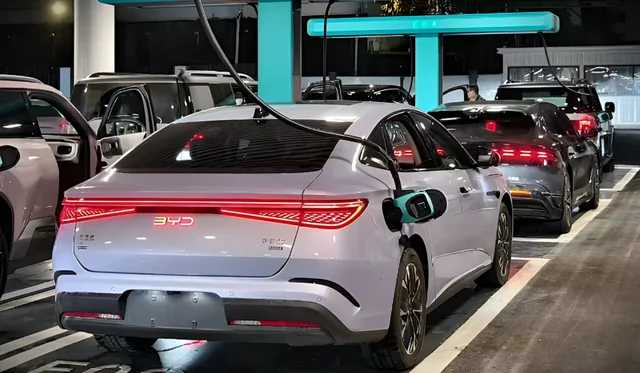
More than 50 U.S. power companies have formed a unified effort to establish a coast-to-coast fast-charging network for electric vehicles along major travel corridors. The initiative, announced by the Edison Electric Institute (EEI), brings together EEI members, the Tennessee Valley Authority, and Midwest Energy Inc., consolidating two earlier regional collaborations—the Electric Highway Coalition and the Midwest Electric Vehicle Charging Infrastructure Collaboration—into the newly named National Electric Highway Coalition.

The coalition’s immediate focus is on closing gaps in the growing EV charging infrastructure along the Interstate Highway System. “We are committed to investing in and providing the charging infrastructure necessary to facilitate electric vehicle growth and to helping alleviate any remaining customer range anxiety,” said EEI President Tom Kuhn. With the EV market poised for rapid expansion, Philip Jones, executive director of the Alliance for Transportation Electrification, emphasized, “With scores of new battery-electric vehicles coming to market over the next couple of years, we need to get the charging infrastructure sited, built and funded.”
EEI projects the number of battery-powered EVs in the U.S. to rise from roughly 2 million in 2020 to at least 20 million by 2030. The current count of public fast-charging stations—about 10,000—would need to grow tenfold to meet demand. Kellen Schefter, EEI’s director of electric transportation, noted that “Charging infrastructure needs to lead electric vehicle adoption” and stressed the importance of ensuring that charging availability is not a barrier, even for longer trips.
Utilities’ roles in the coalition vary. Some will focus on extending high-voltage connections to charging sites such as convenience stores, gas stations, or auto dealerships, with private companies supplying the charging units. Others may invest directly in building complete charging stations where no host site exists. “It’s really going to be all-of-the-above,” Schefter explained.
The coalition’s work is expected to align closely with federal efforts, including the $7.5 billion earmarked for charging networks in the $1.2 trillion infrastructure bill signed by President Biden. The administration’s plan calls for 500,000 EV charging stations nationwide by 2030, with $5 billion allocated to states and $2.5 billion to the Charging and Fueling Infrastructure Program, which also supports hydrogen, propane, and natural gas fueling.
High-voltage direct-current fast charging offers efficiency but comes at a premium. ICF International estimates residential Level 2 charging installation costs at about $1,200, compared to $75,000 for a single fast charger. The International Council on Clean Transportation calculates that supporting 26 million EVs by 2030 would require 2.4 million chargers, including 180,000 fast chargers, at a total investment of $28 billion over the decade.
Most utilities will require state regulatory approval for significant charging infrastructure investments. An EEI survey earlier in 2021 found that 52 electric companies in 31 states and the District of Columbia had received such approval for electric transportation programs, with combined budgets approaching $3 billion. Schefter noted that the number of participating states has since grown to 35, though most programs remain in pilot stages. Large-scale initiatives in California, New York, and New Jersey account for more than 80 percent of the total budget.
While the charging network is a critical component, Schefter cautioned that it is not the entire solution. “The automakers need to hit their targets. The supply chain and battery manufacturers have to ramp up in a big way,” he said. John Bozzella, president of the Alliance for Automotive Innovation, echoed this sentiment, stating that the network “is only one piece of the puzzle” and highlighting the need to address grid resiliency, energy demands, and equitable deployment of charging infrastructure to ensure a successful future for EVs in America.