NASA’s Psyche May Reveal a Lost Planetary Core
“We can’t get to the cores of Earth or Mars or Venus, but maybe we can get to the core of an early asteroid,” explained Erik Asphaug, a University of Arizona planetary scientist, expressing the essence of one of the most unique and ambitious NASA missions. 16 Psyche is a huge, oddly shaped asteroid in the main asteroid belt between the orbits of Mars and Jupiter. For many years, it attracted the attention of researchers due to its composition, which is believed to be rich in metal. However, studying Psyche became even more intriguing recently when scientists tried to answer another question whether some asteroids represent fragments of planets or, on the contrary, are the remnants of celestial bodies that were already disintegrated.

The importance of Psyche lies in the fact that it may preserve information on processes occurring in the ancient universe, which disappeared from the surface of the planet long ago. The core of the Earth cannot be studied since drilling does not allow researchers to go deeper than into the crust. An asteroid such as Psyche becomes much more accessible to research, providing information about early planetary formations, if it is, indeed, composed of a metal interior.
Despite all assumptions and theories about 16 Psyche, scientists continue searching for answers. Recent modeling helped narrow the question but did not clarify the issue completely. Studying the possible origins of its two large depressions, researchers concluded that there are two potential models explaining them a layered body with a metallic core and thin silicate shell, left after collisions, or a mixed body with silicates and metals. The key detail in determining the interior structure of the asteroid is, again, porosity, since it plays a crucial role in shaping its features, including depths and slopes of the depression basins.
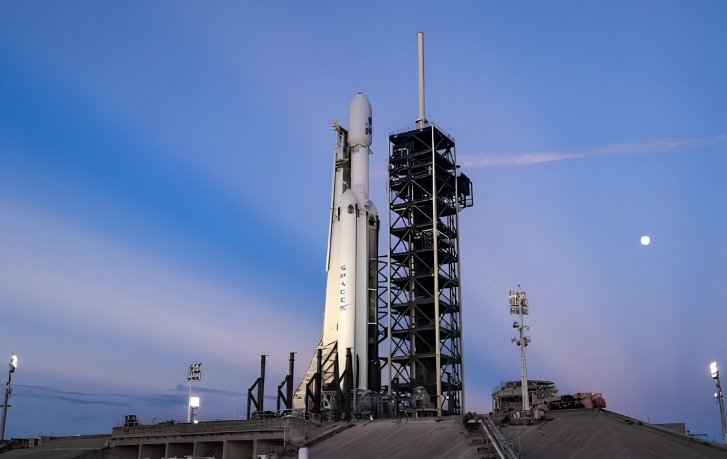
This means that the planned NASA mission is not simply a fly by operation. The spacecraft will reach the destination in 2029 with equipment for measuring gravity, magnetization, the surface composition, and the topography of Psyche. Multispectral imagery will be calibrated during cruise, while a magnetometer and gamma ray and neutron spectrometer will help determine the existence of a magnetic signature characteristic of planetary interiors.
Psyche is also evidence of the fact that the asteroid belt is not a field of debris, but, in some sense, a museum of worlds interrupted at the stage of formation. The importance of asteroids in science and research is connected with the fact that they are the remnants of processes accompanying the formation of the Solar System and, in some cases, can serve as links between studied meteors and the origin of terrestrial planets.
Speaking of 16 Psyche specifically, it used to be considered entirely made of metal until recently. Currently, the asteroid is believed to be a mixture of rock and metal, where the latter makes up the bulk, albeit unknown in terms of exact proportions. This ambiguity becomes its significance as well. If Psyche proves to be the exposed core of a planet, it will provide valuable insight into planet formation. If it will turn out to be a metal rock body rich in porosity, it will lead to conclusions on asteroid survival. Thus, regardless of the results of research, the mission of NASA to the asteroid becomes essential for planetary science.