Why America’s Mach 3 Valkyrie Never Became a Real Bomber
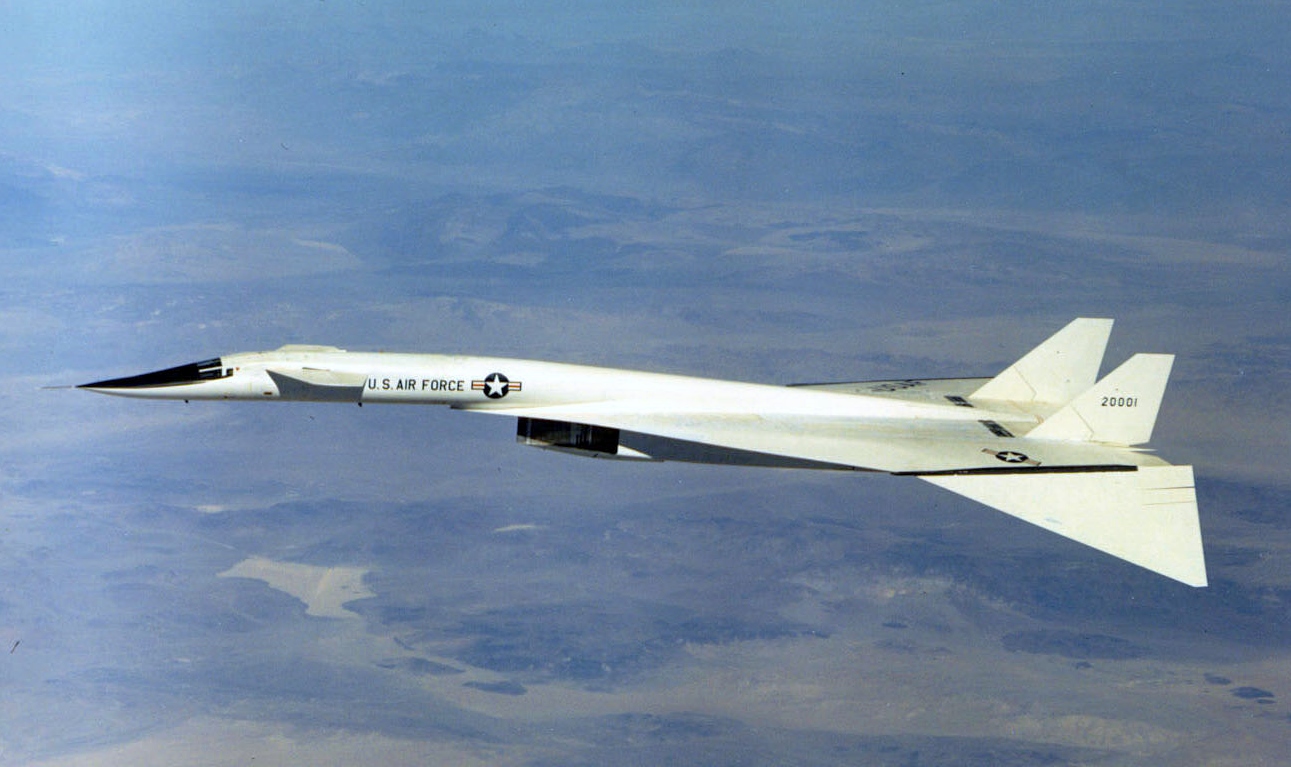
What if you design an aircraft that can’t be outwitted or outrun in the sky, but the sky changes before the vehicle? The North American XB-70 Valkyrie was constructed on a concept of flight that seemed invulnerable in the Cold War era: a bomber that was faster and too high for interceptors to catch. The aircraft, which possessed six General Electric turbojet engines, a cruise speed in excess of Mach 3, and a giant delta wing, would have been able to fly across continents at about 70,000 ft and not being easily approachable. It did not look as though it was an improvement to the B-52 in raw quantities but indeed as a different type of machine.

It was as radical in its design as it was in its mission. The Valkyrie exploited the shockwave created at supersonic speed by means of compression-lift aerodynamics and wingtip drafighting to increase lift, while enhancing stability. Since the airframe would have to endure extreme heating due to the requirement to maintain Mach 3 flight even for an extended period, North American used honeycomb-panels of stainless steel, titanium in vital areas, and fuel-carrying heat exchangers to control airframe temperature. This was aerospace engineering of the 50s and early 60s, created without the benefit of modern digital simulation but built in wind tunnel and hand-calculations, and subject to repeated flight testing. The strategic rationale failed as well.
The basic idea behind Valkyrie started to break down as Soviet anti-missile needs developed. The very fast and high aircraft were no longer safe from very fast and high I.D.A. (intercept defense) aircraft once systems such as the S-75 Dvina S.A.M. (surface-to-air missile) made very fast and very high aircraft vulnerable. Meanwhile, long-range missiles like the intercontinental ballistic missile (ICBM) were also an easy-to-miss, low-cost way for nuclear arms to be transported. The Air Force had been demanding a bomber that could run, not walk, through enemy airspace, however, doctrine was slowly moving to the idea of lower level penetration through enemy airspace, an environment the XB-70 was not designed for with its thin delta wing and specialized structure. It was not until 1961 however that the bomber program was cancelled before a Valkyrie was ever flown, and the two completed aircraft were redesignated research aircraft.
The latter one came in very handy. The two prototypes measured and captured unusual information on large supersonic aircraft during 129 research flights between 1964 and 1969, the National Museum of the U.S. Air Force reports. Some improvement to the second prototype brought it to Mach 3.1 at 73,000 ft, and to Mach 3 for 32 minutes in May 1966. This was no less than a flying experimenting centre for speedy aircraft structures, propulsion, sonic boom and the ongoing debate over very fast civil aircraft practicability. Its most widely-publicized moment had, however, nothing to do with its mission.
The second XB-70 was flying another unauthorized close formation publicity photo, with several other aircraft, which was to be taken on June 8, 1966 when its pilot got his nose into the right wingtip of the bomber. In the aftermath of the crash, investigators became more interested in inadequate visual cues and the large wingtip vortex created by the Valkyrie, a condition which led to renewed concerns about wingtip vortex hazards. The F-104 bounced off the bomber, hit both vertical stabilizers and burst in flames. The XB-70 proceeded along for 16 seconds and then it dropped into an unrecoverable spin. Pilot Joe Walker of NASA and copilot Carl Cross of the Air Force were killed and Air Force pilot Al White escaped in the clamshell capsule of the Valkyrie with serious injuries. Only one Valkyrie is left today in Dayton, OH. It is a testament to the fact that there are so many technical correct aircraft that are strategically out-of-the-way, and this one does more than any other to demonstrate that fact.