Ukraine Receives More Patriot Missiles but Still Seeks 300 for Winter
Ukraine has received additional Patriot air-defense missiles, but the central readiness question remains unanswered: how much of the country’s stated 300-missile winter requirement did the shipment cover? President Volodymyr Zelensky confirmed the arrival on Aug. 25, saying that “a little more Patriot missiles have arrived.” Neither the quantity nor the interceptor variant was disclosed in the account of his remarks.

That missing information sharply limits what can be concluded about the delivery. It is a completed transfer that adds physical inventory, not merely a pledge. But without a missile count, the shipment cannot be measured against the 300 interceptors Ukraine says it wants for winter, and there is no public basis for calculating how long the new supply could support operations.
Missile inventory, not just launchers, determines readiness
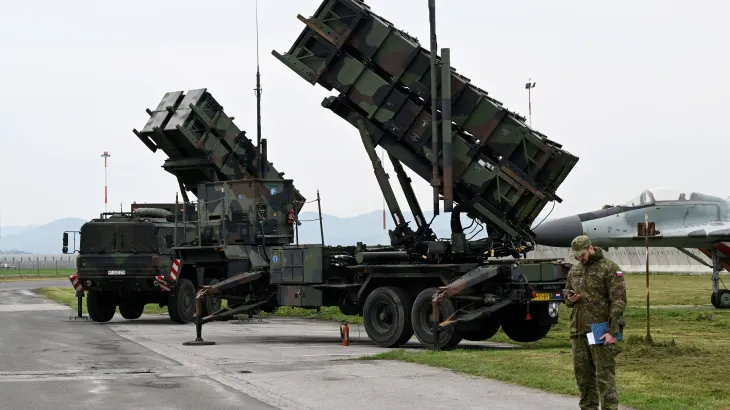
Patriot is more than a missile launcher. The ground-based system combines radar, an engagement-control station, launchers, power equipment and interceptors to detect, track and engage aerial threats. According to a Congressional Research Service overview, its missile family includes different designs with different intended roles. Because Ukraine did not identify the variant delivered, it would be inappropriate to assign the shipment a specific mission or claim that every missile fills the same operational need.
The distinction also illustrates why counting launchers or complete systems does not establish available defensive capacity. A fielded battery still depends on a replenishable interceptor inventory, trained crews, maintenance support and functioning radar and control equipment. The newly arrived missiles improve one part of that chain, but the undisclosed quantity prevents a broader readiness assessment.
Ukraine is also adding other layers. Zelensky said the country had received confirmation concerning several Crotale air-defense systems and their missiles, while AIM missiles used for interception had arrived. Those systems can broaden the available inventory, but they should not be treated as a one-for-one substitute for an unspecified Patriot interceptor. Layered air defense depends on matching available systems and missiles to different classes of threat, rather than treating all interceptors as interchangeable.
Winter support is moving from promises toward deliveries
Britain has separately committed £100 million through NATO’s Prioritised Ukraine Requirements List to support Patriot missiles and other air-defense equipment intended for delivery before winter. The British government’s announced package establishes funding and a delivery objective, but it does not disclose a Patriot missile quantity. Until those interceptors arrive, that package remains distinct from the missiles Zelensky said were already in Ukraine.
This difference between an arrival, a confirmed future contribution and an industrial plan matters in a constrained supply environment. Patriot interceptors are required by the United States and multiple international operators, so additional deliveries must compete with stockpile requirements and existing orders. Public accounts have disputed the severity of shortages in Europe: unnamed U.S. and NATO officials described inventories as critically low, while NATO and Pentagon representatives rejected broader claims that required munitions were unavailable. The disagreement does not provide a reliable public inventory figure, but it does show why a Ukrainian request cannot be assessed independently of allied reserves and production rates.
Production expansion offers no immediate substitute for missiles already manufactured and cleared for transfer. Increasing output requires contracts, supplier capacity, qualified components, production tooling, testing and customer acceptance. Even when funding is available, those steps create a lag between an order and a usable interceptor. That makes transfers from existing inventories potentially faster, while also forcing donor countries to balance Ukraine’s needs against their own readiness requirements.
The human stake is rising as winter approaches. The United Nations Human Rights Monitoring Mission in Ukraine reported that at least 437 Ukrainian civilians were killed in July 2026, 30% more than a year earlier. The new missiles are intended to support air defense amid continuing attacks, but the delivery’s practical scale remains unknown.
Other initiatives remain at earlier stages
Zelensky also reported progress involving SCALP long-range missiles, including British confirmation concerning production and French action on missiles and required licenses. No production quantity, delivery schedule or license terms were disclosed, so that development cannot yet be counted as completed industrial implementation.
Ukraine expects a schedule for the FREYJA initiative within seven to 10 days, including planned meetings and information about blocked areas of defense-company cooperation. Zelensky said Norway had confirmed $9 billion in funding for Ukraine for 2027 and could help finance a FREYJA office. Those are prospective steps rather than delivered capability, and the initiative’s scope has not been publicly explained.
For the immediate winter requirement, the firmest fact is therefore also the limiting one: more Patriot missiles are now in Ukraine, but no disclosed count shows how far that arrival moves the country toward 300.
| More aerospace and engineering stories, right in your MSN feed. Follow AMI on MSN |
By David Whitaker — Associate editor for AMI’s aerospace and drone systems desk, translating flight systems, aircraft programs, spaceflight, and UAV developments into accessible technical stories.