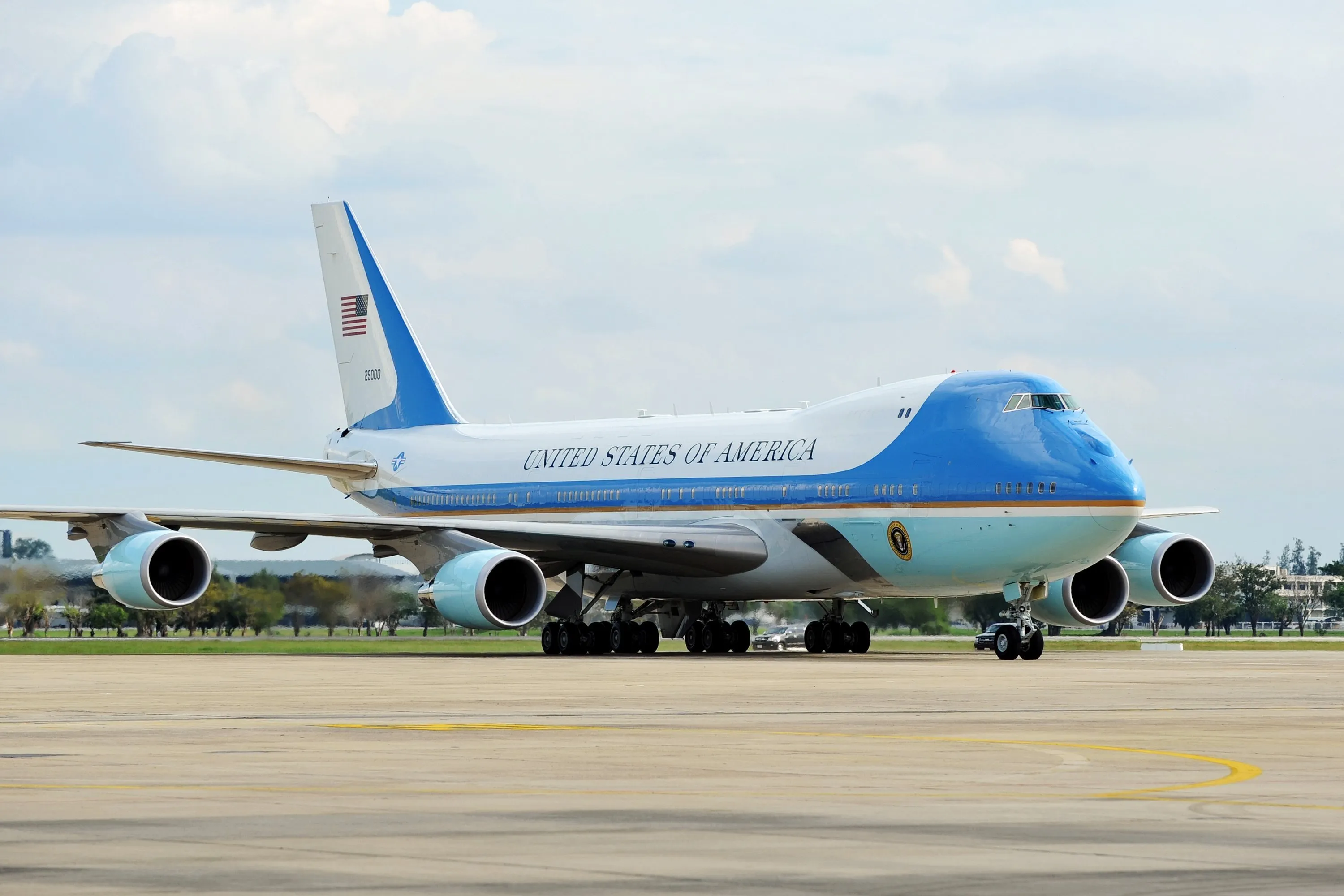
Boeing Takes Another $280 Million Air Force One Charge, Holds 2028 Delivery
Boeing recorded another $280 million charge on the VC-25B Air Force One replacement program, attributing the hit primarily to added production and certification resources. The company still expects to deliver the first of the two purpose-built presidential aircraft in 2028.

The charge is fresh evidence of the cost and execution burden still attached to the permanent replacement fleet. Although Boeing reported stronger second-quarter commercial-aircraft performance, the presidential-aircraft work continued to weigh on its results as more resources were assigned to building and certifying the highly modified jets.
The key word is “resources.” On a conventional commercial-aircraft program, production and certification are already demanding but largely repeatable once the design and manufacturing system mature. VC-25B is different: it combines a commercial widebody foundation with a specialized military mission, extensive modifications and a small production run of only two aircraft. That limits the benefits normally gained by spreading engineering and factory costs across many deliveries.
Adding production resources can mean Boeing is spending more effort to execute work at the required pace and standard. Adding certification resources points to the separate burden of demonstrating that the finished aircraft and its modified systems satisfy applicable requirements. The disclosed charge does not establish a particular technical failure or identify a new delay, and Boeing continues to hold the 2028 first-delivery forecast. It does show that maintaining that schedule is requiring more investment.
Why a presidential 747 is not a standard conversion
The VC-25B aircraft are intended to operate as flying presidential command centers, not merely long-range transports with premium interiors. That mission drives extensive integration work across aircraft systems, communications, power, environmental control and protective functions. Specific sensitive capabilities are not public, but the broad engineering challenge is clear: changes cannot be treated as isolated additions when they interact with the aircraft’s weight, electrical demand, cooling load, structural provisions and certification basis.
In such a program, installation is only part of the job. Boeing must also document the design, control the configuration, inspect production work and verify through analysis and testing that the integrated aircraft performs as required. A late change in one area can create additional work elsewhere, even when the underlying commercial platform is mature. That makes certification an ongoing design-and-evidence process rather than a final administrative step.
The two-aircraft scale intensifies the economics. Tooling, engineering, test planning and specialized labor remain necessary, but there is little fleet volume over which to amortize those costs. Bespoke equipment and tightly controlled modifications can also create production sequences unlike Boeing’s commercial lines. The result is a program where added labor or certification effort can become financially visible quickly.
The 2028 date remains the operational marker
Boeing’s continued 2028 forecast matters because the existing presidential fleet has carried presidents since 1990, while the replacements have already encountered substantial delays. Every additional year before delivery extends reliance on older aircraft and increases the importance of maintenance and interim transport planning. The new charge is therefore not just an accounting item; it reflects resources being applied to the fleet transition.
There is also a distinction between schedule confidence and schedule certainty. Holding the forecast means Boeing has not announced a further slip with this charge. It does not eliminate the remaining integration, test, certification and delivery work. For a highly modified aircraft, progress must be measured not only by physical assembly but by whether the supporting verification package closes at the same pace.
The Qatar-donated 747 now being used as an interim presidential transport illustrates the operational pressure created by the delay, but it is not a substitute for the VC-25B mission design. The administration plans to use that aircraft for an Ireland trip before approximately 60 days of additional work expected to begin in October. Officials have not detailed the modifications, and that temporary aircraft’s configuration should not be equated with the dedicated replacement fleet.
The immediate program test is now straightforward: Boeing must convert the extra production and certification spending into verifiable progress without moving the first delivery beyond 2028. The $280 million charge shows what preserving that date is currently costing.
| More aerospace and engineering stories, right in your MSN feed. Follow AMI on MSN |
By David Whitaker — Associate editor for AMI’s aerospace and drone systems desk, translating flight systems, aircraft programs, spaceflight, and UAV developments into accessible technical stories.