NASA Ends MAVEN Mission After Mars Orbiter Falls Silent
Generally, no spacecraft get tours going into the sunset! A single signal and it goes silent once again. By virtue of an anomaly near Mars, the final final for the Mars Atmosphere and Volatile Evolution orbiter, known as MAVEN, has come to NASA. MAVEN has now come to the end of its days after the anomaly near Mars, as NASA’s engineers concluded that the spacecraft could not be recovered. This decision influences more than just one mission log entry: MAVEN had been more than 11 years in the making and was designed to help paint a clearer picture of the Mars atmosphere’s rapid dissipation and how it helped warm and wet the planet billions of years ago.

Named for the late Carl Sagan, MAVEN was the first NASA mission to focus exclusively on the upper atmosphere and the escape of gases from Mars, launching in 2013 and arriving at the planet in 2014. It studied a fundamental question that had to be answered on Mars. Ancient rivers, minerals formed by water, and indications of climate help to describe an entirely different Mars billions of years back, but today Mars is cold, dry, and exposed. MAVEN aided in the link between the two images of Mars by demonstrating how solar activity slowly stripped away material from the planet’s atmosphere over time, which had no global magnetic field. The mission discovered that the Sun is an important influence on the loss from Mars’ atmosphere and found that the solar wind can penetrate to a greater depth in the atmosphere than had previously been thought.
As of before losing contact, the orbiter was in normal mode. Controllers had hoped to re-establish contact with MAVEN when it came around the corner behind Mars on Dec. 6, but this didn’t happen either. Subsequent examination of the Deep Space Network radio data showed that the spacecraft was probably placed in safe mode in which it started to spin very quickly, presumably having affected its previously known orbit and leading its batteries to quickly empty themselves of energy so that even the radio signals were no longer possible to maintain. The cause is never really established and so the end of the mission never really ends.
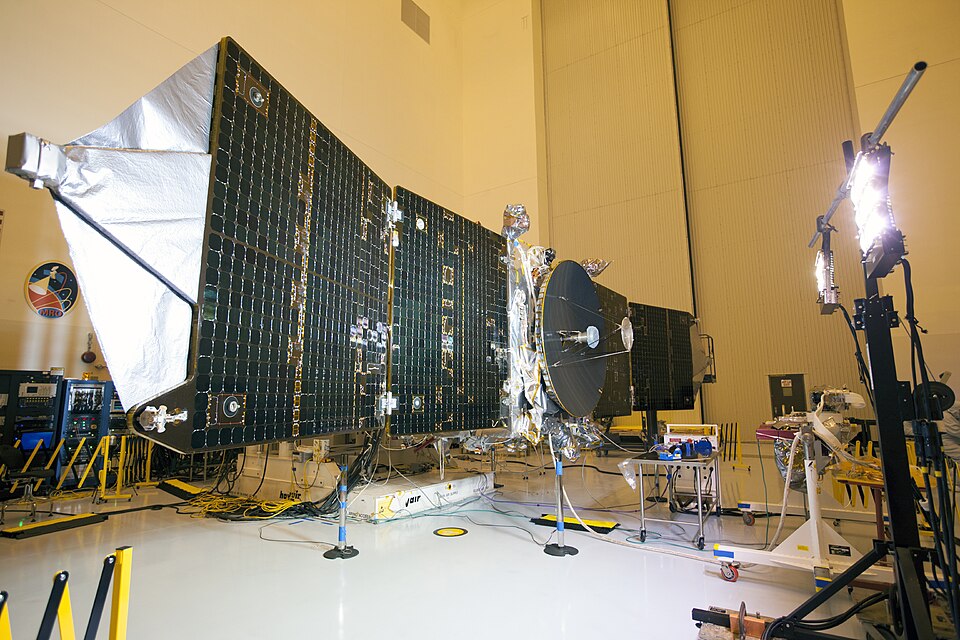
In addition to its name, MAVEN’s science thrust was comprehensive. It will image the Mars upper atmosphere and measure the composition of neutral particles and ions up to 400 km above the planet, as well as how the upper atmosphere varies with altitude, season and solar events to help the researchers understand the dynamics of the upper atmosphere. All other instruments were placed on booms, the body of the spacecraft, and an articulated payload platform that ensured that certain sensors always faced the planet. Those architecture enabled MAVEN to study what gases escape, look at the winds in the upper atmosphere, and monitor the effects of the Martian environment on dust, solar storms, and daily changes in temperature. Eventually the mission also returned data on the rates of oxygen, carbon, and hydrogen escaping from the atmosphere, directly connecting the atmospheric loss to the loss of carbon dioxide and water molecules.
MAVEN also turned out to be of significant practical value. It was used as a way to relay data from surface missions to bring back more data from rovers such as Curiosity and Perseverance. This support position carried the spacecraft over and above being a scientific platform to an infrastructure role in the exploration of Mars.
MAVEN’s survival strategy could be the most long-lasting: NASA has promised that the research mission’s entire data collection will be archived for later research. Despite the lack of fresh passes over Mars, the data it sent back while in orbit can still help researchers study the history of the planets’ climate, how the atmosphere escapes into space, and the radiation environment astronauts would encounter on a mission to Mars.