Russia Starts Building Su-75 Prototype, but $30 Million Price Remains Unproven
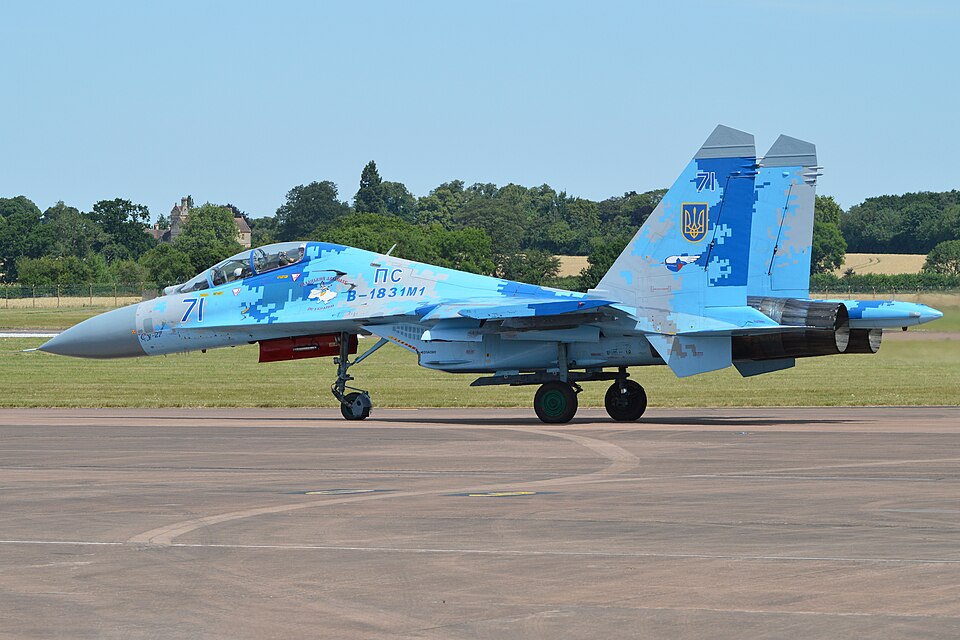
The Su-75 Checkmate now has a physical manufacturing milestone behind it, but not yet the evidence needed to support its unusually low price or advertised performance. Russia’s United Aircraft Corporation said on October 9 that the first prototype had entered construction, five years after the proposed single-engine stealth fighter was unveiled.

Chief executive Vadim Badeha described the aircraft as “already in the prototype construction phase.” That is tangible progress beyond a display model or digital design, but it does not mean the prototype is complete or approaching flight on a firm schedule. No official first-flight date accompanied the announcement, while Alexei Bogatyriov of the Safir Analytical Centre anticipates a flight sometime between late 2026 and 2027.
Construction establishes hardware, not performance
Building a prototype allows engineers to begin turning drawings, structural calculations and systems plans into an integrated aircraft. Manufacturing can expose problems involving component fit, tolerances, access for maintenance, wiring and plumbing routes, weight growth and the ability of suppliers to deliver flight-representative hardware.
Those are important development steps, particularly for an aircraft intended to combine a reduced radar signature with an internal weapons bay, active electronically scanned array radar, infrared sensors and a digital cockpit. Yet prototype construction alone cannot validate how those elements perform together in flight.
Rostec credits the proposed Su-75 with a maximum speed near Mach 2, supercruise, a 7,400-kilogram payload and a range of 2,900 to 3,000 kilometers without external fuel tanks. Those figures remain manufacturer targets because the program has no documented evaluation flights. A first flight would begin testing the aircraft’s aerodynamics, propulsion and basic systems; it would not verify the full flight envelope, sensor performance, reduced-signature characteristics, payload, range or reliability.
The scale of work that can follow an initial flight is illustrated by the F-35 program, without suggesting that the two aircraft or their programs are directly equivalent. The F-35’s developmental test phase accumulated more than 17,000 flight hours across 9,200 sorties and executed over 65,000 test points to verify its design, durability, software, sensors and performance, according to the F-35 Joint Program Office’s 2018 completion announcement. The comparison shows why getting airborne is an opening milestone rather than proof of production readiness.
The $30 million promise needs a production program
Rostec has estimated an export price of $25 million to $30 million, while Russian industry representatives have projected flight-hour costs of $5,000 to $7,000. They identify commonality with the twin-engine Su-57 as one source of savings, and both aircraft are intended to be assembled at Komsomolsk on Amur.
Neither estimate can be established from one prototype. A credible acquisition price depends on production volume, supplier contracts, labor requirements, tooling, test costs and how development expenses are distributed across an ordered fleet. Operating costs emerge later from fuel use, maintenance hours, component life, spare-parts demand and actual aircraft availability.
The lack of an order therefore weighs as heavily as the unfinished flight-test schedule. The Su-75 has no ordered production batch or confirmed launch customer, and the Russian Aerospace Forces have not announced a purchase. India has not committed to the Checkmate and is concentrating resources on its locally designed Advanced Medium Combat Aircraft program.
That leaves the Su-75 facing the difficult economics of an export-oriented fighter without a domestic fleet commitment to anchor production, training and support. Potential customers are buying more than an airframe: they need confidence in spare parts, maintenance documentation, pilot and technician training, software support and upgrades over decades of service.
Sanctions targeting Russia’s defense industry add another constraint by complicating access to some components, production equipment and international financing. Limited Su-57 production also makes the proposed savings from shared systems harder to judge until the Su-75’s supply chain and manufacturing rate are defined.
The prototype can begin closing the five-year gap between promotion and hardware. It cannot yet close the larger gap between a proposed $25 million to $30 million fighter and an aircraft that customers can fly, price, maintain and order. The next decisive milestone is a completed prototype entering a funded flight-test campaign not merely a projected first-flight window.
| More aerospace and engineering stories, right in your MSN feed. Follow AMI on MSN |
By David Whitaker — Associate editor for AMI’s aerospace and drone systems desk, translating flight systems, aircraft programs, spaceflight, and UAV developments into accessible technical stories.