Latvia Shoots Down Drone but Admits Border Defense and Radar Gaps
Latvia has successfully intercepted a drone entering from Belarus, but the incident also exposed the unfinished state of its border defenses. Defence Minister Raivis Melnis said the country still lacks sufficient anti-drone systems and radar coverage, while warheads for locally made interceptor drones purchased earlier remain under procurement.

The drone was shot down over the Balvi region after entering Latvian airspace from Belarus. Wreckage recovered in Balvi municipality is being examined by experts, and its origin has not been officially confirmed. An explanation that it may have been diverted by Russian electronic-warfare countermeasures also remains unconfirmed. Melnis said Latvia would continue intercepting drones that enter its territory to protect residents and property.
The successful shootdown therefore represents one completed defensive action, not proof of continuous coverage along Latvia’s eastern border. Border protection depends on a chain of capabilities: sensors must detect and track a small aircraft, information must reach command systems, authorities must classify the object, and an available countermeasure must be able to respond. A working element at one location cannot compensate for missing radar or anti-drone coverage elsewhere.
A border network needs more than interceptor aircraft
Latvia has stated that it plans to place domestically made equipment along its entire border with Russia and Belarus, with the end of September given as the deployment target. Melnis said officials were reviewing current conditions with the National Armed Forces to determine whether that plan required adjustments. The acknowledged shortage means the intended density of sensors and counter-drone systems had not yet been reached when the Balvi interception occurred.
This is the central engineering constraint in defending a long border. Interceptor drones are effectors the components intended to stop an aircraft but they require reliable detection, tracking and command links before they can be used as part of a broader system. Sparse sensor coverage can leave an advanced interceptor without timely information, while additional radar without enough response systems can produce awareness without a corresponding ability to act.
NATO’s Layered Counter-UAS Initiative illustrates the wider integration problem. Its experiments connect sensors, command-and-control nodes and counter-drone effectors from different manufacturers and countries. NATO describes the objective as creating cells that can detect, track and neutralize drones while sharing information with other systems. The testing has expanded from individual cells to multiple connected cells, including experimentation conducted in Latvia.
That model is relevant to Latvia’s border plan because geographic coverage and technical integration are separate requirements. Equipment must be distributed across the area being protected, but those components must also exchange usable information. Adding domestically produced hardware can improve coverage only if the sensors, command systems and response equipment function as a coordinated network rather than isolated installations.
Warhead procurement reveals a second readiness gap
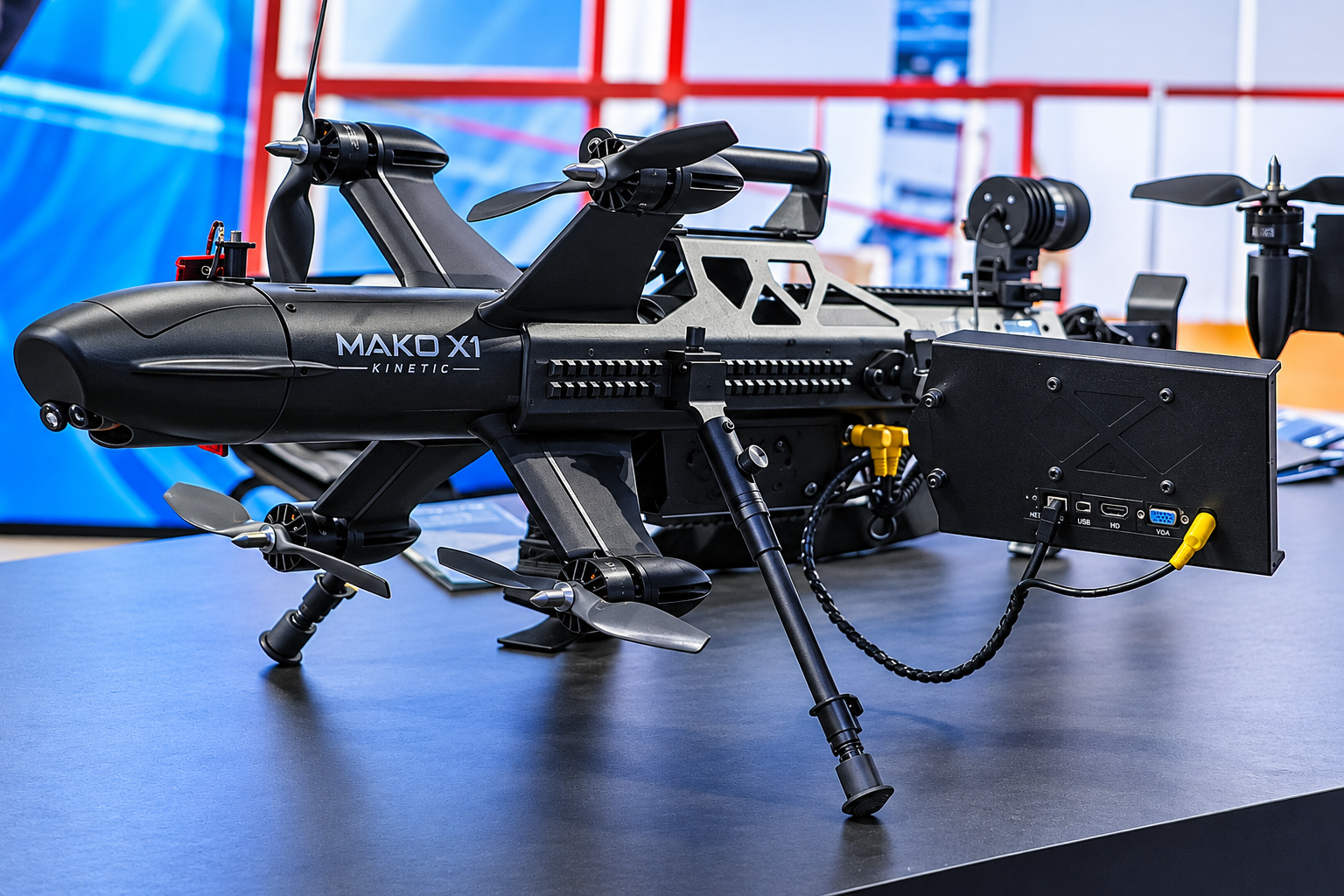
The Origin Robotics interceptors create another distinction between owning equipment and fielding a complete capability. According to Melnis, Latvia began purchasing and testing the Latvian company’s interceptor drones at the end of 2025. The initial purchases did not include explosive warheads; that requirement was added later, and procurement of industrially manufactured warheads is still underway.
Former Defence Minister Andris Sprūds said explosives must be added to integrate the interceptors fully into Latvia’s air-defense system. He identified two proposed supply paths: using explosives already held by the National Armed Forces and obtaining internationally supplied products meeting NATO standards. No completed warhead procurement was reported.
Melnis rejected the characterization of the purchasing sequence as negligence. He said it may instead have reflected insufficient discussion and understanding between the ministry and armed forces. Whatever the administrative explanation, the practical result is clear: an interceptor airframe purchased without its intended terminal payload is not yet the complete defensive capability officials described for integration into the air-defense network.
The sequence also creates testing, approval and supply considerations. A suitable payload must be procured through an industrial process and incorporated into a system that Latvia is still testing. Those steps sit alongside the separate task of deploying enough radar and anti-drone equipment across the border. Accelerating one component cannot automatically close gaps in the others.
Latvia’s immediate policy is to keep intercepting drones that enter its airspace, but its longer-term protection rests on completing the whole chain. The Balvi shootdown showed that Latvia can respond under some conditions; the admitted sensor shortage and unfinished warhead procurement show why full-border coverage remains a work in progress.
| More aerospace and engineering stories, right in your MSN feed. Follow AMI on MSN |
By Stephen Wallace — Editor for AMI’s aerospace integration and unmanned mobility coverage, focused on drone manufacturing, VTOL systems, autonomous networks, and air-ground mobility links.