Ukrainian Drone Strike Reportedly Leaves Samara Hub Burning Two Days, Briefly Halts Kazakh Crude
Kazakh crude was moving again, but the Russian oil hub receiving it was reportedly still burning. A reported Ukrainian drone strike on November 2 was followed by a second day of fire at the Samara Linear Production and Dispatching Station, temporarily stopping transportation through the cross-border Atyrau–Samara pipeline.
Kazakhstan’s Energy Ministry said pumping resumed after a technical inspection and that the pipeline was operating normally, according to Reuters. That restored an important route carrying Kazakh crude through Russia to international markets. It did not settle the condition of the broader Samara facility, where the precise damage and timetable for full restoration remained unknown.
The distinction between restarted transportation and complete recovery is central to understanding the incident. Pipeline flow is one measure of service, while the condition of storage tanks, transfer equipment and other parts of a dispatch station determines how much operational flexibility remains available. No verified assessment has established which systems were damaged or how much of the site’s capacity was unavailable.
A large junction carries more than one operational burden
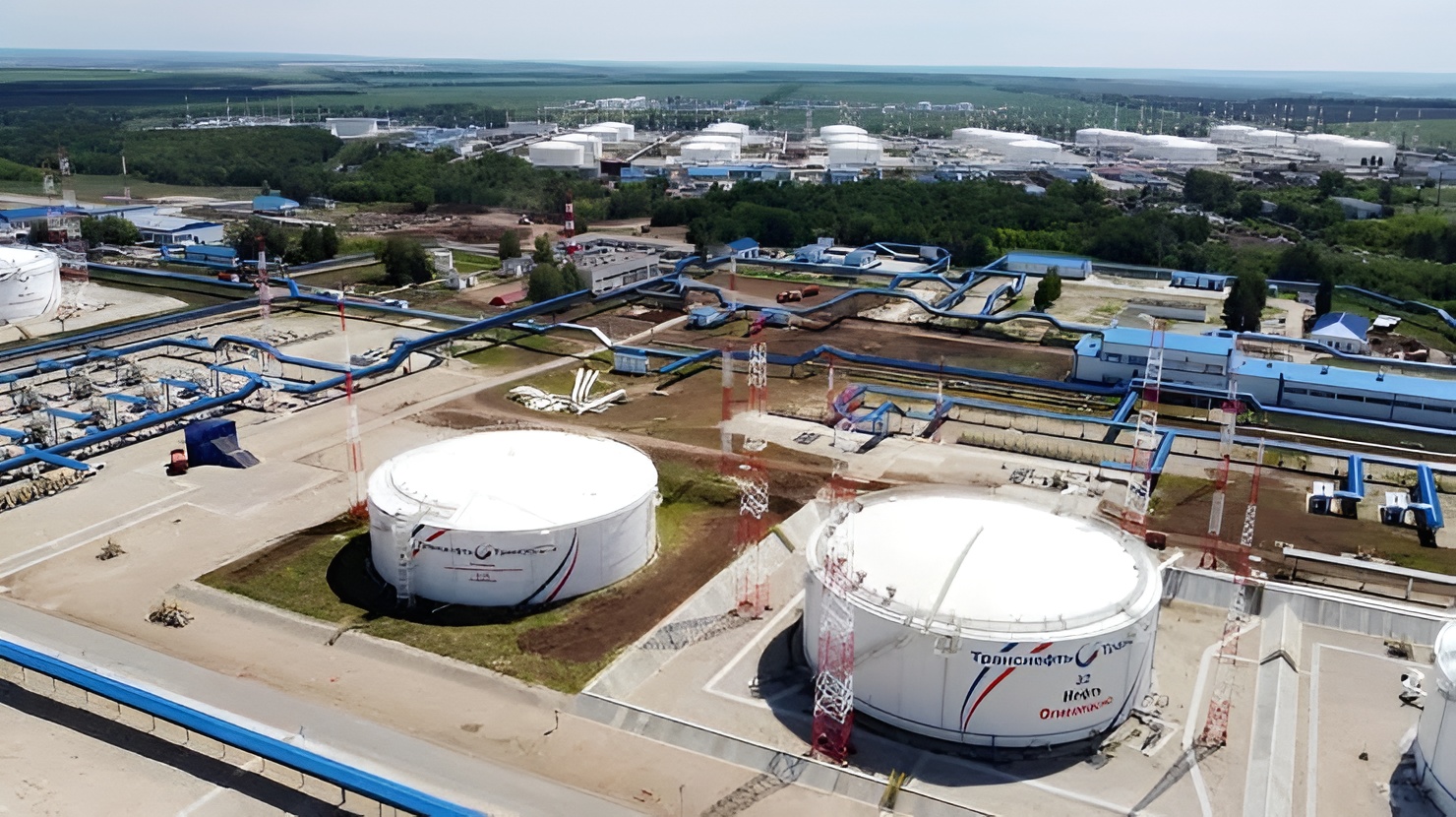
Owned by Transneft, the Samara station covers more than 216 hectares and contains 71 tanks with total stated capacity exceeding 1.6 million cubic meters of oil. Four main pipelines intersect there, allowing the site to receive, store and send crude onward.
Those figures explain why a temporary halt can matter even when pumping restarts relatively quickly. A storage and dispatch complex is more than a length of pipeline: it provides space and coordination between arriving and departing flows. Restoring one transit movement confirms that a usable operating path has been returned to service. It does not reveal the condition of every tank or establish that the station has regained its previous storage and routing flexibility.
The available information also does not quantify any lasting reduction in capacity. The reported fire affected a facility with 71 tanks, but the number of tanks damaged has not been officially specified. The site’s total stated storage capacity therefore describes its scale, not the amount of oil lost or taken offline.
Air defense success and infrastructure continuity are different measures
Samara regional governor Vyacheslav Fedorishchev said air defenses were operating and that the drone attack had been repelled, while providing no detailed account of damage to the oil infrastructure. A fire reportedly continuing into a second day shows why air-defense reporting alone cannot answer whether an industrial site maintained uninterrupted service.
For infrastructure operators, continuity is measured downstream of the defensive response: whether personnel can inspect equipment, whether pumping can safely restart and whether storage and dispatch functions remain available. In this case, the confirmed operational consequence was an overnight suspension of Kazakh oil transit followed by a restart after inspection. The unresolved issue is the station’s overall condition.
Reports of several attacks on Russian oil-sector sites between October 30 and November 2 also place sustained pressure on readiness without establishing the number, type or effectiveness of the drones involved. Repeated alerts can require air-defense coverage and industrial emergency response across multiple locations, but the available reporting does not support conclusions about launch capacity, interception rates or the long-term effect on Russia’s oil network.
The next meaningful update is a capacity assessment
Initial accounts attributed the incident to Ukrainian drones, while the regional governor confirmed a drone attack and said it had been repelled. The continuing fire and damaged tanks were reported through outside accounts and satellite detection; Russian authorities had not published a complete damage assessment.
That leaves three separate status indicators: Kazakh crude transportation resumed, a fire reportedly persisted for a second day, and full restoration remained without a public timetable. The next consequential milestone is not another confirmation that oil is flowing, but a verified account of how much storage and dispatch capacity the Samara hub can actually use after the fire.
| More aerospace and engineering stories, right in your MSN feed. Follow AMI on MSN |
By Stephen Wallace — Editor for AMI’s aerospace integration and unmanned mobility coverage, focused on drone manufacturing, VTOL systems, autonomous networks, and air-ground mobility links.