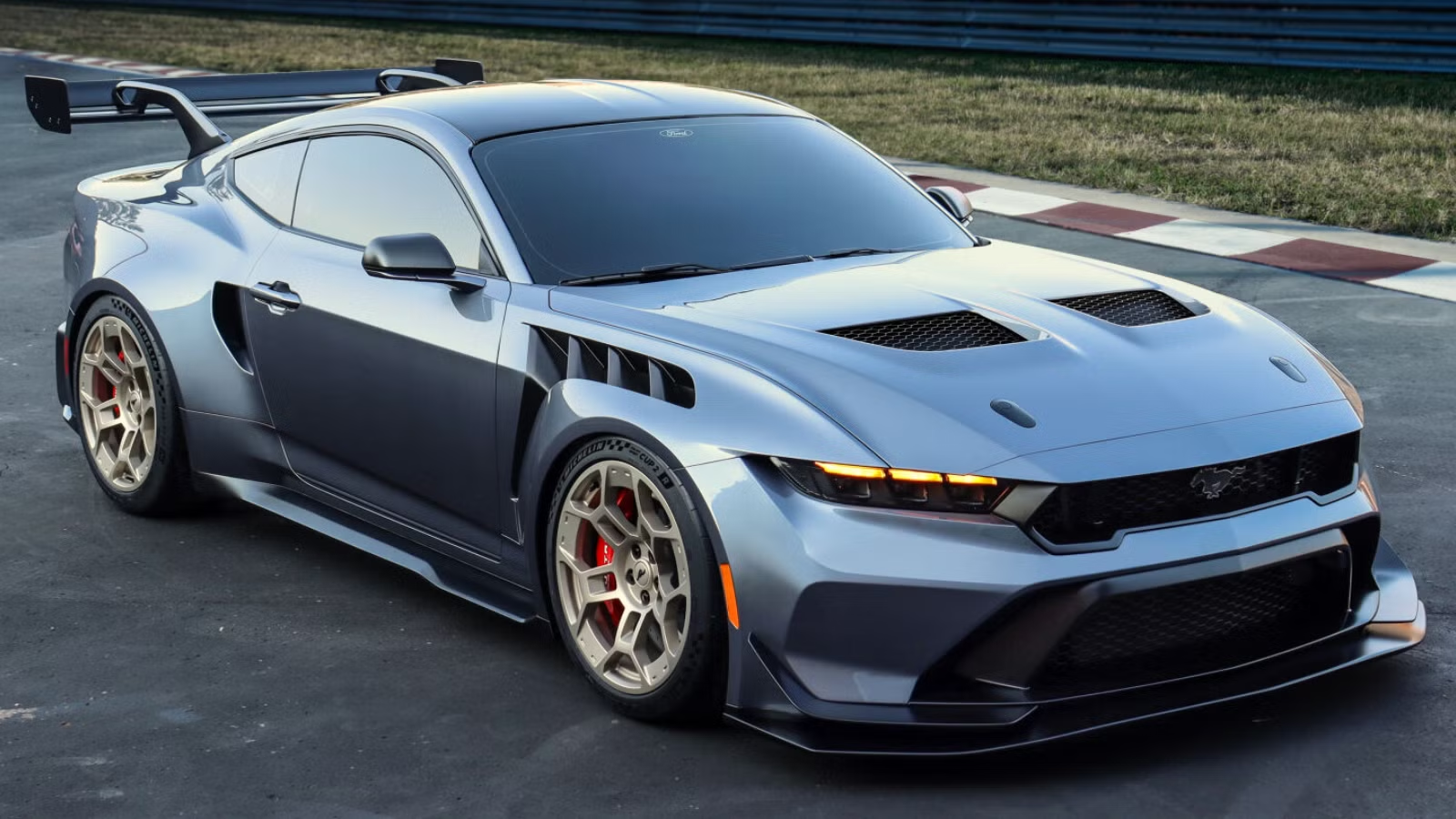
Fictional Mid-Engine Ford Mustang Would Demand a Costly New Supercar Platform
The fictional “Maranellostang” solves one appealing design problem by creating several expensive engineering ones. Its Ford Mustang-inspired body places the imagined engine behind the occupants, adds Ferrari-style hybrid assistance and adopts the proportions of a mid-engine supercar. Building such a vehicle, however, would require a new or extensively bespoke platform not a straightforward variation of the production Mustang.
The render is not an official Ford or Ferrari project. It combines a pony badge, broad nose, blacked-out grille and three-bar taillights with a low roof, short front overhang, prominent rear haunches, door-mounted air intakes and a glass-covered engine compartment. The result retains recognizable Mustang styling while discarding the front-engine layout that has defined the model since its April 1964 debut.
Moving the engine changes the entire structure
A production Mustang platform is organized around an engine ahead of the passenger compartment. Relocating a Coyote V8 behind the seats would change the major load paths, occupant space, suspension mounting requirements, cooling routes and crash structures. The long hood could remain as a styling reference, but it would no longer perform the same packaging role.
The rear structure would have to carry the engine, transmission and suspension loads while preserving an occupant safety cell. Engineers would also need to manage weight distribution and provide enough space for exhaust hardware, air induction, fuel storage and heat shielding. Door-mounted intakes and a glass engine cover may communicate the intended layout visually, but functional airflow would have to be developed around real thermal loads and aerodynamic pressures.
The transmission presents another fundamental break from the conventional Mustang formula. A rear-mounted Coyote V8 could not simply retain the familiar front-engine driveline. It would need adaptation for a transaxle an assembly combining transmission and final-drive functions near the driven axle. Packaging a dual-clutch unit, differential, driveshafts and suspension around a large V8 would make the rear of the car a tightly integrated system rather than a collection of easily transferred Mustang components.
Hybrid power adds performance and another thermal system
The Ferrari 296 GTB offers the conceptual template cited for the render: a mid-mounted, twin-turbocharged 3.0-liter V6 and electric motor producing a stated 819 horsepower through an eight-speed dual-clutch transmission. The imagined Ford-centered alternative would retain a Coyote V8 and add electric assistance, torque management and a dual-clutch transmission. A suggested 650 to 750 horsepower is only a hypothetical target, not a Ford specification.
Electrification would introduce a traction battery, electric motor, inverter, high-voltage cabling and control hardware alongside the V8. Each component would need a protected location, and the battery could not be treated as unused-space filler. Federal safety work addresses in-use operation, battery-fire mitigation and post-crash electrical safety; NHTSA’s Battery Safety Initiative also covers thermal runaway, vibration resistance and other battery risks.
Thermal management would be especially demanding because the vehicle would combine engine, transmission, power-electronics and battery heat in a compact package. A published high-performance plug-in hybrid packaging study found battery cooling important enough to model the complete vehicle and powertrain before sizing the pack’s liquid-cooling system. That illustrates why a few visible body intakes would not settle the issue: coolant circuits, pumps, heat exchangers and airflow paths would have to work together across road and high-load conditions.
Service access and cost would reshape the Mustang proposition
Once the engine sits beneath rear bodywork and next to hybrid equipment, routine access becomes more difficult. Technicians would need safe procedures and suitable access for both mechanical and high-voltage systems. NHTSA notes that electrified-vehicle service requires qualified personnel with specialized training and equipment. More tightly packaged components can also increase the labor needed to reach parts that are comparatively accessible in a front-engine car.
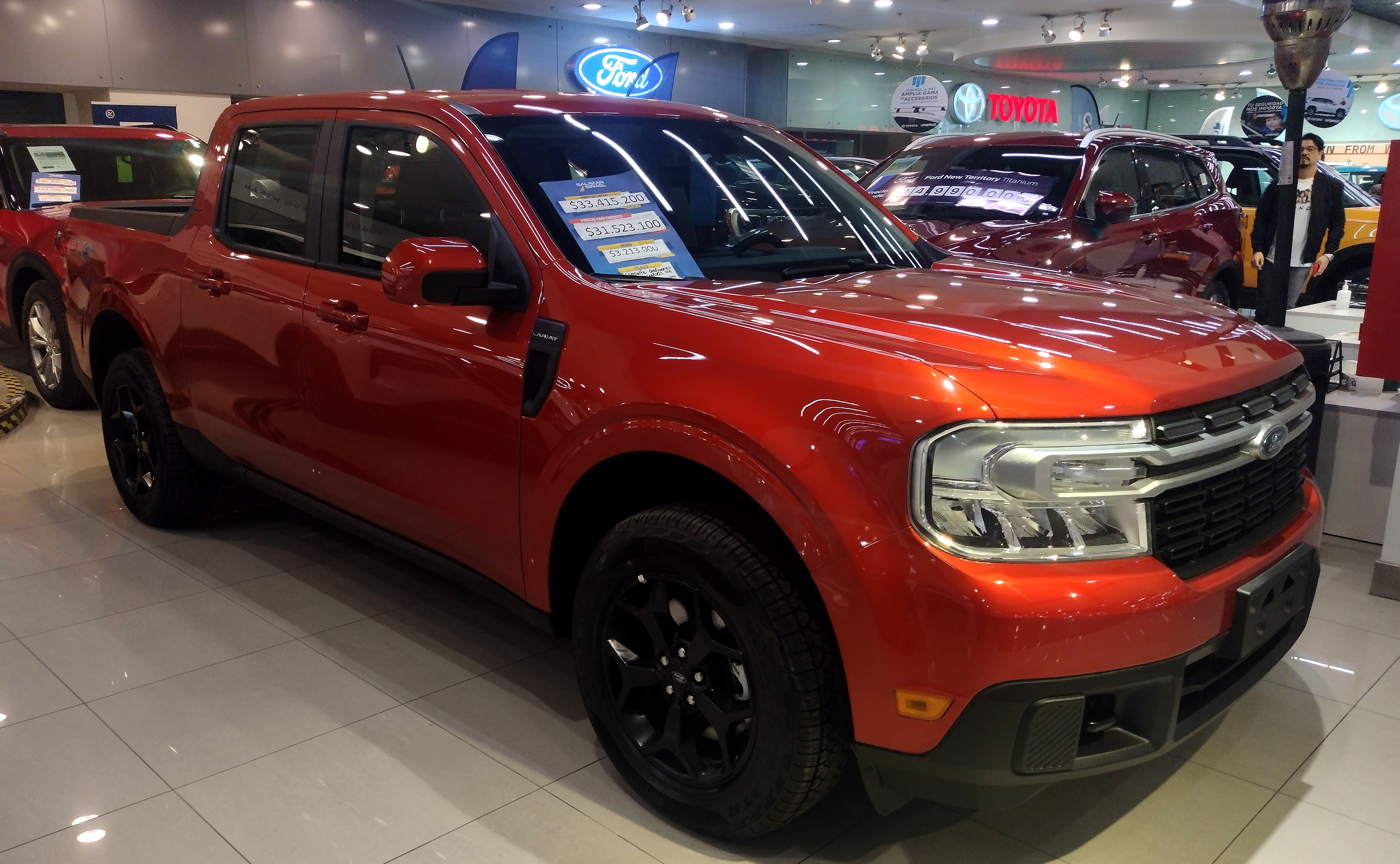
Ford already demonstrates that Mustang identity can stretch well beyond the ordinary GT. The source identifies the Mustang GTD at 815 horsepower, while the 2026 Mustang GT is listed at 480 horsepower or 486 with active exhaust and the Dark Horse at 500. Those figures show that exceptional output does not itself require abandoning the Mustang’s basic front-engine identity.
A mid-engine hybrid would purchase different capabilities at a much higher development cost. New crash validation, bespoke structures, specialized cooling, a compatible transaxle, battery integration and altered manufacturing processes would push the fictional car toward six-figure supercar territory, although no official price exists. It might retain Mustang lighting signatures and an engine family, but relatively little of the affordable, comparatively simple front-engine formula. Making the render real would therefore produce less a radical Mustang derivative than a clean-sheet supercar wearing Mustang cues.
| More aerospace and engineering stories, right in your MSN feed. Follow AMI on MSN |
By Thomas Caldwell — AMI’s senior editor for mechanical and mobility engineering, covering vehicle electronics, systems integration, electrification, chassis systems, propulsion, and safety policy.