NASA’s Swift Observatory Burns Up Over Sumatra After Nearly 22 Years
NASA’s 1,450-kilogram Neil Gehrels Swift Observatory has largely burned up over North Sumatra, ending a mission that operated for nearly 22 years despite being designed for just two. The U.S. Space Force confirmed that the spacecraft reentered Earth’s atmosphere at 7:39 a.m. Eastern time on November 4, or 7:39 p.m. Western Indonesia Time.

NASA expected most of Swift to be destroyed during atmospheric entry, although the agency said some components might have survived and reached the surface. No known injuries or damage were reported. The completed reentry closed a science mission that lasted almost 11 times its original two-year design target.
That comparison captures Swift’s unusual run more clearly than its age alone. Launched on November 20, 2004, the observatory was built primarily to detect gamma-ray bursts brief, immensely energetic cosmic explosions and then turn rapidly enough to study their fading aftermath. Instead of completing a short focused campaign, Swift remained productive across more than two decades of changing astronomical priorities.
A spacecraft built around speed
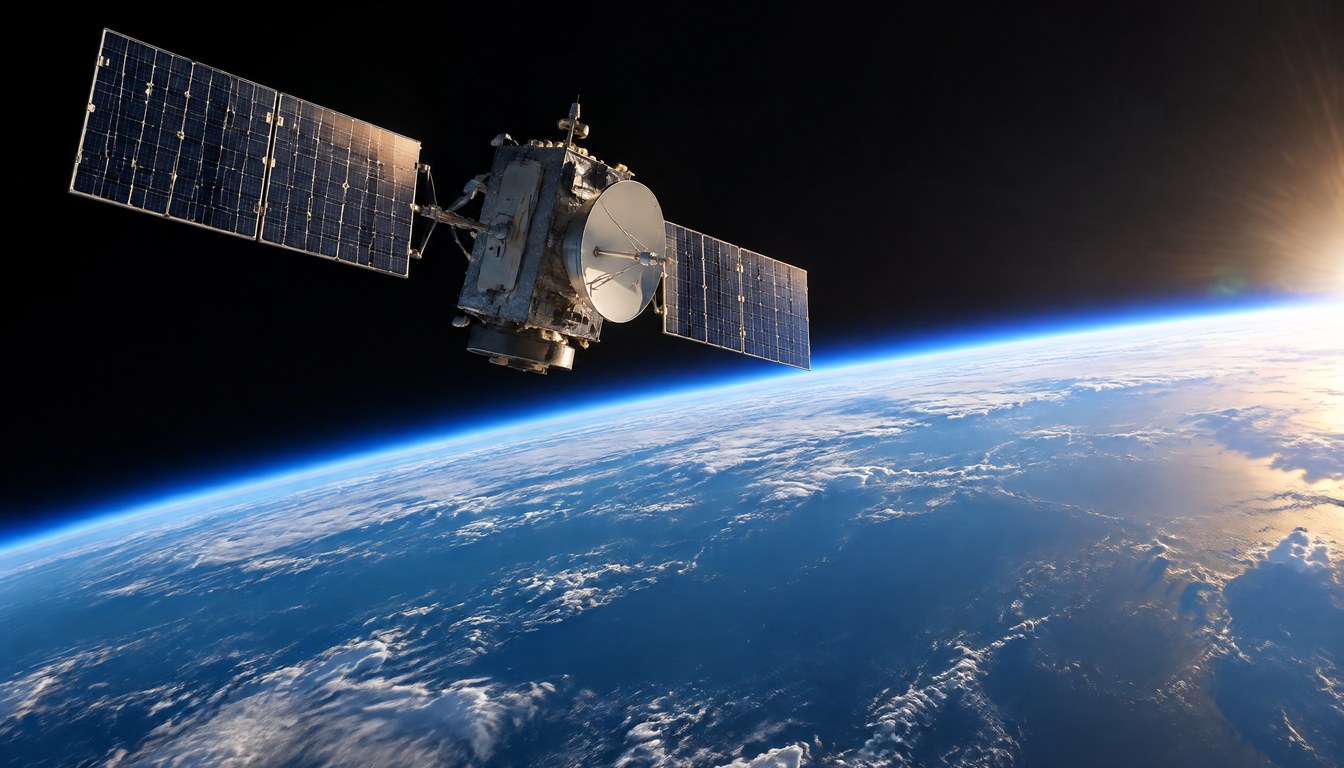
Swift carried three telescopes covering gamma rays, X-rays, ultraviolet light and visible light. The instruments were aligned so the spacecraft could detect a transient event, establish its position and swing the other telescopes toward it. NASA said the process typically took about a minute, fast enough to begin observing before an event’s afterglow faded beyond useful measurement.
That rapid response separated Swift from a conventional observatory scheduled mainly around long, predetermined viewing programs. Its planning system also allowed astronomers to request targets of opportunity from the ground within minutes, while longer monitoring campaigns could track a source over periods ranging from minutes to months. The system could schedule as many as 75 independent targets in a day.
The result was an observatory that outgrew its original gamma-ray-burst assignment. Swift observed more than 2,000 such bursts and over 1,400 supernovas, while also studying black holes, active galaxies, asteroids and comets. NASA estimates that its observations contributed to about 7,000 published scientific papers.
Its longevity did not depend on a late redesign or replacement spacecraft. The same observatory and its flight-and-science operations teams kept supporting observations well beyond the prime mission. Flexible scheduling helped Swift remain useful as new events appeared, while its ability to combine several wavelengths on one platform preserved a capability astronomers continued to request.
Atmospheric drag set the final limit
Swift’s end came from its declining low Earth orbit rather than the exhaustion of its scientific value. All spacecraft at that altitude encounter traces of the upper atmosphere, which create drag and gradually lower an orbit. Recent solar activity increased that effect on Swift, causing it to descend more quickly.
A high-risk, fast-turnaround servicing effort ended in August without an attempt to raise the observatory’s orbit. Swift subsequently resumed science work and observed hundreds of additional targets. That observing posture increased drag, however, and the spacecraft’s orbit continued to decay.
On October 20, Swift reached an altitude of 171 miles, or 275 kilometers. Atmospheric drag at that height prevented its telescopes from holding a sufficiently steady view of astronomical targets. The spacecraft entered safe mode, and its operations team sent a command ending operations in preparation for reentry. That made October 20 Swift’s final observation date, two weeks before its destruction over Indonesia.
The loss also removes a dedicated rapid-response platform from orbit. NASA is examining how existing space telescopes, commercial launch capabilities and possible future missions could cover parts of Swift’s role. No single replacement capability is identified in the available mission updates.
Swift’s physical hardware is now gone, apart from any components that may have survived reentry, but its scientific output remains available. The archive spans roughly 12 terabytes and includes nearly 22 years of brightness measurements, multiwavelength spectra and more than 1.5 million ultraviolet and optical images. A spacecraft planned for two years therefore leaves behind a dataset and an operational model for fast-response astronomy built over almost 22.
| More aerospace and engineering stories, right in your MSN feed. Follow AMI on MSN |
By David Whitaker — Associate editor for AMI’s aerospace and drone systems desk, translating flight systems, aircraft programs, spaceflight, and UAV developments into accessible technical stories.