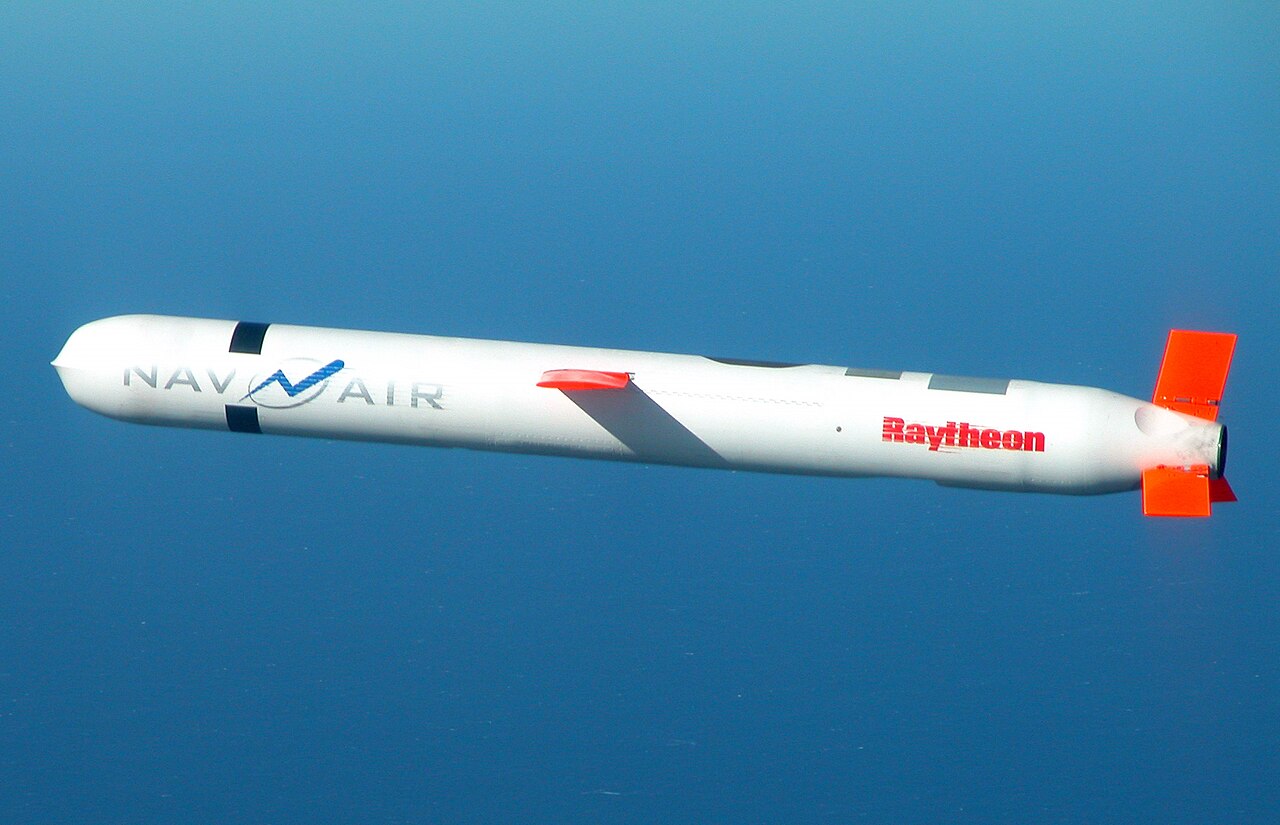
Navy Awards $22.9 Billion for Sixteenfold Raytheon Tomahawk Production Goal
More than 1,000 Tomahawks a year is the Navy’s objective. About 60 a year is the reported starting point. Its seven-year, $22.9 billion contract with Raytheon therefore asks the missile-production system to increase annual output more than sixteenfold.

The August award creates long-term demand, but it does not mean Raytheon is already producing at the target rate. No public schedule specifies when annual output must cross 1,000, and no year-by-year delivery plan has been released. The available information also does not establish how much of the contract’s total value was obligated at award.
Raytheon, an RTX business, said it delivered three times as many missiles during the first half of 2026 as in the comparable 2025 period. Without the underlying totals, that growth cannot be measured against the 1,000-plus annual objective. A tripling from a limited baseline could still leave most of the planned expansion ahead.
A factory expansion is only one part of the ramp
Raytheon President Phil Jasper said the company is investing in workers, technology, facilities and its supply chain. Those categories identify the major pieces of the production problem: hiring and training skilled labor, installing equipment, expanding qualified manufacturing processes and ensuring outside suppliers can deliver at matching rates.
Tomahawk work takes place in Tucson, Arizona; Huntsville, Alabama; and Andover, Massachusetts, with components coming from a broader nationwide network. Output can rise sustainably only if capacity advances across that network. More room at a final assembly site cannot compensate for a supplier still delivering specialized components at the previous rate.
A separate Navy agreement with L3Harris illustrates that dependency. L3Harris, which has supported Tomahawk production for more than 30 years, is expanding capacity for components used in the missile. The company did not disclose the agreement’s value or quantify its planned production increase, leaving the contribution of that supplier expansion unclear.
That uncertainty is typical of large production ramps. A prime contractor may have a public headline target while individual suppliers work under separate agreements, schedules and investment plans. Their machinery, labor and quality controls must mature early enough to prevent one constrained component from setting the pace for the entire line.
Seven years buys predictability, not immediate output
The contract’s duration is central to its industrial purpose. Suppliers are more likely to hire workers, add shifts and commit capital when demand extends across several years instead of arriving through isolated annual orders. The Navy used the same logic in its later Standard Missile-6 production award, describing a five-year agreement with two option years as a way to increase throughput, expand workforce capacity and secure supply chains.
Long-term visibility still cannot remove physical lead times. Facilities must be prepared, equipment installed and workers trained before completed output rises. Specialized suppliers may already serve several defense programs, creating competition for manufacturing talent, materials and production slots as the government simultaneously expands Patriot, Terminal High Altitude Area Defense and other missile lines.
For taxpayers, the important measure is not the contract’s ceiling alone but the relationship between annual spending, added industrial capacity and accepted missile deliveries. Public milestones would make that relationship easier to assess: intermediate production rates, dates for reaching them, supplier-capacity targets and the point at which the line is expected to exceed 1,000 missiles per year.
A broader replenishment problem
The production push follows concerns over munitions use and replacement during ongoing operations against Iran. A Congressional Research Service assessment cited the Defense Department inspector general’s finding that munitions expenditures had produced inventory shortfalls and exposed industrial bottlenecks requiring significant lead time to address. Exact public figures for specific weapons expended remain limited.
The Navy is also spending on missiles already in inventory. Raytheon received another $381 million in January to recertify and upgrade Tomahawks under an existing contract. Modernizing existing weapons and building new ones are distinct efforts, but both can draw upon engineering staff, facilities and supplier capacity.
The $22.9 billion award gives Raytheon and its suppliers an unusually large and durable demand signal. Execution will be measured by whether three production sites and a nationwide supplier base can move together from output counted in dozens to more than 1,000 Tomahawks every year a target for which the Navy has not yet published a completion date.
| More aerospace and engineering stories, right in your MSN feed. Follow AMI on MSN |
By David Whitaker — Associate editor for AMI’s aerospace and drone systems desk, translating flight systems, aircraft programs, spaceflight, and UAV developments into accessible technical stories.