Puerto Rico Flight Draws DHS’s $53 Million Gulfstream Into Cost Dispute
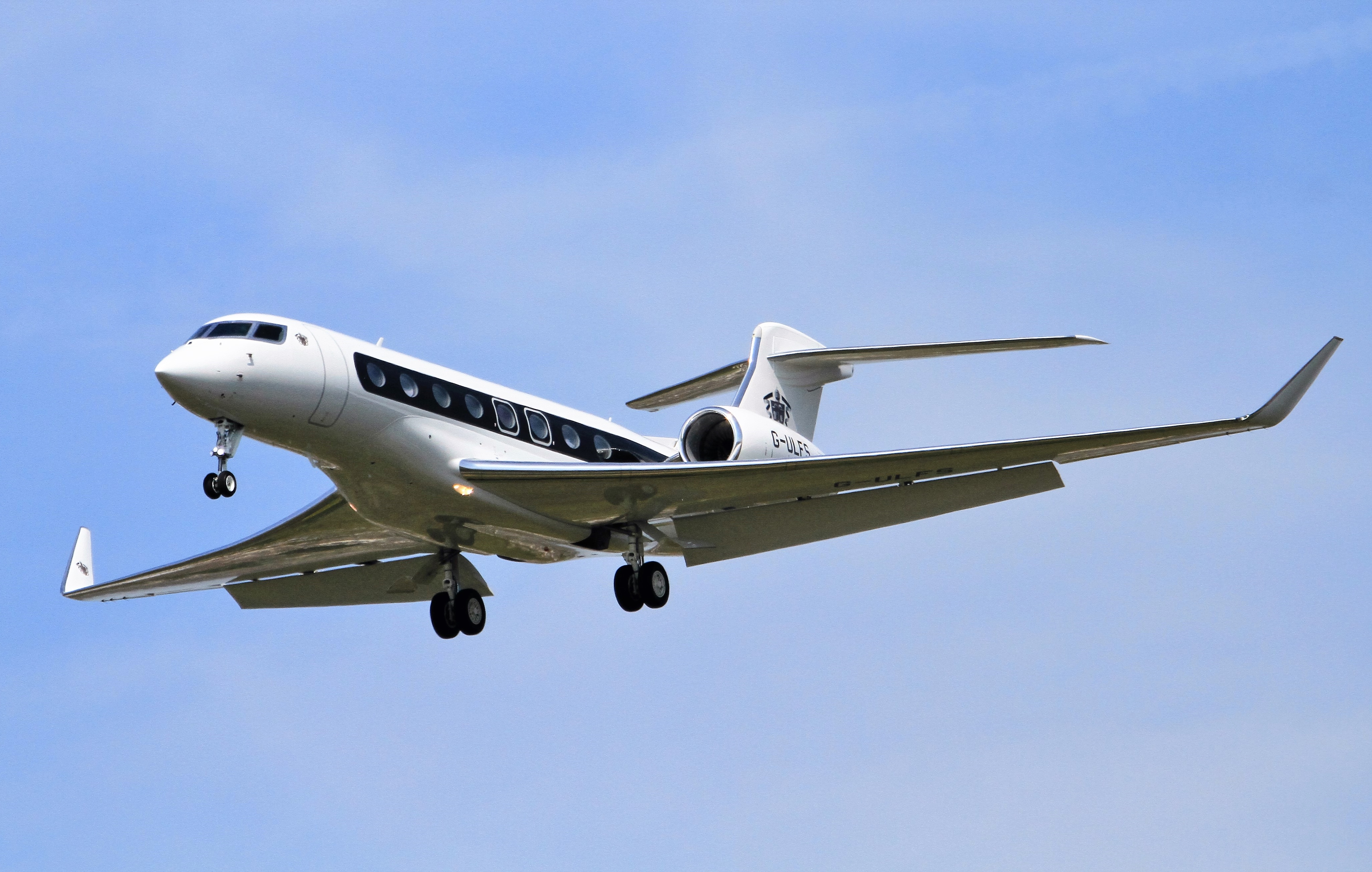
A flight from Washington to San Juan has placed a specific aircraft at the center of questions about the Department of Homeland Security’s $304 million purchase of five planes. Tracking data show Gulfstream G650 N472US making that trip on October 20, 2026, while government photographs show senior official Tom Homan leaving a similarly painted business jet in Puerto Rico. Its partially visible registration appeared to match, although DHS has not confirmed that the photographed aircraft was N472US.

The White House said Homan went to Puerto Rico “to do assessments of immigration and maritime border security efforts.” N472US flew from Puerto Rico to West Palm Beach the following day. DHS declined to confirm the aircraft’s location for security reasons, and White House spokesperson Lauren Bis said official travel arrangements follow established processes and security procedures.
Those facts support an apparent operational link, not a confirmed passenger manifest. Their importance lies in what the trip adds to the procurement record: one of DHS’s two recently acquired G650s appears to have entered the senior-official transport role that congressional overseers had described months earlier.
The aircraft record sharpens the price question
N472US is not an unidentified Gulfstream inferred solely from its paint. A registry-derived aircraft listing identifies N472US as a 2016 Gulfstream G650, serial number 6198, registered to the U.S. Department of Homeland Security. That makes the flight record directly relevant to the agency’s fleet, even though it does not conclusively identify the aircraft in the Puerto Rico photographs.
DHS purchased five aircraft from Daedalus Aviation for $304 million on March 24. The transaction included two G650s assigned a price of $53 million each. Senators Patty Murray and Chris Murphy alleged in an August oversight letter that each carried an $11 million markup over its previous price. They said one was leased to the FBI director for 12 months and the other was being retrofitted for Homan and additional DHS officials.
The apparent Puerto Rico mission is consistent with that stated role. It does not, by itself, validate the purchase price or establish that the government overpaid. The same aircraft listing gives a broad G650 price range of $27 million to $43 million by build year, but it also warns that engine time, total flight time, maintenance-program enrollment, damage history, installed equipment and complete records can materially alter an individual jet’s value. Its ranges are rough market guides, not an appraisal of N472US.
That distinction leaves the alleged markup dependent on transaction-specific documentation. A valid comparison would need to identify what the $53 million covered beyond the underlying airframe: inspections, maintenance status, communications or security equipment, cabin changes, spare parts, support, training and retrofit work could all affect the delivered cost. Without that breakdown, a previous sale price and a current acquisition price are not necessarily equivalent figures.
Utilization is only one part of the ownership case
The flight supplies a concrete example of use, but one Washington–San Juan trip cannot establish the demand needed to support ownership of two long-range business jets. The policy test is whether expected flight frequency, passenger demand, security constraints and scheduling requirements made purchasing more advantageous than leasing, chartering or obtaining aircraft through another agency.
Federal equipment-acquisition guidance calls for a case-by-case comparison of purchase, short- and long-term rental or lease, and interagency options. Relevant factors include how long and how extensively equipment will be used, recurring payments, maintenance and repair, servicing capability, obsolescence and possible use by other agencies. Federal aircraft acquisitions must also follow the applicable acquisition rules under government aircraft-management regulations.
For taxpayers, the tradeoff is between flexibility and fixed capacity. An owned aircraft can provide controlled availability for time-sensitive official travel, but it also creates continuing costs for crews, training, maintenance, storage and support when utilization is low. Charter or shared government lift can avoid some fixed expenses, although it may provide less scheduling control. The available flight data do not show annual hours, dispatch frequency, passenger loads or the cost of rejected alternatives.
A 2004 Government Accountability Office review of other federal aircraft programs explains why those missing figures matter. GAO described lifecycle analysis as encompassing acquisition, operation and maintenance over an aircraft’s useful life, and found weaknesses at that time in cost data and fleet planning. The historical findings do not establish current DHS noncompliance, but they provide a useful framework for evaluating this purchase.
Murray and Murphy requested purchasing records, flight logs and cost analyses while challenging the acquisition’s congressional authorization. Those records would separate four questions that one apparent trip cannot answer: what DHS bought for $53 million, why it selected a G650, how often the aircraft is used and whether ownership costs less than the available alternatives. The Puerto Rico flight gives N472US an apparent mission; DHS still has not publicly connected that mission to the fleet size, price and acquisition authority under review.
| More aerospace and engineering stories, right in your MSN feed. Follow AMI on MSN |
By Thomas Caldwell — AMI’s senior editor for mechanical and mobility engineering, covering vehicle electronics, systems integration, electrification, chassis systems, propulsion, and safety policy.