SpaceX Seeks 100 Starship Launches, 200 Landings Under Federal Review
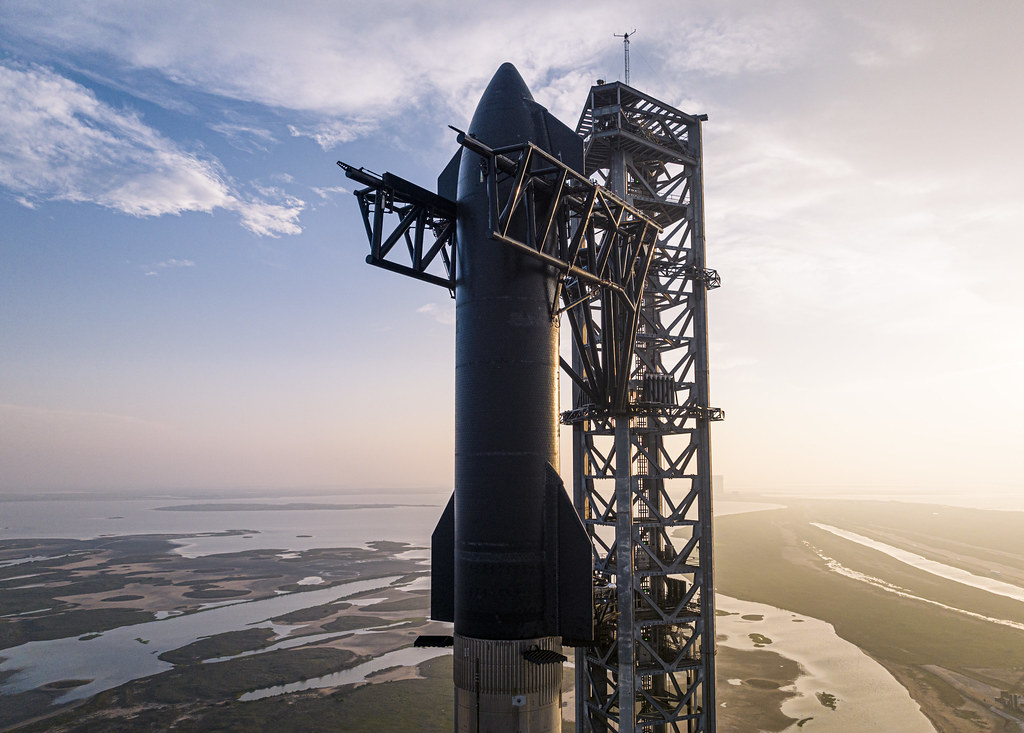
SpaceX wants federal authorization for up to 100 Starship launches and 200 landings annually from Starbase, its rocket development complex near Boca Chica, Texas. The Federal Aviation Administration initiated a new environmental review of the proposed expansion in October 2026, leaving both the operating scale and its timing unresolved. The agency outlines its broader oversight of the Boca Chica project on its Starship environmental-review page.

The numbers would represent a sharp step beyond the operating level previously evaluated and approved at Starbase. An earlier FAA decision covered up to 25 orbital launches per year, along with as many as 25 Starship landings and 25 Super Heavy booster landings. SpaceX’s new request would quadruple that annual launch ceiling and raise total landings from as many as 50 to 200.
High cadence is part of the reusable-rocket design
For a reusable vehicle, flight frequency is more than a scheduling target. Each mission can provide engineering data on ascent, atmospheric return, recovery, refurbishment and preparation for another flight. A higher cadence can give design and operations teams more opportunities to identify recurring maintenance demands, adjust hardware and refine ground procedures.
Frequent operation is also central to the economic argument for reusability. Development facilities, launch infrastructure and specialized workforces carry substantial fixed costs whether a rocket flies occasionally or regularly. Spreading those costs across more missions can improve the economics of transporting payloads, provided recovered hardware can be returned to service without excessive inspection, repair or replacement work.
Authorization for 100 launches would establish capacity, however, rather than guarantee 100 completed missions. Actual cadence would still depend on vehicle availability, successful testing, payload demand, launch-site turnaround and individual licensing conditions. A nominal average of nearly two launches per week would also require Starbase to function less like an intermittent test range and more like a sustained transportation and maintenance system.
That distinction exposes the engineering challenge behind the request. Reuse delivers its largest operational benefit when the vehicle, launch mount, landing systems and support equipment can all be cycled predictably. A reusable rocket waiting on lengthy refurbishment or ground-system repairs does not produce high cadence merely because regulators have allowed more flights.
The review covers more than a flight count
The FAA’s licensing process evaluates potential environmental effects alongside public safety, national-security or foreign-policy concerns, insurance and financial-responsibility requirements. Environmental review therefore addresses one major part of the proposed expansion, but its completion would not automatically entitle SpaceX to conduct every operation in the request. The company would also need the appropriate vehicle-operator license or license modification and would remain subject to its conditions and limitations.
For communities around Starbase, the practical issue is the cumulative operating level, not just whether one additional launch is acceptable. Moving from an authorized ceiling of 25 launches to a proposed 100 would mean substantially more launch and landing activity around the South Texas site. The review provides the federal process for evaluating that broader footprint and considering public input before the operating limit changes.
The affected interests are not identical. SpaceX and prospective commercial-space users could benefit from more test opportunities and greater transportation capacity. Local residents would experience the direct consequences of increased site activity, while federal regulators must balance commercial-launch development with environmental and public-safety responsibilities.
SpaceX has also identified a subsequent phase that could eventually reach 456 launches and 912 landings per year. That larger figure has not been authorized either, and it underscores how far the company’s long-range operating concept extends beyond today’s approved level.
The immediate decision is narrower but still consequential: whether Starbase can move from 25 authorized annual launches toward a requested 100. Until the FAA completes its review and acts on the necessary licensing changes, SpaceX’s proposed cadence remains an operating plan rather than an approved launch schedule.
| More aerospace and engineering stories, right in your MSN feed. Follow AMI on MSN |
By David Whitaker — Associate editor for AMI’s aerospace and drone systems desk, translating flight systems, aircraft programs, spaceflight, and UAV developments into accessible technical stories.