Voyager 1 Sacrifices a Science Tool as Power Runs Critically Low
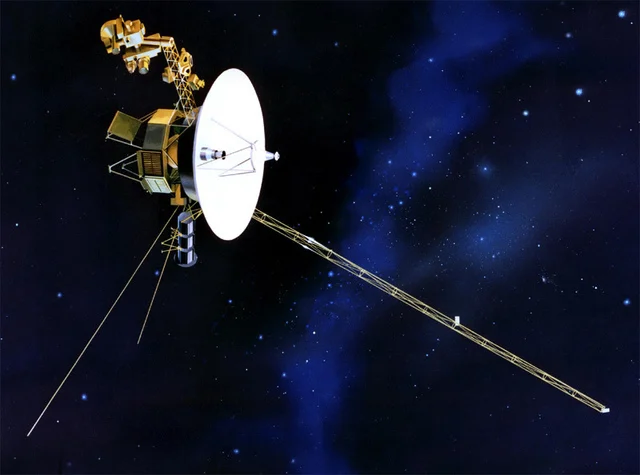
How does a space mission cope with its inability to stay alive unless giving up part of its scientific goals? Such an option is presented by the Voyager 1 spacecraft, the farthest man-made object from Earth, which is operated by NASA while trying to cut back energy consumption and thus preserve its operations in interstellar space. The scientists had to turn off the Low Energy Charged Particles experiment (LECP) after an unexpected decrease in energy during a routine roll maneuver put the equipment at risk of initiating its protective system. Given the distance of the spacecraft located at 15 billion miles away from our planet, such a procedure is both complicated and risky.

It should be noted that LECP has to be disabled mainly due to the location of the mission at the point where any other active device is unable to collect similar information. Indeed, Voyager 1 and Voyager 2 remain the only missions exploring the environment beyond the heliosphere created by solar particles emitted by the Sun. Therefore, the readings collected there can reveal a unique set of features characteristic of the interstellar medium, in particular, density and pressure variations.
In this case, the instrument has been collecting relevant information continuously since the launch, measuring ions, electrons, and cosmic rays coming from both the solar system and outside the Milky Way. According to NASA, the information obtained with the help of LECP has allowed for learning much about the structure of interstellar space. However, in 2026, the energy margin became insufficient to maintain the operation of all systems simultaneously. Thus, the rotation motor of LECP consuming 0.5 watts of energy per second has remained operational so as to reactivate the device if necessary.
The main problem associated with energy consumption arises because of the old-fashioned method of power generation used onboard Voyager 1. More specifically, radioisotope thermoelectric generators operate without any moving components and transform thermal energy emitted by plutonium decay into electricity. Such an approach has been beneficial in terms of longevity; however, it causes an unrecoverable reduction of power over time.
In this connection, according to the data provided by NASA, both Voyagers lose 4 watts annually, meaning that scientists have to turn off heaters and disable various instruments. Still, they have to preserve the proper temperature to ensure the operation of crucial equipment. “While shutting down a science instrument is not anybody’s preference, it is the best option available.” “Voyager 1 still has two remaining operating science instruments one that listens to plasma waves and one that measures magnetic fields. They are still working great, sending “critical data” from a region of space no other human-made craft has ever explored.”
As NASA plans further reductions in energy consumption of both Voyagers by implementing what was called the Big Bang a series of simultaneous changes involving multiple switches from high to low-power components, the scientists expect LECP shutdown will provide about a year of additional time for testing the project. Considering that Voyager 1 has already been operating for more than 48 years and has not finished collecting useful data yet, its continued functioning requires some sacrifices.