Why One SR-71 Crew Refused to Eject From a Burning Blackbird
In addition, the inlet system of the aircraft allowed it to develop 55% of its maximum thrust during Mach 3 cruise speed, indicating that the Blackbird was not only incredibly fast but also quite mechanically complicated. These factors can help explain the case of a very revealing flight test of the aircraft in July 1968. Colonel Richard “Butch” Sheffield was serving as a reconnaissance systems officer of Ben Bowles on board the aircraft that turned into a struggle for systems management. According to Sheffield, the aircraft was cruising at a speed of Mach 2.88 and an altitude of 68,000 feet above Oklahoma. In this case, catastrophic failure occurred on the right engine of the SR-71.

This information might be important to consider because in the SR-71 aircraft, problems with the engine led to multiple complications. For example, in this particular plane, the propulsion system, inlet performance, fuel heating, loading, and controllability were intricately intertwined and thus, a serious malfunction could result in many different types of complications.
It is possible to notice that Sheffield described the situation in a rather blunt manner: “We were at Mach 2.88 and 68,000 feet over Oklahoma when the right engine suffered catastrophic failure.” The pilot of the aircraft mentioned that the plane became uncontrollable and that he could see the fire in the right engine even when the fuel had been turned off. When the pilot asked whether he should eject from the plane, Sheffield answered no.
However, such answer can seem reckless if one remembers that the SR-71 had a very complex ejection procedure that was developed for operation in extreme cases when the height above the ground exceeded 80,000 feet. Crew members wore special full-pressure suits that enabled them to stay alive under such difficult conditions. However, even such a possibility did not make an escape process less dangerous. The matter is that Sheffield had to perform ejections before and claimed that his back still hurt because of the last escape attempt. Thus, it is possible to understand that physical experience had a critical impact on his decisions.
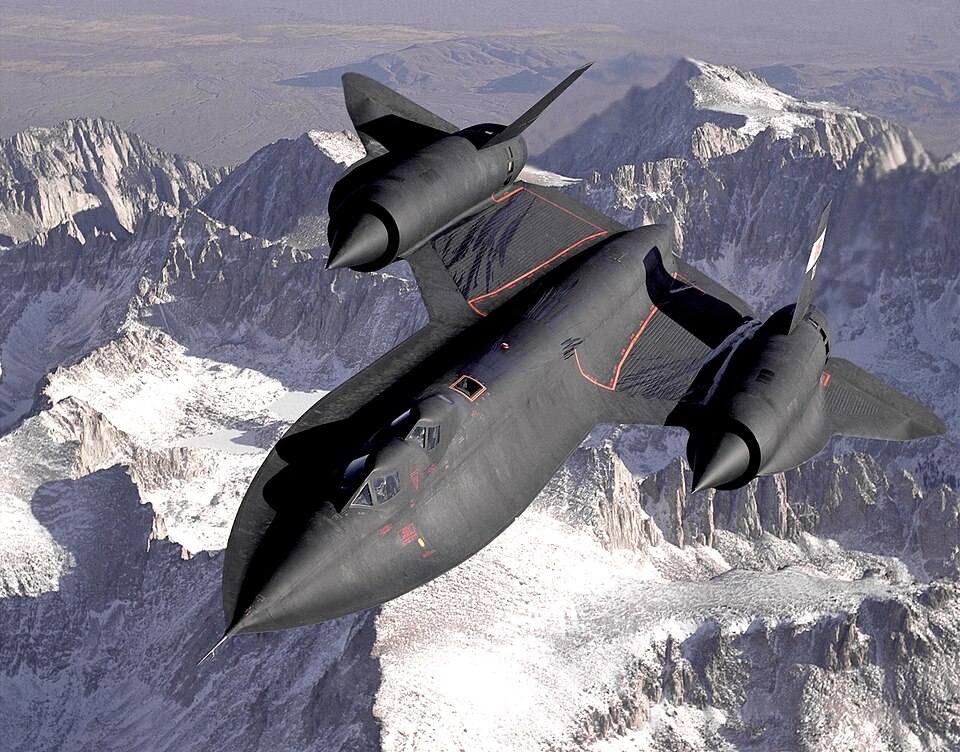
In addition, it is necessary to mention that the SR-71 aircraft operated very close to its engineering capabilities. Its 93%-titanium airframe expanded by almost 12 inches during flight while the aircraft’s fuel tanks sealed when they were heated. At the same time, the aircraft used JP-7 fuel as a coolant of both the airframe and onboard devices prior to combustion. The aircraft became famous precisely due to its exceptional capability to operate at Mach 3 speed. However, the use of such a strategy meant that fire in any part of the wing near the root could cause destruction of the airframe and fuel supply to the engine.
As the author mentioned, “bucking like a bronco,” the crew had to struggle with various issues including engine fire and engine failure, hydraulics, generator, descent, and other situations. Moreover, the pilot was using the checklist belonging to another crew member who was a left-handed person. This information gives an idea about the initial operations with the Blackbird aircraft that despite being extremely advanced still demanded manual intervention in many situations.
As for recovery, the crew decided to choose Carswell Air Force Base for landing. To check whether there was a flame, they performed a low-pass maneuver and were informed that no flame had been noticed. Then Bowles successfully landed. Only afterwards, it became clear how significant the damage had been. Later, Kelly Johnson stated that it had been the only Blackbird that ever flew in a structurally compromised condition, requiring six months of repairs.
Interestingly, the landing caused another misunderstanding. The leaking fuel attracted attention from the firefighters who did not know how common this phenomenon was in the SR-71 aircraft. Thus, it is possible to conclude that the episode demonstrates several reasons why the Blackbird still stands out today.