Vast’s Satellite Push Signals a Bigger Fight Over Low Earth Orbit
However, these categories cannot always divide companies working in space commercially nowadays. This is evident in Vast’s recent developments. Since its foundation, Vast has been focused on one grandiose idea developing privately funded space stations that will replace the International Space Station once it stops functioning. Such stations are indeed included in NASA’s overall vision of future space endeavors, and various companies have started to develop the appropriate equipment. However, this time, Vast decided to enter another market by introducing a new class of satellite buses.

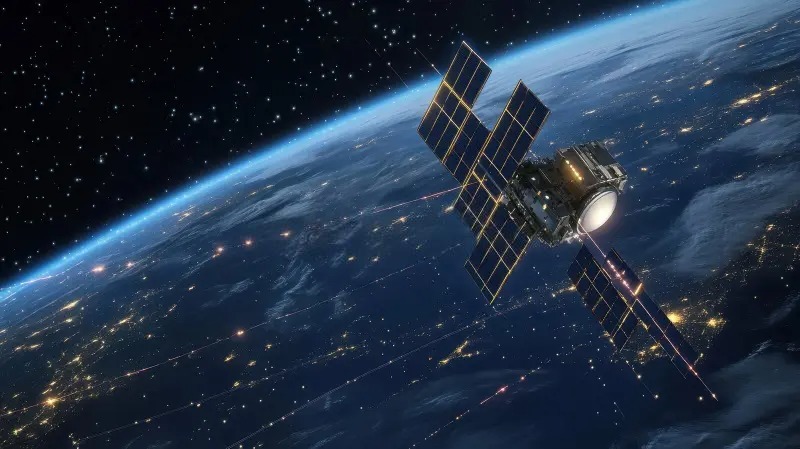
These new vehicles will be used to transport communication, earth observation, national security applications, and orbital computing solutions into orbit. In particular, Vast announced a 15-kilowatt-class satellite bus which is supposed to be introduced as soon as 2027 with the number of launches amounting to ten. Based on current publications and descriptions, this spacecraft will have a dry mass of 700 kg, will be able to support payloads weighing more than 350 kg, and will initially operate in low earth orbits.
The decision to introduce these spacecraft was dictated by several factors. In particular, the current market tends to rely extensively on radar imaging, broadband payloads, electric propulsion, and onboard data processing. All these elements require significant amounts of energy, thus rendering some of the traditional satellite designs obsolete. According to SpaceNews, Vast intends to introduce a vehicle with more than 500 m/s of delta-v through electric propulsion and offer an alternative model using Nvidia’s Vera Rubin Space-1 for AI computing tasks and other data center-related purposes.
In this context, it becomes evident why a new bus can be considered an essential component for the Vast ecosystem. The company claims that the same set of technologies developed and implemented on its stations can also find application in this case. Haven Demo was previously presented as a precursor of stations yet to come; however, it should be mentioned that the vehicle was used to prove that the company could deliver the required level of engineering capabilities. Consequently, a second revenue stream might emerge from the same projects as the satellite buses can reuse existing propulsion, power, and avionics.
From this perspective, Haven Demo serves as a proof of concept in two ways: one might argue that the spacecraft helped to establish the foundation of a second product line. While the International Space Station is still a unique achievement, the post-IS era will include multiple private stations. Developing such facilities will require reliable engineering capabilities, supply chain management, and numerous launches to be performed. However, building satellites allows Vast to exercise these skills and gain additional revenue.
This fact can become even more obvious based on the current progress the company mentioned that it received a commitment from a confidential client to launch four satellites with additional options. For a firm mostly known for its space stations, this information is more important since low earth orbit appears to become an infrastructure business.