NASA Pushes ESCAPADE Mars Launch to 2025
Blue Origin’s towering New Glenn rocket, a partially reusable heavy-lift vehicle designed to compete in the high-stakes orbital launch market, will not make its debut in October 2024 as originally planned. The mission in question—NASA’s twin ESCAPADE probes bound for Mars—was slated to lift off from Launch Complex 36 at Cape Canaveral Space Force Station during an eight-day window opening on October 13. That schedule has now been set aside.

NASA announced the change following a comprehensive review involving Blue Origin, the Federal Aviation Administration, Space Launch Delta 45 Range Safety Organization, NASA’s Launch Services Program, and the Science Mission Directorate. “The decision was made to avoid significant cost, schedule and technical challenges associated with potentially removing fuel from the spacecraft in the event of a launch delay, which could be caused by a number of factors,” officials stated. Such defueling operations can be complex, especially for interplanetary spacecraft that carry specialized propellants and require precise thermal and contamination controls.
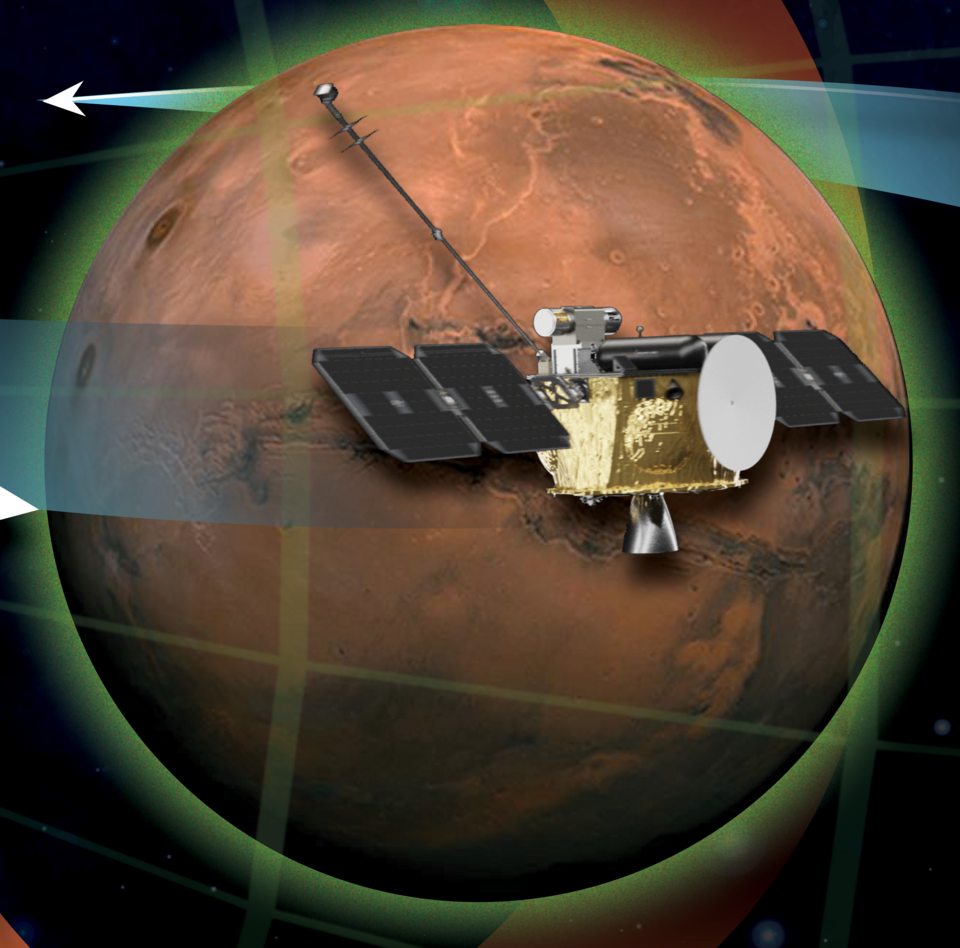
ESCAPADE—short for Escape and Plasma Acceleration and Dynamics Explorers—comprises two identical spacecraft named Blue and Gold. Their mission is to study Mars’ magnetosphere and atmospheric interactions with solar wind, a key factor in understanding how the planet’s climate evolved over billions of years. The probes will measure charged particle flows, magnetic field variations, and the dynamics of plasma escaping from the Martian atmosphere. This data will help scientists assess how space weather affects planetary environments, knowledge critical for future crewed missions beyond Earth.
The original launch date was aligned with a favorable Earth-Mars geometry that occurs roughly every 26 months, enabling efficient transfer trajectories. NASA’s updated plan now targets spring 2025 for the earliest possible launch opportunity. While that may seem unexpectedly soon given the orbital mechanics involved, the agency has not disclosed the exact trajectory adjustments under consideration.
Blue Origin, led by Amazon founder Jeff Bezos, is pressing ahead with New Glenn’s flight schedule despite the ESCAPADE delay. The company confirmed it will advance the rocket’s second flight—originally planned for December—into November 2024. That mission will carry Blue Ring technology and serve as New Glenn’s first National Security Space Launch certification flight. “We plan to move up New Glenn’s second flight, originally scheduled for December, into November. New Glenn will carry Blue Ring technology and mark our first National Security Space Launch certification flight. We’ll provide more details on these launch plans in the coming weeks,” the company stated via X.
Blue Ring is Blue Origin’s new spacecraft platform designed for in-space logistics and delivery. According to the company, it offers end-to-end services including payload hosting, orbital transportation, refueling, data relay, and logistics support, along with an in-space cloud computing capability. Such platforms are increasingly important for sustaining complex missions, enabling satellite servicing, and extending operational lifetimes in orbit.
The ESCAPADE mission carries a price tag of $80 million and remains a priority for NASA’s planetary science program. Nicky Fox, associate administrator for science at NASA Headquarters, emphasized its significance: “This mission can help us study the atmosphere at Mars — key information as we explore farther and farther into our solar system and need to protect astronauts and spacecraft from space weather. We’re committed to seeing ESCAPADE safely into space, and I look forward to seeing it off the ground and on its trip to Mars.”
New Glenn’s development represents a major milestone in U.S. commercial launch capabilities. Standing over 95 meters tall and designed with a reusable first stage, it is engineered to deliver payloads exceeding 45 metric tons to low Earth orbit. The vehicle’s success could reshape competitive dynamics in the heavy-lift segment, currently dominated by SpaceX’s Falcon Heavy and approaching competition from United Launch Alliance’s Vulcan Centaur. For ESCAPADE, the delay underscores the intricate interplay between launch readiness, spacecraft handling constraints, and interplanetary mission timing.