NASA’s Swift Rescue Puts Robotic Satellite Servicing to the Test
The aging Swift Observatory could receive a life-saving service in a time-critical mission from NASA that is more than just a simple rescue attempt. The U.S. space agency will try to prove the effectiveness of an autonomous rendezvous, robotic capture, and orbit-raising for the spacecraft that was not meant to be serviced.

For a $30 million contract, Katalyst Space Technologies has been tasked by NASA to raise Swift from 224 miles (about 360 kilometers) up to 373 miles (about 600 kilometers) above the Earth’s surface using a robotic vehicle. According to the company and the mission, the launch of Lift spacecraft could happen as early as on Tuesday at Pegasus launch facility in the Marshall Islands.
This timeline is crucial because of the increased sun activity and the subsequent increase in the amount of drag in low Earth orbit (LEO). It is a critical factor for a spacecraft in question as Swift has to stay in orbit above 185 miles (about 300 kilometers) for the operation to succeed. At the moment, the Swift’s orbit is rapidly decaying, and its deorbitation threshold has been estimated to be in October of this year. NASA has already shut down all instruments of the observatory in order to delay its orbit decay since February.
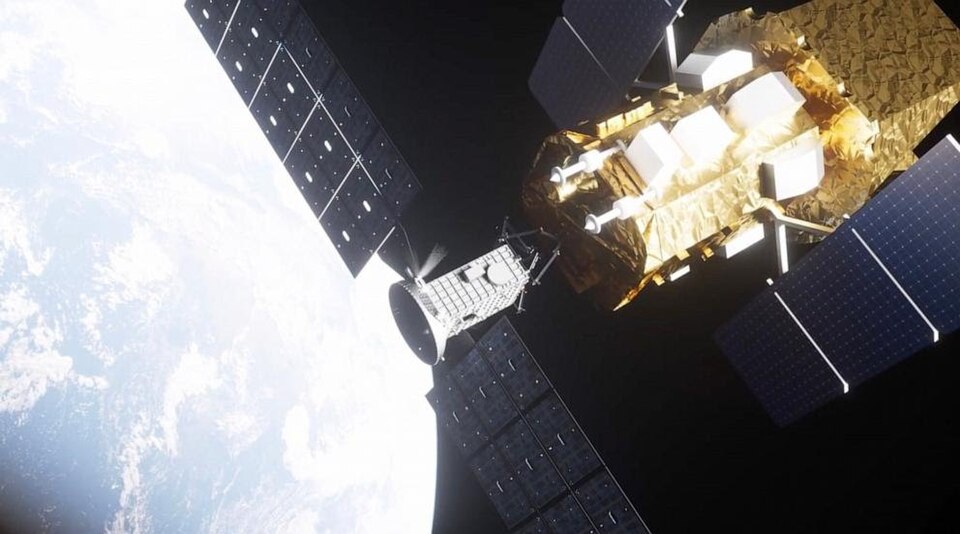
From the engineering point of view, the problem of getting close to Swift is not the main obstacle here. It is the problem of the successful capture of the 1.6-ton spacecraft launched in 2004 with no servicable interfaces, no docking ports and no possibility for retrieving the vehicle from the very beginning. Katalyst’s robotic vehicle named Lift is about as large as a kitchen fridge with a 40-foot solar wingspan and three robotic arms. Every arm has reached 3 feet (about 0.9 meters) in length and uses finger-like pinchers to grasp the spacecraft.
This is the whole point of the mission. The servicing of any satellite is much easier and safer when there are appropriate means for it included into the satellite’s design. Swift lacks them. Therefore, the mission represents the ability of the autonomous satellite and robotic equipment to catch and service an unmanned government asset in orbit.
Katalyst representatives and the NASA officials claim that the operation is not guaranteed to be successful. This statement is important to keep in mind due to the nature of the task. Autonomous rendezvous and robotic capture are some of the most challenging space operations that are made even more difficult by the tight schedule and a descending target.
As NASA claims, Swift has remained useful and the costs of its replacement are not allocated in the budget of the agency at the moment. Nicky Fox, NASA’s science mission chief, stated that the agency will lose much of its capability if Swift reenters the atmosphere, and NASA does not have money to replace it at the moment. From the viewpoint of operators and purchasers, this situation shows how the economics of life extension can work. Servicing of the satellite that remains operable represents a tempting choice compared to replacement that costs more significantly.
Swift is worth this mission as it serves the special function of the observatory. The spacecraft was meant to turn to any event, such as gamma-ray burst or exploding star, rapidly. It is a difficult mission to perform easily, especially taking into account that other observatories generate even more targets for follow-up work.
The relevance of the U.S. market of services is as significant as the scientific one. In case of success, this mission will show NASA and other government customers a working example of how on-orbit servicing looks under time pressure: a commercial spacecraft, autonomous rendezvous, robotic capture, and orbit raising for the legacy asset. Besides, the mission will highlight the important design lesson that the industry has learned over years. Expensive, long-living, and mission-critical satellites should be built for inspecting, catching, refueling, and repositioning purposes from the very beginning.
Katalyst has already announced plans for further servicing missions after Swift, including the servicing of higher altitude satellites and potentially Hubble in the future. However, the importance of this particular mission lies in something different and more direct. Before becoming a usual market segment, on-orbit servicing has to prove that it is capable of solving one difficult and real-life problem on the unprepaired asset.
It is why the mission of Swift is so important. It is not just a rescue attempt for one observatory. It is a chance to prove the ability of the U.S. robotic servicing to move from concept slides and demonstrations to operational tool for the extension of government space assets’ lifetime.
By David Whitaker — Associate editor for AMI’s aerospace and drone systems desk, translating flight systems, aircraft programs, spaceflight, and UAV developments into accessible technical stories.