NASA’s Swift Rescue Push Highlights Robotic Servicing’s New Role
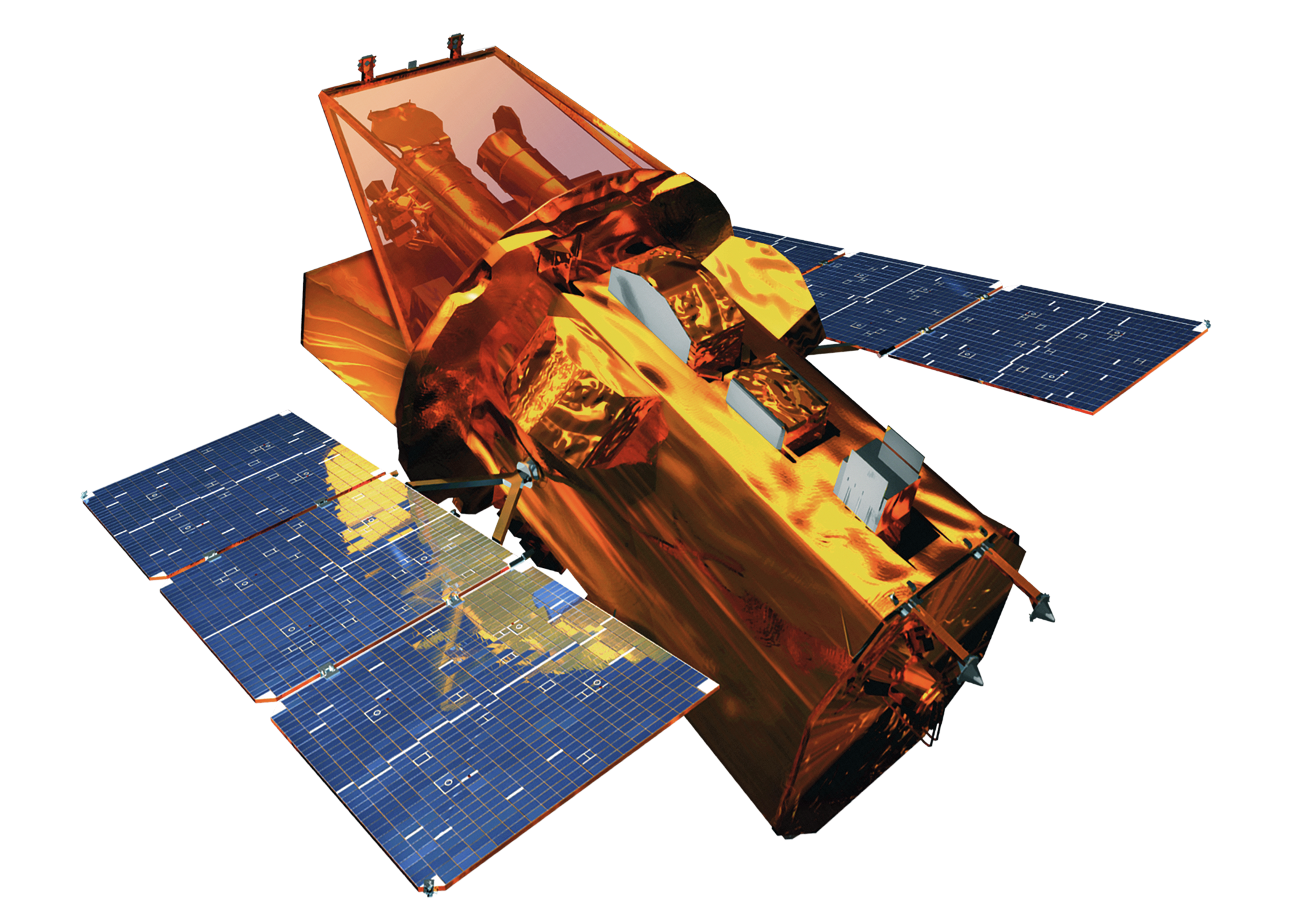
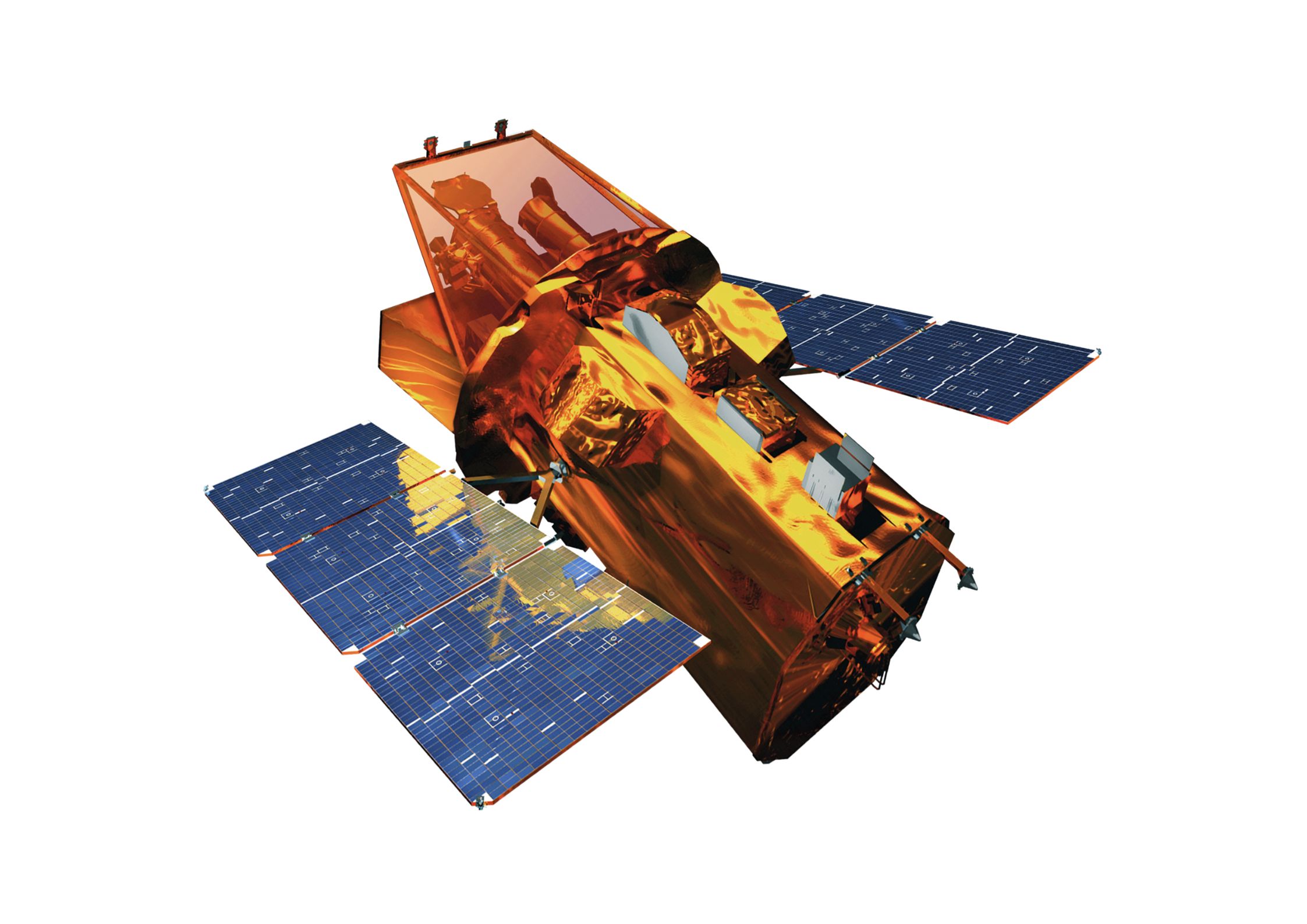
NASA is gearing up for a $30 million program to save its aging Swift space telescope from crashing down to earth. The mission should kick off sometime within this week. The premise is rather simple. A robotic servicing craft will need to match orbit with Swift, and then boost the space observatory to a higher and safer orbital position, which will avoid its drop from orbit due to drag caused by atmospheric friction.

This is, therefore, not only a satellite rescue attempt but also a real-world test case of whether robotic servicing could emerge as a viable tool to preserve America’s orbital assets, which are not intended to be serviced. Built to study gamma-ray bursts, Swift formally known as Neil Gehrels Swift Observatory was launched in 2004. But by the beginning of 2025, yearly altitude forecasts showed that without intervention, Swift would have dropped out of orbit during summer of 2026 due to unexpectedly strong solar activity and resultant increase in the drag in Low Earth Orbit.
Consequently, NASA took action in two ways. From an operational standpoint, the team controlling the observatory managed to tweak its positioning, which helped maintain the altitude. In addition, the agency supported commercial servicing concepts and contracted Katalyst Space with $30 million to try to boost Swift.
As far as technical specifics go, NASA announced that it is the company’s LINK spacecraft that will be used for the operation. According to NASA, the vehicle was designed specifically for capturing Swift and performing the orbit raising maneuver. Also, LINK completed vibration and thermal-vacuum testing at NASA’s Goddard facility. The latter is a crucial step, as it usually serves as a sign of readiness of a spacecraft for launch and space environment.
Speaking of the launch process, this project is noteworthy because of the launch configuration. According to NASA, the spacecraft will be carried to space using the air-launched Northrop Grumman’s Pegasus XL launch vehicle released from the company’s L-1011 Stargazer aircraft.
However, the tricky part here is not only the fact that LINK will be launched successfully. After the spacecraft separates from the Pegasus, it will have to go through numerous steps to complete the mission. According to NASA’s published timeline, LINK’s power systems, navigation sensors, and control mechanisms will be checked in orbit before approaching Swift. Then, engineers will spend several weeks to conduct surveys of the spacecraft and identify the suitable points for grabbing it. After this, LINK will gradually increase its orbit over a course of several months.
This highlights the true complexity of the task. As Swift was not constructed for docking and/or servicing, any attempts to rescue it will require successful interaction of guidance, navigation and control technologies, robotic capture mechanism, and mission assurance system.
In addition, NASA also made it clear that the time element plays a crucial role in the mission design. The agency claims that the observatory should remain above the altitude of approximately 185 miles (300 kilometers), as anything below this altitude makes any recovery effort extremely difficult. To increase margin, the operations team changed the observation strategy and decreased power consumption of the spacecraft, thus decreasing the rate of the altitude loss.
There are still some unknown elements of this mission, such as specific servicing techniques, identity of the spacecraft used, and orbital mechanics involved in the maneuver. Although the NASA’s announcements shed light on certain aspects of this mission, not everything has been revealed yet, as there are no guarantees of success. Even in case of a cooperative target, rendezvous and capture are always difficult maneuvers.
Nevertheless, the overall significance of this mission is already evident. Should NASA and its partner manage to complete this mission, the outcome will not be limited to extending life of Swift for scientific purposes. In addition, it will prove that robotic servicing technology can transition from conceptual to operational stage.
It will have significant implications for mission cycle planning of agencies, as they will consider replacing, maintaining, and extending the life of their expensive and rare platforms in times of budget constraints. This is the key lesson to be learned from this mission for American space sector. The attempt to save Swift is a deadline-driven demonstration of orbital maintenance under real operational pressure. No matter whether this attempt will be successful, it will test the capability that is becoming increasingly relevant in times of aging valuable spacecraft and the effect of drag, solar activity, and costs of replacements in low Earth orbit.
David Whitaker — Associate editor for AMI’s aerospace and drone systems desk, translating flight systems, aircraft programs, spaceflight, and UAV developments into accessible technical stories.