Embry‑Riddle Drone Swarm Project Advances in NASA Challenge
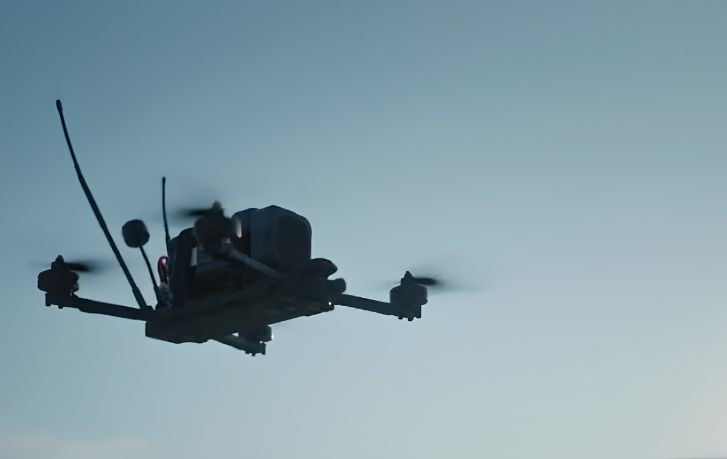
A team of students at Embry‑Riddle Aeronautical University is developing a swarm of microdrones aimed at transforming 3D mapping in GPS-denied environments. Their project, SUAVE—Swarm Unmanned Aerial Vehicles using Emergence—was selected for the NASA Aeronautics Research Institute’s 2023 University Student Research Challenge (USRC), securing a grant of up to $80,000.

GPS-denied zones, where satellite signals are blocked or degraded, present persistent challenges for mapping and inspection. Such areas include interiors of buildings, underground mines, sewer systems, canyon landscapes, dense forests, and large industrial facilities. Traditional mapping in these settings can be slow and incomplete. Daniel Golan, co-principal investigator and a Mechanical Engineering junior, explained, “The main application is to map out GPS-denied locations and make a 3D map in a more efficient way.” He added, “The swarm would spread out and get everything significantly quicker with a lot more data. You are able to get a more accurate map in significantly less time.”
The NASA USRC invites university teams to propose concepts aligned with NASA Aeronautics’ flight research priorities. Steven Holz, assistant manager of NASA’s University Innovation project, noted, “We’re thrilled to be receiving and awarding more proposals than ever. The students continue to come up with novel and impactful research proposals that we believe will lead them to leaving their mark on the aeronautics industry and beyond.”
Beyond technical development, the challenge incorporates an entrepreneurship element. Teams must raise supplemental funding through crowdfunding, enhancing their communication and business skills. SUAVE has also received institutional support via Ignite and Spark grants from Embry‑Riddle’s Office of Undergraduate Research.
Work on the prototype is taking place in the university’s Engineering Physics Propulsion Lab (EPPL). Faculty mentor Dr. Sergey V. Drakunov, EPPL director and professor of Engineering Physics, guides the team’s control system design and AI algorithm development. “I advise them on control system design and AI algorithms, but it’s their choice how to implement it,” Drakunov said. “It’s important to give the students that intellectual freedom, it stimulates their creativity and, as a result, they have great ideas.”
Bryan Gonzalez, a senior in Mechanical Engineering and co-principal investigator, focuses on the swarm’s software and control systems. His background includes work on controls for exoskeletons and robotic arms at EPPL, and a recent internship at the Florida Institute for Human & Machine Cognition. “I have had an interest in controls since I came to the Engineering Physics Propulsion Lab and have worked on controls for exoskeletons and robotic arms here,” Gonzalez said. “The swarm is a step outside of my comfort zone, but one that I see great potential in creating a unique nonlinear control system for.”
The SUAVE team comprises Stanlie Cerda-Cruz, Kyle Fox, Ethan Thomas, Adam Duke, Ryan Ebrahimi, Ryan Taylor, and Nicholas Sontra, alongside Golan and Gonzalez. Their collective expertise spans mechanical engineering, software development, and applied physics, enabling an integrated approach to swarm autonomy.
For Golan, the project extends beyond technical achievement. As an Air Force ROTC cadet who completed U.S. Space Force training, he views leadership as integral to his future career. “Leadership is huge because I’m going to the military,” he said. “It’s also been a really good way to take some of the components I’ve learned in class and apply them.” His summer internship with Boeing’s Engineering Development Program involved work on the MQ‑25 aerial refueling drone. “I did work supporting Boeing’s MQ 25 aerial refueling drone,” he said. “That was a lot of fun, and I learned a lot.”
While the immediate focus is terrestrial mapping, the team sees broader applications. Golan remarked, “The swarm algorithm also has the potential for probe mapping of asteroids in space.” Such adaptability underscores the relevance of swarm robotics not only for Earth-based inspection and mapping, but also for future planetary and deep-space exploration missions.