US brake-pedal rewrite could reshape robotaxi certification pathways
Some carefully crafted changes to brake rules in the United States would potentially have disproportionate effect on the architecture and certification of purpose-built robotaxis. The proposal submitted by the National Highway Traffic Safety Administration states that vehicles that were designed to operate exclusively with no human driver inside would not have to be fitted with a manual brake pedal within Federal Motor Vehicle Safety Standard No. 135.

On the surface, this seems simple enough, but actually represents a significant departure from the current framework of regulations in terms of the specifics of autonomous-vehicle engineering. As long as most of the federal safety rules assumed the presence of a person controlling the steering, the acceleration and braking of the vehicle, when it does not contain this assumption anymore, that becomes its limitation. In other words, the proposal starts the decoupling of the braking quality from the requirement to possess human-operated brake pedal.
No less important, however, is the fact that the proposed changes do not imply relaxation of the braking standards themselves. Agency stated that stopping distance requirements will remain valid, while the vehicles with manual driving controls should still comply with the existing standards. In other words, this proposal relates to the method of issuing a braking command and testing it, but does not involve making any change to the braking capability of the braking system itself.
It matters for the robotaxi design. In the traditional vehicle, the pedal is the interface between the machine and human operator, who transforms his/her force into braking action in whatever manner it may be – via hydraulic or electric brakes. When it comes to the vehicle without human control, all these aspects become purely technical, because the automated driving system decides when to brake, sends a command, and the braking system acts accordingly. Thus, the proposal reflects this control chain and provides some alternatives for the braking system testing procedure.
The proposed rule also demonstrates how regulators try to align the regulations with modern technological developments. Traditionally, when manufacturers introduced new autonomous vehicles that did not comply with the old federal standards, they had to request an exemption from the standards. Currently NHTSA is working on the revision of some standards to avoid such problem in the future and stated that manufacturers will not need to get any exemptions once the modernization is complete. In this regard, the proposed rule offers the developers of autonomous shuttles and robotaxi platforms a chance to go through certification process without adhering to outdated standards.
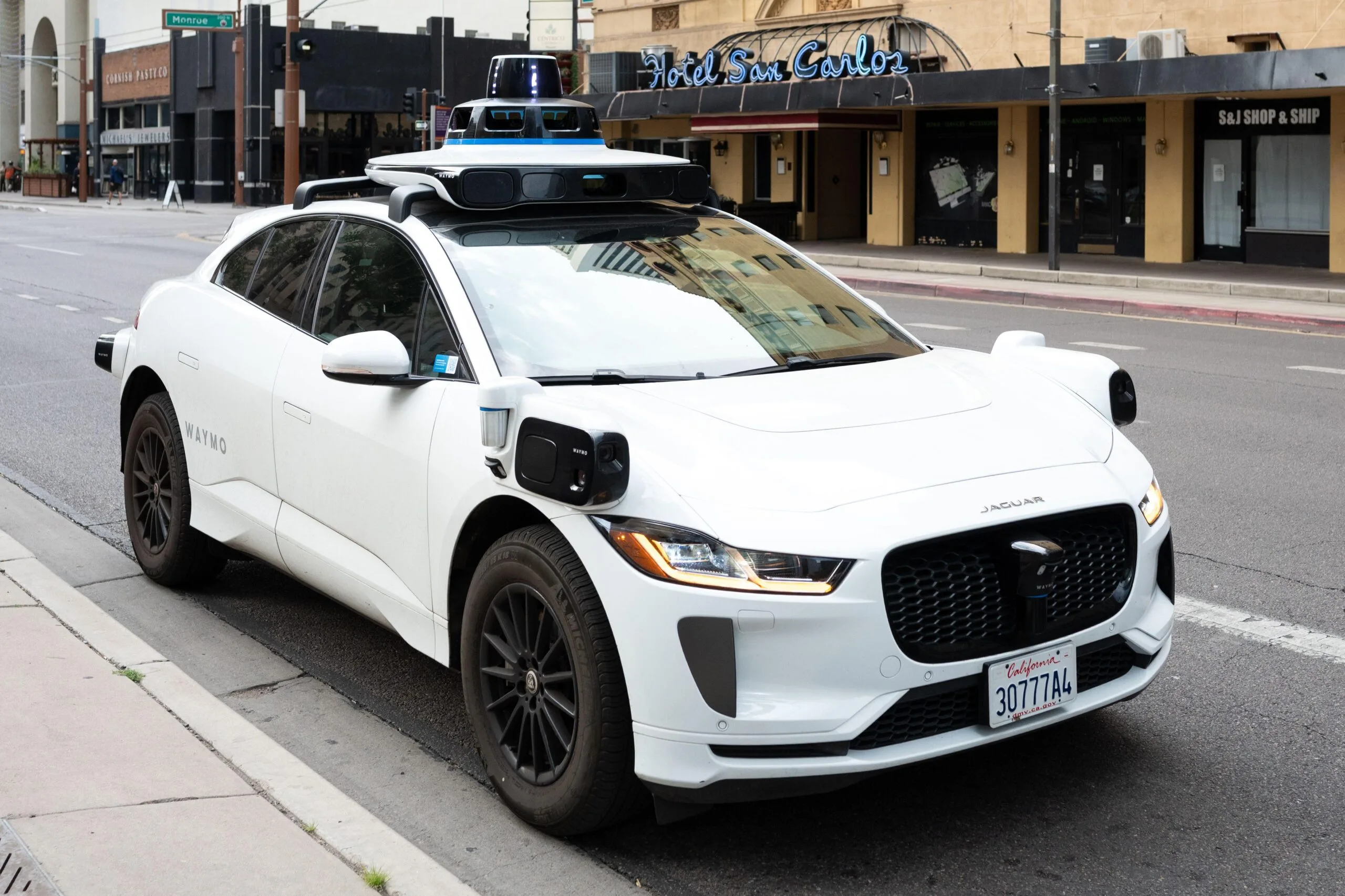
This is particularly important for the development of the autonomous shuttles or cab vehicles that were designed for autonomous operation from the very beginning, as opposed to modified passenger vehicles. Bloomberg provided some examples of this market segment – Tesla’s, Waymo’s and Zoox’s platforms. Also it was reported that General Motors’ Origin AV had faced some difficulties due to regulatory uncertainty concerning the absence of manual controls. The proposed rulebook recognizing the possibility of the passenger-only autonomous layout will give engineers the opportunity to design the vehicles as they see appropriate in terms of cabin design, seating, entrance capabilities, and control placement.
However, this is far from the complete revision of the autonomous vehicles regulation. It is not clear yet whether the federal regulators will change their position regarding the requirement of steering wheels or some other components. Moreover, even NHTSA stated explicitly that the proposal will ensure that an AV has the ability to physically brake on demand, while the safety performance standards for autonomous vehicles under the real-life conditions are being developed separately.
It means that the core question whether it is possible to prove the proper decision-making ability concerning the braking in any traffic situation remains unanswered. From the point of view of robotics community, it means the difference between actuator certification and behavioral validation. The first question concerns the ability of the machine to apply the braking force, while the second is concerned with proving that the machine knows when and how to do it properly.
This is the reason why the proposed rule has been greeted by the mixed response from the stakeholders. Autonomous Vehicle Industry Association welcomed the move, claiming that it will help the leadership of the United States in the sphere of autonomous vehicles. However, some safety advocates and Consumer Reports claimed that the performance standards should be implemented before removing the manual safety systems. Instead of changing existing regulations, they asked for stronger and more comprehensive AV safety rules.
There is also a pragmatic aspect of deployment. Many robotaxi operators use the vehicles designed traditionally and hence equipped with the steering wheel and brake pedal. They fit the current rules better, but include some compromises in packaging and design that are not appropriate for the vehicles that will never be driven manually. Once this brake-pedal proposal is adopted, it will help to remove one of the clear certification penalties of the clean-sheet autonomous vehicle platform.
Thus, for the U.S. market, the key message is that certification gradually moves away from the human-control assumptions towards the function-oriented approach. The brake pedals, telltales, parking brake controls and test procedures are no longer just technical details but become a part of the general question of how regulators will certify the machines that sense, decide and actuate without the driver. This transition will take time to complete, but it is obvious that robotaxi deployment will depend as much on the standards architecture as on the software advances.
From the engineering point of view, it is not the removal of a pedal but the demarcation of the boundary between the occupant interface and the vehicle control. The braking rules may loosen in relation to the human hardware, but the main challenge of certification moves to proving the reliability of the robotic system behind that hardware in the real life.
By Jonathan Barrett – Editor for AMI’s future mobility and autonomous systems section, with two decades experience covering robotics, e-mobility, drone-vehicle convergence and transport mechanical systems.