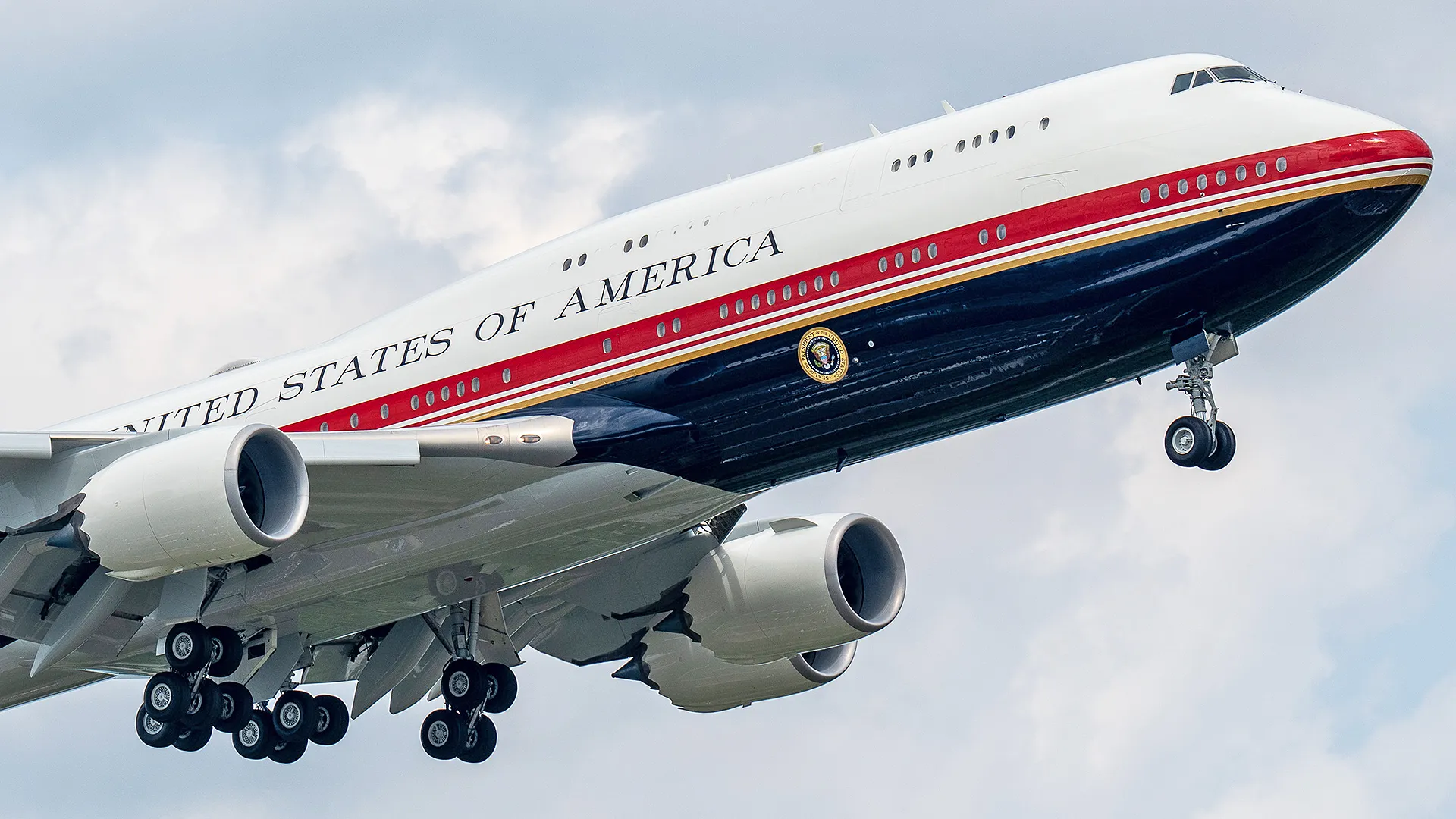
Interim 747-8 Shows Air Force One Modernization Stopgap at Work
The presentation of the modified Boeing 747-8 aircraft by the United States Air Force at Joint Base Andrews can be seen primarily as a fleet readiness effort and not as a solution to the ongoing issue of replacing Air Force One. It is relevant for this issue because of the nature of the presidential airlift mission. Amid aged assets, maintenance issues, and fleet modernization efforts, this mission should continue operating in an effective manner. The currently operated VC-25A aircraft have been delivered in 1990. It is evident that the bridge aircraft is developed to ease the pressure on the aged fleet while the replacement program continues.

Speaking about the aerospace industry, this is another case of a typical stopgap modernization effort. When the bespoke platform is delayed, the operator must decide whether to stretch the legacy platform amid increased maintenance burden or to deploy an interim aircraft to improve the margins. In this case, the Air Force and Pentagon have decided to purchase a modified 747-8 aircraft to serve as an interim replacement until the entry of service of VC-25Bs towards the end of the decade.
This can be explained considering the timeline. Originally, the Air Force expected to receive the VC-25B in 2024. However, due to several factors, including the COVID-19 pandemic and supply chain problems, this plan did not succeed. The next generation replacement aircraft are expected to be delivered no earlier than in 2028.
Four years of gap is a considerable amount of time for any aviation project, particularly in the case of such a specialized executive transport fleet that operates a limited amount of aircraft. Two existing aircraft leave no room for downtime and unplanned maintenance and modernization efforts. An interim aircraft cannot address these concerns fully but can make them less stressful by providing an additional available platform and freeing up space.
Another important detail is the engineering balance. The bridge aircraft uses the new 747-8 platform, but it does not claim to replace the VC-25B program completely. According to the Air Force, this is a secure, modified executive platform with all the technologies that ensure the safety, protection, and connectivity of the President of the United States. This wording indicates a requirement-based approach, i.e., the focus on essential systems and not wasting extra time to adapt the interim aircraft to be the future replacement.
Here, the approach has been summed up by the Secretary of the Air Force Troy Meink who stated, “From the beginning, we meticulously evaluated every requirement to accelerate delivery while maintaining the high standards expected of the presidential mission.” From the perspective of program management, this is the main narrative here speed does not matter unless it compromises security, reliability, and performance of the mission. The Air Force claims that this bridge aircraft was designed around this very principle.
It is also necessary to note some industrial considerations of the decision. Firstly, the 747-8 is a proven airframe platform with an established utilization history for cargo, military, and VIP transport applications. Using this airframe for developing the interim solution helps to reduce certain integration risks when compared to design and construction of a stopgap platform from scratch. Nonetheless, even modification of an aircraft that has been previously owned is quite a challenging integration effort. In addition to hardware changes, it also includes commissioning flights, crew training, and preparations for the maintenance and logistics support otherwise, the platform won’t operate effectively.
Currently, the Air Force is already utilizing the bridge aircraft in this regard. Commissioning flights have been started and the platform has been integrated into the Presidential Airlift Group as a part of the effort to ensure the continuity of executive airlift operations. It means that the decision is not limited to repainting an aircraft and its transfer to the control of the Air Force. Instead, it is an example of how the service manages risks when a visible and mission-oriented recapitalization program fails to meet the schedule.
For the U.S. aerospace audience, the key message is rather obvious. High-end government aircraft programs are not exempted from the issues affecting the entire industry fragile supply chains, complex certification process, integration problems, and growing costs and complexity of maintaining old airframes. In this regard, the 747-8 bridge demonstrates what happens when these problems occur on top of a mission-critical program. The Air Force buys time, maintains fleet readiness and modernizes despite the fact that the permanent solution is still several years away.
By Robert McKinney – Editor-in-Chief for AMI’s automotive and mobility coverage, with a mechanical engineering background and a decade of experience covering powertrain systems, electric vehicles innovation, and global vehicle manufacturing.