Ford Plans Nearly 4 Million Test Miles for Next F-150 After Recall Record
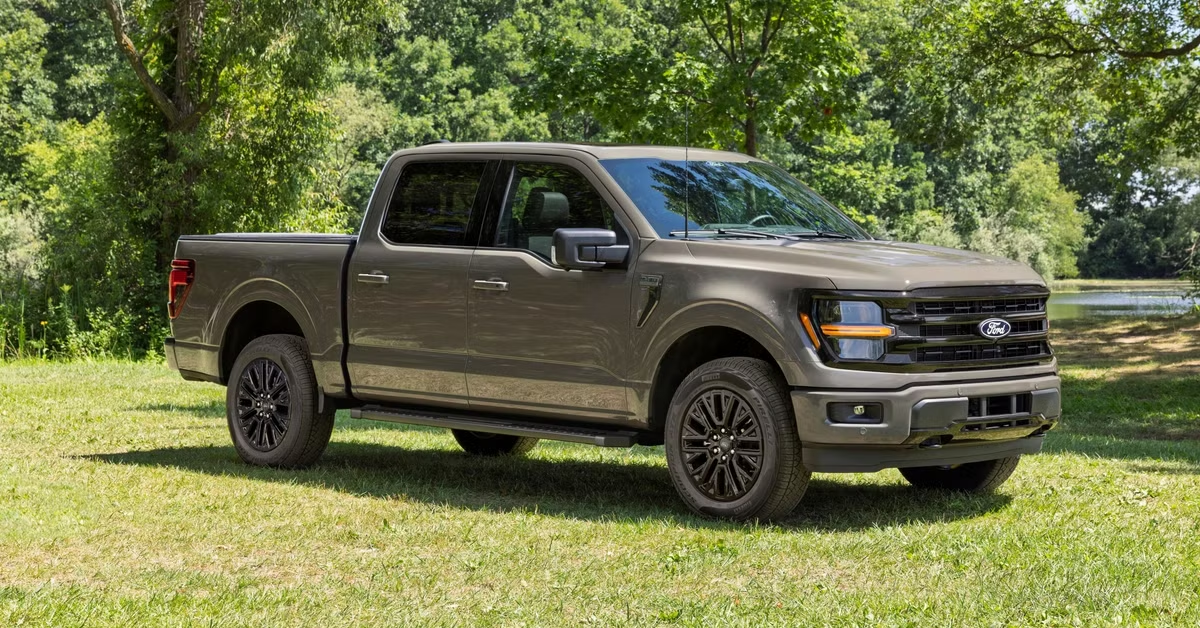
Nearly 4 million miles will define Ford’s validation program for the next-generation F-150. After the automaker logged a record 153 U.S. recall campaigns affecting almost 13 million vehicles in 2025, Ford is substantially increasing the amount of durability work planned for its most recognizable truck.
CEO Jim Farley disclosed the program during Ford’s third-quarter 2026 earnings call, saying, “The F-150 will be the most extensively tested truck ever at Ford.” Prototype builds are scheduled to begin in the first quarter of 2027. The larger test program is a meaningful engineering response to Ford’s quality challenge, but it remains a plan rather than proof that customers will receive more reliable trucks.
More miles, powertrain cycles and structural testing
The full-vehicle mileage target is set to rise from 1.6 million miles to nearly 4 million. That is approximately 2.5 times the previous distance, adding about 2.4 million test miles. Ford also plans to increase powertrain durability testing five-fold and double its endurance and strength testing.
Those categories address different parts of vehicle validation. Powertrain testing can exercise engines, transmissions and their associated systems through repeated operating cycles. Endurance and strength work evaluates whether components and structures tolerate the loads Ford expects over their service lives. Full-vehicle testing then places interacting hardware and software into a complete truck, where heat, vibration, loading and control behavior can combine in ways that isolated component tests may not reproduce.
That systems-level work is especially relevant as trucks add feature content while still having to meet emissions and fuel-economy requirements. More functions, controllers and interfaces create more potential interactions to validate. A durable component is not sufficient if its connection, calibration or behavior within the complete vehicle produces a customer problem.
Test mileage alone, however, is an incomplete measure. Four million lightly demanding miles would not necessarily expose as much fatigue or as many edge conditions as a smaller but carefully constructed program. The useful questions are which loads, temperatures, road surfaces, payloads and operating cycles the miles represent and whether failures are found early enough for engineers to change designs and confirm the fixes before production.
Why test design matters as much as distance
Automakers use accelerated test cycles to reproduce years of damage without waiting years for ordinary road use. An SAE International study of suspension bushings and powertrain mounts illustrates the challenge: laboratory block cycles may fail to represent real loading unless variable, multidirectional and out-of-phase forces are translated accurately into a useful accelerated test.
Research involving large-vehicle road simulators points to the same boundary. Simulator testing can compress development time, but its value depends on correlation with real-road wear. Vehicle load, road quality and component temperature can materially change the damage accumulated during a nominal mileage interval. For Ford, the headline number will be valuable only if the program covers the duty cycles experienced by personal trucks, contractors, utilities and other commercial fleets.
The stakes extend beyond inconvenience. Fleet operators depend on truck availability for paid work, and an unscheduled repair can remove a working asset from service. Better validation can potentially identify weak components, software interactions or manufacturing-sensitive designs before customers encounter them, reducing downtime and repair burden. It can also create extra engineering time and cost if testing uncovers problems late, particularly after tooling or supplier processes have been established.
Recall history sets a demanding benchmark
Recent F-150 recall campaigns have involved tailgates, speedometers and tachometers. One cited speedometer and tachometer fault affected more than 100,000 trucks. Farley did not directly connect those campaigns to the expanded validation program when presenting it, and additional durability mileage cannot by itself guarantee that unrelated hardware, software or manufacturing faults will be prevented.
Farley described the powertrain objective as a “bulletproof powertrain target” and said Ford intends eventually to extend the broader testing approach across its lineup. That could make the F-150 program a template for how Ford validates other vehicles, provided the company can turn test findings into design changes, supplier controls and stable production processes.
The decisive measurement will arrive after the next-generation F-150 moves beyond prototypes and accumulates customer service history. Until then, nearly 4 million test miles represent a much larger opportunity to find problems not confirmation that Ford has eliminated them.
| More aerospace and engineering stories, right in your MSN feed. Follow AMI on MSN |
By Thomas Caldwell — AMI’s senior editor for mechanical and mobility engineering, covering vehicle electronics, systems integration, electrification, chassis systems, propulsion, and safety policy.