General Atomics Targets 60-Hour Flights for Hybrid-Electric Combat Drone
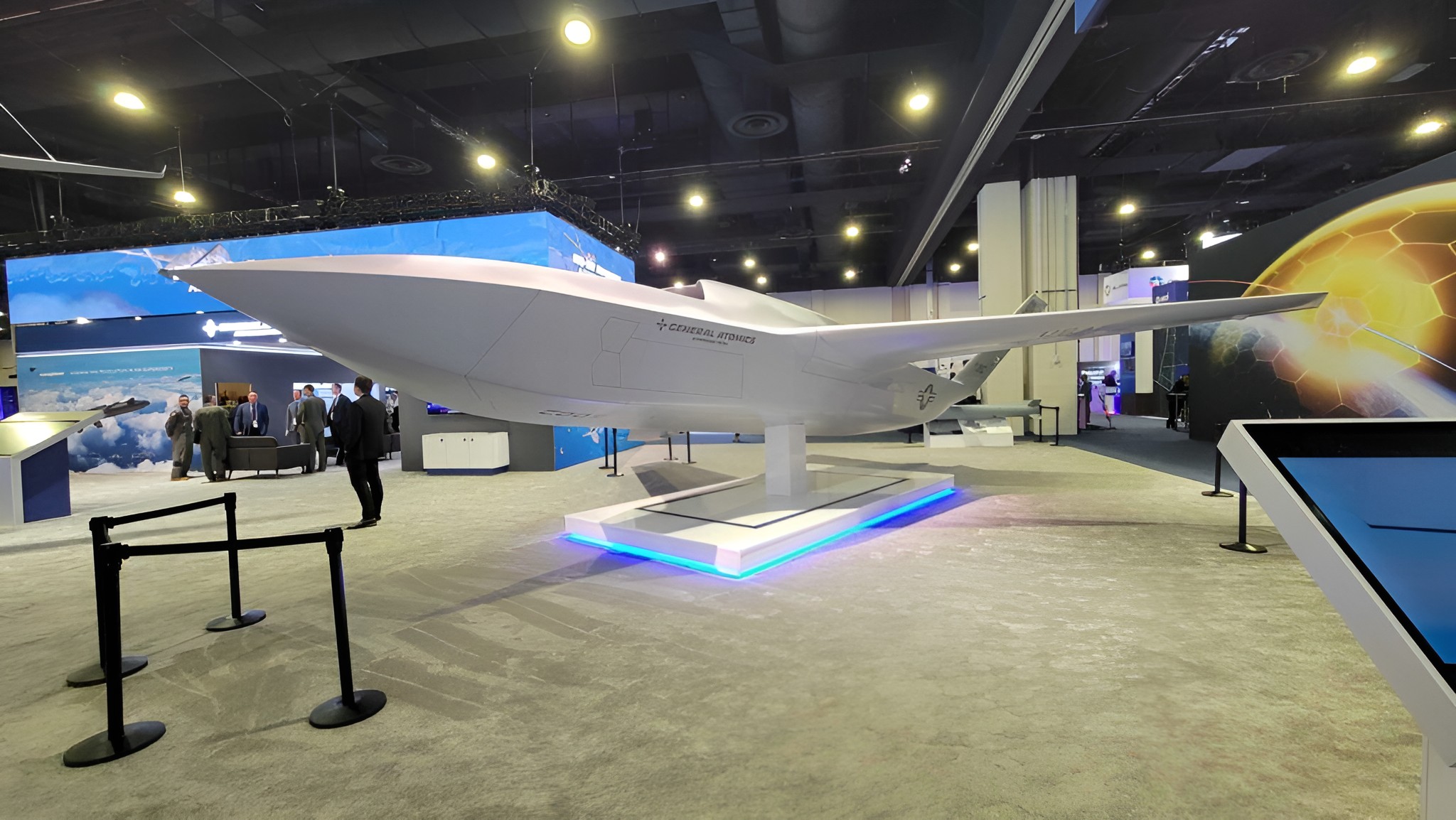
More than 60 hours without refueling would keep a combat-capable drone airborne for over two and a half days. That is the striking endurance goal General Atomics has set for NextGen, a hybrid-electric flying-wing aircraft being designed for reconnaissance and strike missions. For now, however, 60-plus hours is an engineering target rather than demonstrated performance.
The company has not disclosed the propulsion arrangement selected for NextGen, leaving a central question unanswered: how will the aircraft turn hybrid-electric power into both exceptionally long endurance and the capability to carry mission systems and weapons? General Atomics has described the project as a larger flying wing whose development could also inform the planned Gambit 4 drone.
Why hybrid power could extend endurance
A hybrid-electric aircraft combines fuel-burning machinery with electrical propulsion or assistance. Possible arrangements include a combustion engine driving a generator for electric fans, an engine providing direct propulsion with electrical support, or a system that combines those approaches across different phases of flight. None has been confirmed as NextGen’s final configuration.
The endurance case rests primarily on efficiency. A generator-based arrangement could let a combustion engine spend more time operating near an efficient power setting while electric motors deliver thrust where and when it is needed. That could reduce fuel consumption, helping the aircraft remain aloft longer without requiring the mass of a battery-only system sized for a 60-hour mission.
Hybrid architecture can also give engineers more freedom to place engines, motors, fans and exhaust outlets around an airframe. Depending on the eventual layout and operating conditions, it could reduce noise and infrared emissions. Those remain potential design benefits, not measured NextGen results, and General Atomics has not identified the aircraft’s final propulsion layout.
Long endurance also creates demands beyond producing thrust efficiently. Power electronics, electric machines and energy storage introduce heat that must be managed throughout a flight lasting days. Component mass, conversion losses and cooling hardware can consume part of the efficiency advantage. Reliability becomes equally important because the propulsion and electrical systems must continue operating across an unusually long mission without onboard maintenance.
Those challenges are well established in broader hybrid-aircraft research. A NASA and GE Aerospace hybrid-electric demonstrator integrated electric motors, a gas turbine and energy storage on a modified Saab 340B. NASA identified power, thermal management, battery technology and aircraft-level integration among the barriers addressed during years of research. That program concerns a different aircraft and does not validate NextGen’s endurance target, but it illustrates why moving hybrid propulsion from a concept into flight requires extensive system testing.
NextGen feeds a broader modular-drone effort
General Atomics intends NextGen’s work to flow into its Gambit architecture, a family of six proposed modular drones. The family is designed to reuse core equipment such as landing gear and baseline avionics, allowing substantially different aircraft to share portions of their engineering and manufacturing foundation. NextGen could provide propulsion and flying-wing experience for Gambit 4 rather than forcing that variant to begin from a blank design.
A shared core can reduce duplicated development and simplify production, but it does not eliminate the integration work unique to each airframe. A long-endurance flying wing still needs its propulsion, thermal controls, electrical distribution and mission equipment balanced as one aircraft. The value of modularity will depend on how much hardware can be reused without imposing mass or packaging penalties on specialized variants.
General Atomics is also planning a company live-fire demonstration in early 2027, but that milestone applies to Gambit 6 not NextGen. Gambit 6 is taking shape as a ground-attack modification of Gambit 2, also known as the FQ-42A. It provides related evidence that the broader Gambit effort is moving toward weapons testing, while NextGen’s defining promise remains farther upstream: proving that a fully outfitted hybrid-electric reconnaissance and strike drone can actually stay aloft for more than 60 hours.
| More aerospace and engineering stories, right in your MSN feed. Follow AMI on MSN |
By Stephen Wallace — Editor for AMI’s aerospace integration and unmanned mobility coverage, focused on drone manufacturing, VTOL systems, autonomous networks, and air-ground mobility links.