Ukraine Adviser Says Geran-5 Hit 1,000 Kilometers Per Hour, Raising Interceptor Bar
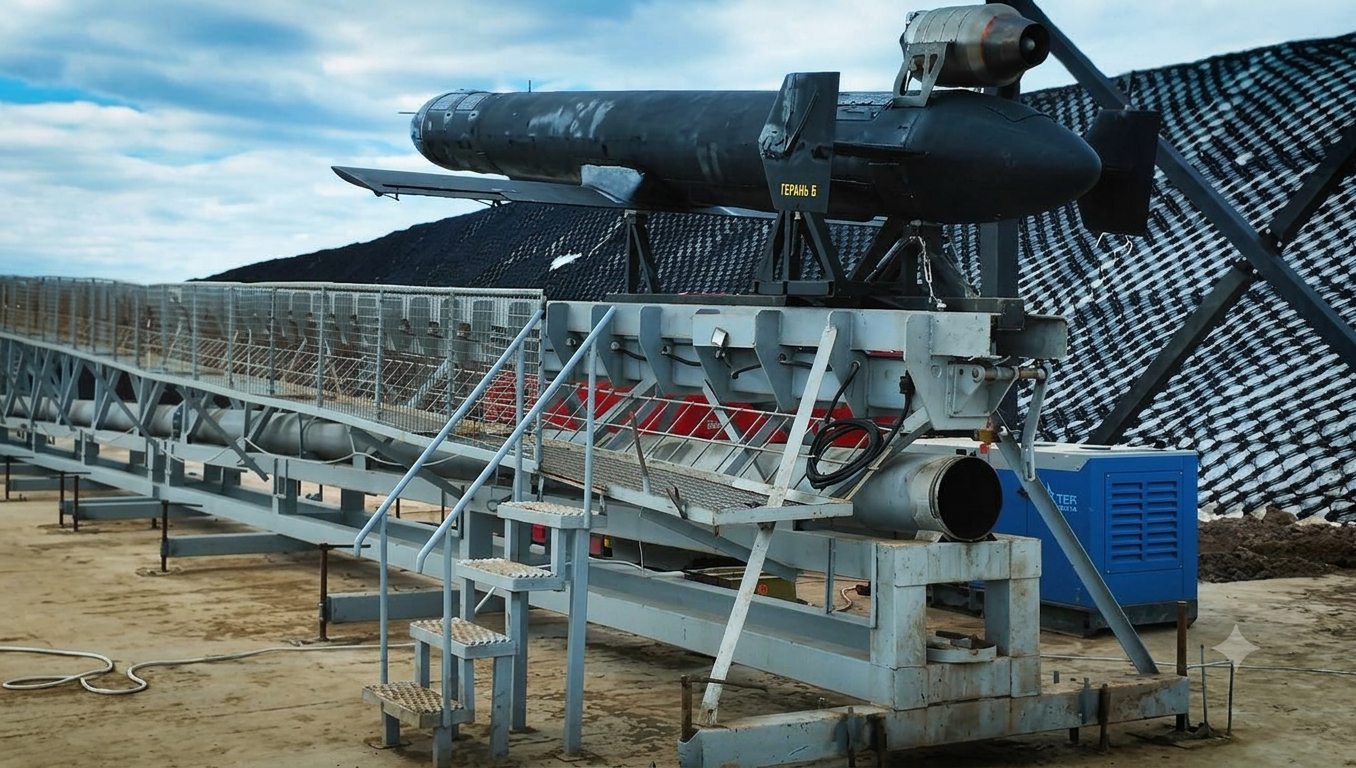
A faster interceptor cannot compensate for a target detected too late or handed off unreliably. That is the central engineering tension behind a new claim about Russia’s Geran-5 jet-powered drone: Serhiy “Flash” Beskrestnov, an adviser to Ukraine’s president on defense technologies, said the aircraft reached 1,000 kilometers per hour during certain maneuvers.

Beskrestnov made the statement to journalists in Kyiv on October 29. No independent measurement or further description of those maneuvers was provided, so the figure should be treated as an attributed peak rather than a confirmed sustained-flight speed. Even with that boundary, it points to a steepening performance requirement for Ukrainian interceptor-drone programs.
Earlier interceptors were built around a slower target set. Our guys built interceptors that worked against the Shaheds at 300 km/h, but that’s no longer relevant, Beskrestnov said. He added that developers had moved toward aircraft capable of 500, 600 and 700 kilometers per hour.
Speed shrinks the margin across the system
The propulsion challenge is only the most visible part of the problem. An interceptor still needs an approaching aircraft to be detected, tracked, identified and handed to a guidance system with enough time and positional accuracy to complete its task. Any delay or uncertainty upstream consumes part of the performance gained by building a faster airframe.
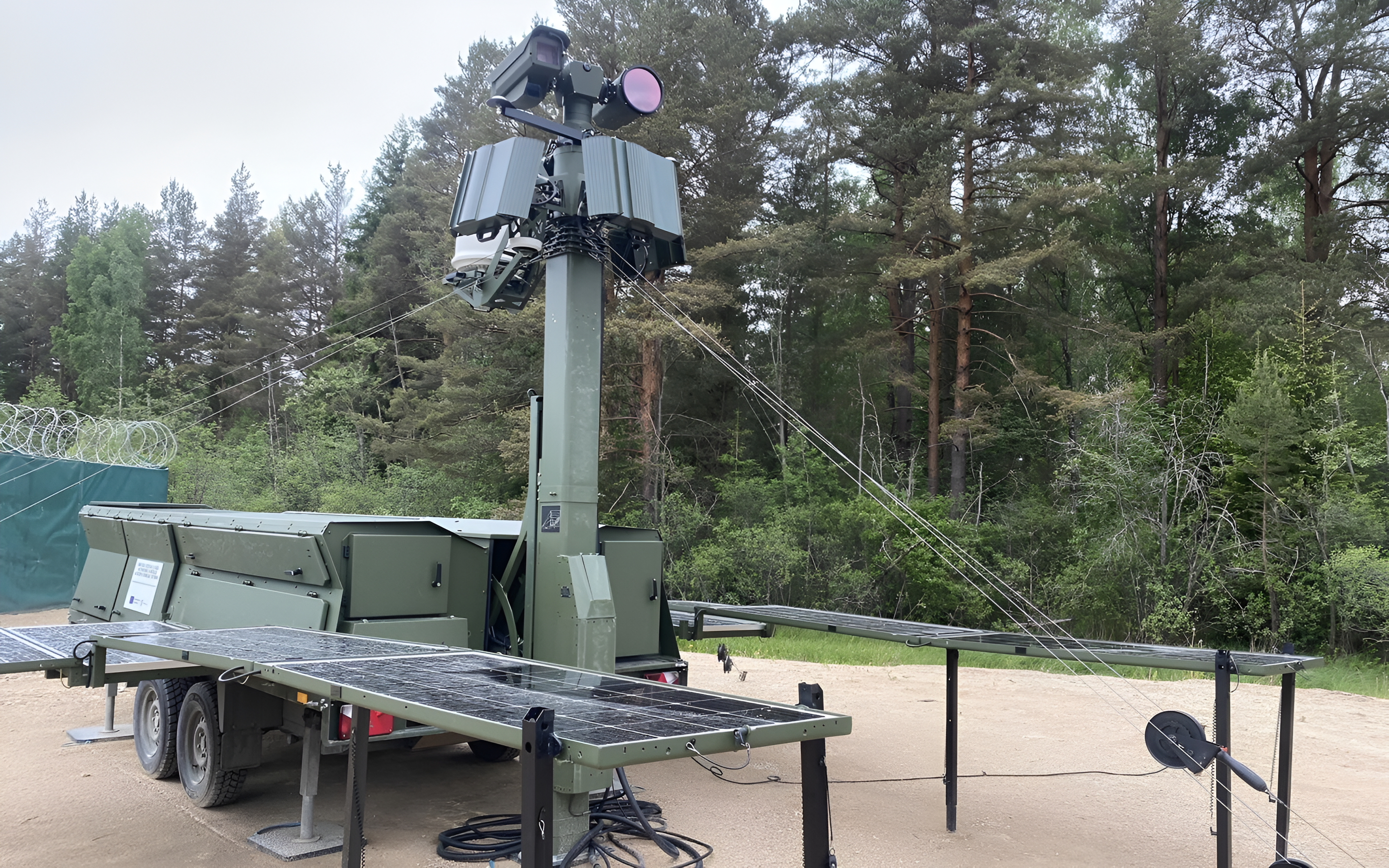
That makes sensor coverage and data quality central to readiness. Counter-drone systems can combine radar, radio-frequency detection, cameras and acoustic sensors, but those technologies have different ranges, update rates and operating limitations. Data from multiple sensors also must be associated with the same aircraft and synchronized before it can support a reliable track. A faster target puts greater pressure on that entire chain without automatically improving any individual sensor.
Ukraine’s Air Force had already projected that Russian jet drones could reach 800 to 900 kilometers per hour. In an October 6 readiness update, Deputy Air Force Commander Yurii Cherevashenko said those speeds had not yet been recorded and that the jet drones then in use reached up to 600 kilometers per hour. Beskrestnov’s later 1,000-kilometer-per-hour claim therefore represents a reported step beyond the Air Force’s earlier projection, but not a directly documented fleet-wide capability.
Automatic acquisition becomes a production requirement
Beskrestnov identified guidance and automatic target acquisition as systems that also need improvement. At higher speeds, those functions cannot be treated as accessories added after the aircraft has demonstrated raw performance. They are part of whether the interceptor can produce a repeatable result under time pressure.
Automation also has to manage uncertainty rather than merely respond quickly. False detections, intermittent tracks or inaccurate position estimates can burden operators and waste limited opportunities. The practical objective is dependable cooperation among sensing, tracking, guidance and the human interface not the highest isolated speed recorded by a prototype.
This system-level view is also reflected in NATO’s current counter-drone experimentation, which connects sensors, command-and-control nodes and response systems from different manufacturers and nations. NATO describes interoperability and data exchange as core scaling problems, illustrating why an individual aircraft’s performance is only one part of an operational counter-drone network.
A prototype is not a fielded fleet
Manufacturing adds another boundary. On October 6, Cherevashenko said 20 manufacturers were communicating with the Air Force and 14 were conducting test flights. Six had achieved certain results against jet drones, while three had results the Air Force considered promising. He said delivery of jet interceptors at the required scale was not expected before the end of November at the earliest.
Those figures show a broad development effort, but they also expose the distance between parallel prototypes and dependable serial output. Higher-speed aircraft can place additional demands on propulsion, structures, controls, guidance hardware and quality assurance. Each design still has to be produced consistently, supported in service and operated without imposing excessive training or workload on frontline personnel.
“Creating a model that flies quickly is only one part,” Beskrestnov said. And making a serial product that will be very easy to use is a completely different matter.
The reported Geran-5 speed raises the upper end of the challenge, but Ukraine’s more consequential milestone will be whether detection, automatic acquisition, guidance, production and operator simplicity mature together. A 700-kilometer-per-hour interceptor that cannot be fielded reliably remains a prototype; a scalable system has to make every link work at operational tempo.
| More aerospace and engineering stories, right in your MSN feed. Follow AMI on MSN |
By Stephen Wallace — Editor for AMI’s aerospace integration and unmanned mobility coverage, focused on drone manufacturing, VTOL systems, autonomous networks, and air-ground mobility links.