European Commission Rejects €500 Million Baltic Drone-Defense Request, Points to Loans
The European Commission has rejected a €500 million request from Lithuania, Latvia and Estonia for a regional drone-defense system, leaving the three governments without the direct EU funding route they sought. Instead, the Commission pointed them toward borrowing through the European Union’s Security Action for Europe program, according to LRT’s account of the response.
The decision changes the proposal’s prospective financing model. Rather than receiving the requested €500 million in additional support, the Baltic states may have to accept a repayable public obligation, identify smaller EU funding sources or restructure how the project is financed. The governments have not been reported as agreeing to the loan option, and no resulting change to the system’s scope or schedule has been established.
A loan shifts cost rather than removing it
Security Action for Europe, generally known as SAFE, is a loan instrument rather than a grant program. The EU Council describes SAFE as providing up to €150 billion in competitively priced, long-maturity loans for defense investment, particularly common procurement among member states. The EU raises the money through bond issuance, but beneficiary countries remain responsible for repayment.
That distinction has a direct public-cost consequence. Central EU borrowing can offer participating countries access to financing on potentially more favorable terms than separate national borrowing, while long maturities can spread payments over many years. It does not transfer the final expense away from the participating governments. Debt service would remain part of their public finances rather than being covered by a new €500 million allocation from the EU budget.
The available terms therefore become central to any comparison. Interest costs, repayment schedules, national allocations and the division of borrowing among Lithuania, Latvia and Estonia would determine the eventual burden. Those project-level terms have not been disclosed. LRT reported that €21 billion remained after SAFE’s first call and that another call was expected, but available lending capacity does not by itself amount to approval for this specific system.
Regional procurement fits SAFE, with conditions
On paper, a three-country drone-defense purchase aligns with SAFE’s emphasis on common procurement. The program explicitly covers small drones and related counter-drone systems, along with air and missile defense, critical-infrastructure protection, artificial intelligence and electronic warfare. Joint participation by the three Baltic governments would also fit the general requirement that common procurement involve at least two countries.
Eligibility still brings industrial and technical constraints. SAFE generally requires that no more than 35% of component costs originate outside the EU, Ukraine, or participating European partner countries. Some higher-category systems face stricter conditions concerning a contractor’s ability to modify equipment without non-EU restrictions. Those rules can shape supplier selection, system architecture and lifecycle support even when financing is available.
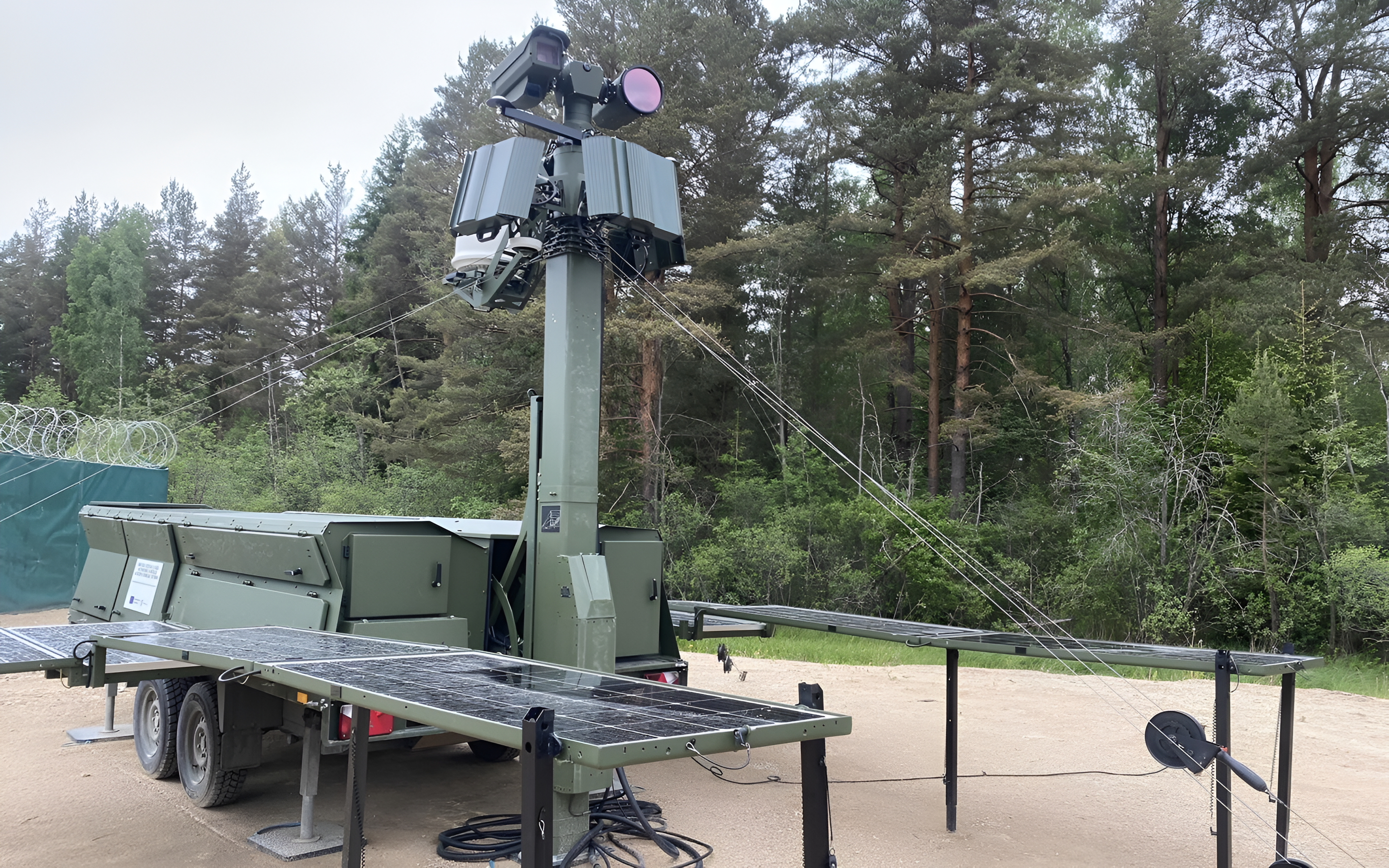
The proposed Baltic system has been described at a high level as combining drone detection, artificial intelligence and interception technology. No equipment list, contractors, technical requirements or cost split has been released. That leaves unanswered whether the full proposal fits one SAFE category, crosses several categories or would need to be divided into separate procurement packages.
Financing is only one integration problem
A regional drone-defense network is not defined solely by the number of sensors or other components purchased. Systems supplied by different countries and manufacturers must exchange data, connect with command-and-control infrastructure and operate under compatible technical standards. NATO’s counter-drone experimentation has consequently focused on linking sensors, control nodes and response systems across national and manufacturer boundaries.
Common financing can support that integration by giving participating states a shared procurement framework. It can also introduce tradeoffs: joint requirements take coordination, domestic budget responsibilities must be assigned, and industrial eligibility rules may narrow the supplier pool. None of those factors establishes that the Baltic project has been delayed, reduced or canceled. They identify the decisions that become more consequential when grant-style support is replaced by borrowing.
The immediate result is narrower but financially significant: the Baltic states did not receive the requested €500 million funding route. SAFE may keep a regional procurement option open, but it would do so through debt that the participating member states must repay and under eligibility rules that could influence what they ultimately build and buy.
| More aerospace and engineering stories, right in your MSN feed. Follow AMI on MSN |
By Stephen Wallace — Editor for AMI’s aerospace integration and unmanned mobility coverage, focused on drone manufacturing, VTOL systems, autonomous networks, and air-ground mobility links.