Drone Attack Damages Lukoil Refinery as Local Fuel Queues Form
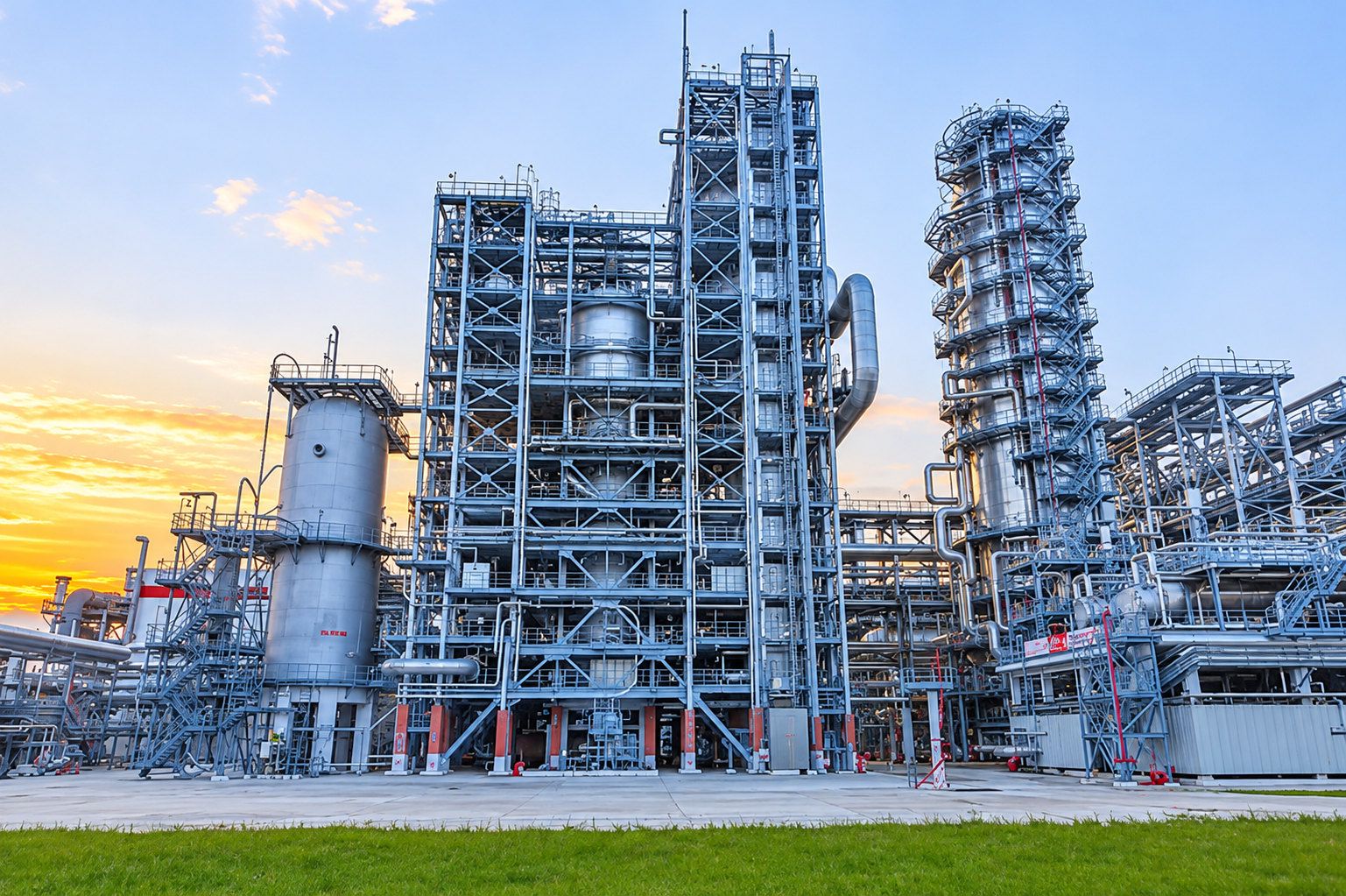
A drone attack significantly damaged the Lukoil-Nizhegorodnefteorgsintez refinery complex in Kstovo, Russia, after which queues formed at local petrol stations. The refinery can process about 340,000 barrels of crude oil per day, but authorities had not established how much production was lost or how long repairs might take.
The attack occurred overnight on November 1 in Russia’s Nizhny Novgorod region. Regional governor Gleb Nikitin confirmed significant damage to an industrial facility in the Kstovo district, where several fires were observed at the refinery. Preliminary reports indicated there were no casualties. Authorities were still assessing the location, extent and operational consequences of the damage.
The immediate public effect was visible away from the industrial site. Kstovo residents began queuing at petrol stations to obtain remaining fuel supplies, reflecting uncertainty about near-term availability. Those lines establish a rapid buying response, but they do not yet show the size or expected duration of a shortage.
Why the refinery’s capacity matters
Lukoil-Nizhegorodnefteorgsintez is described as one of Russia’s largest refineries and produces fuels and lubricants. Its approximate annual crude-processing capacity is 17 million tonnes, equivalent to around 340,000 barrels per day. Lukoil’s broader refining information describes a network of plants equipped for conversion and reforming, the processes that turn crude feedstock into usable petroleum products.
That 340,000-barrel figure measures the refinery’s nominal crude-processing capacity, not the amount of output confirmed offline after the attack. A facility can suffer serious damage without losing all production, while disruption to an important unit or shared service can reduce output elsewhere in an interconnected refinery. No unit-level operating data or shutdown total had been established.
The distinction sets the central limit on assessing the event. Treating the plant’s full capacity as lost production would assume a complete shutdown that has not been confirmed. Conversely, the refinery’s scale means that even a partial or temporary reduction could be consequential if inventories and alternative supplies cannot cover local demand.
Queues are an early signal, not a production measurement
Petrol-station queues can develop before physical supplies are exhausted because drivers respond to uncertainty by buying earlier or purchasing more fuel than usual. That sudden demand can strain station inventories and delivery schedules even when fuel remains elsewhere in the distribution system.
The broader mechanics of refinery disruptions also depend on conditions outside the damaged plant. The U.S. Energy Information Administration’s analysis of refinery outages notes that unexpected shutdowns can produce local supply disruptions and temporary price pressure, but the outcome depends on inventories, demand and access to alternative supplies. The analysis concerns the U.S. refining market, yet the underlying constraint is relevant here: capacity loss alone does not determine what motorists experience.
No information was available on Kstovo-area fuel inventories, replacement deliveries or whether stations were receiving normal replenishment. Without those figures, the queues are best understood as evidence of immediate public concern and concentrated buying rather than proof of a prolonged regional fuel deficit.
Repair work could affect other local services
Nikitin also warned that repair work could cause temporary electricity outages and interruptions to heating and hot water in some areas. That warning broadens the potential consequence beyond transport fuel, although no duration or number of affected users was given.
Refinery recovery is more complicated than extinguishing visible fires. Authorities and plant operators must establish what equipment was damaged, which systems can operate safely and whether connected processes need to remain offline. Industry outage experience shows that refinery shutdowns require coordination among interdependent units, labor and equipment; unexpected findings during repair work can extend an outage.
The next meaningful indicators will be the refinery’s confirmed operating rate, the volume and types of fuel production suspended, local inventory levels and a repair estimate. Until those figures emerge, the strongest verified facts remain sharply separated: a refinery rated to process about 340,000 barrels per day sustained significant damage, and Kstovo motorists responded by forming fuel queues almost immediately.
| More aerospace and engineering stories, right in your MSN feed. Follow AMI on MSN |
By Stephen Wallace — Editor for AMI’s aerospace integration and unmanned mobility coverage, focused on drone manufacturing, VTOL systems, autonomous networks, and air-ground mobility links.