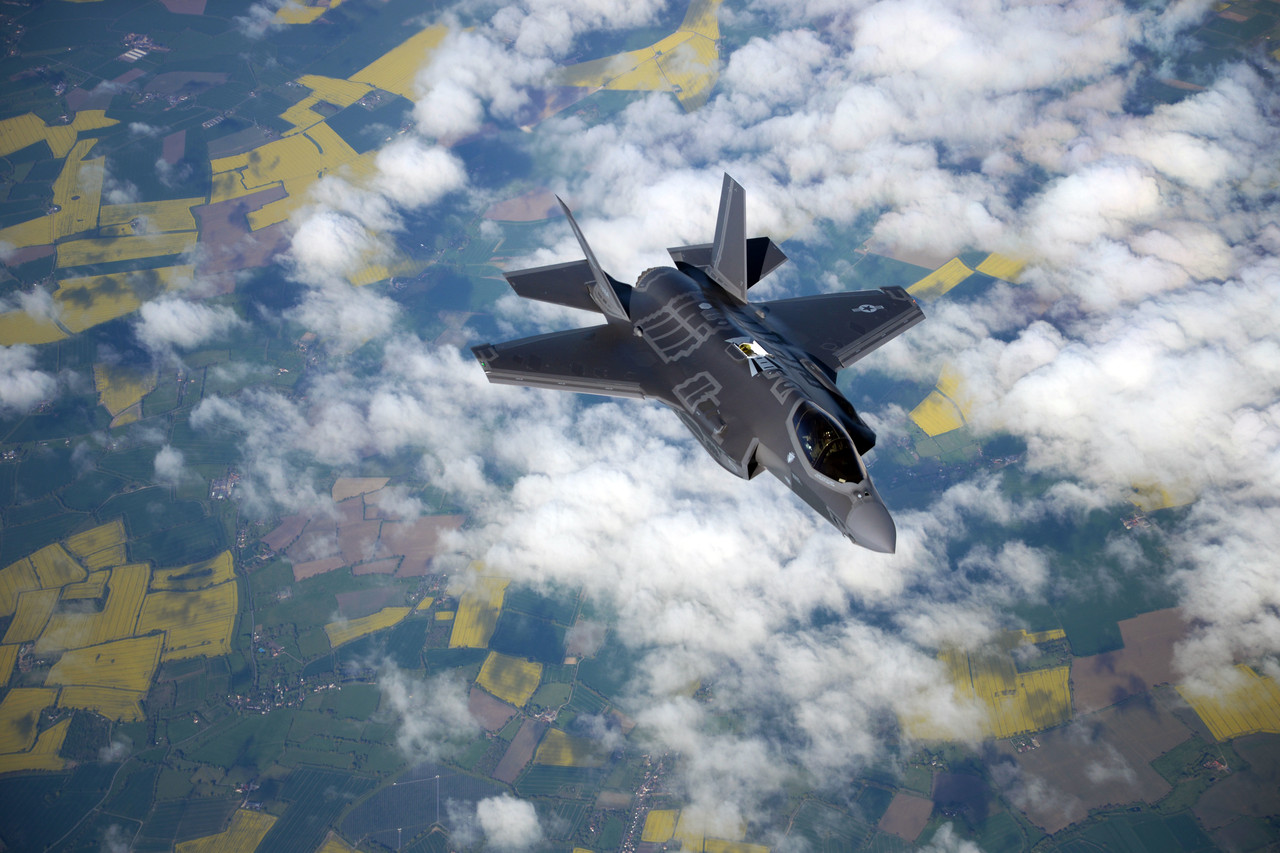
Pentagon Restricts F-35 Report, Cutting Public Visibility Into Cost and Readiness
The Defense Department designated the latest Government Accountability Office review of F-35 production and modernization as “Controlled Unclassified Information,” preventing its public release, the GAO confirmed on July 15, 2026. The decision, reported by The Hill, withholds an annual review that previously gave taxpayers and lawmakers independent data on costs, schedules, modernization and readiness. It is the first time in more than 20 years of annual F-35 reviews that the complete report has been withheld from the public.

The public title “F-35 Joint Strike Fighter: Update on Production and Modernization Efforts” shows why the restriction has consequences beyond access to another government document. Production rate, upgrade progress and aircraft availability are linked parts of the same acquisition system. Without the current review, outside observers cannot determine how GAO assessed those areas or compare its latest findings directly with prior public benchmarks.
Two decades of public reporting have been interrupted
Congress directed GAO to begin annual F-35 reviews in 2005. Those reports created a continuing public record as the Lockheed Martin fighter moved from development into production, worldwide operation and sustained modernization. Earlier editions documented whether deliveries and upgrades were meeting schedule, how costs were changing and whether the fielded fleet was achieving expected readiness.
The current designation does not mean the report is classified. Controlled Unclassified Information is government material that remains unclassified but is subject to safeguarding or distribution controls. The practical result here is still substantial: GAO said there is no current plan for public release.
Key lawmakers will receive the findings, although not every member of Congress will receive a complete, unredacted copy. That preserves a channel for formal oversight, but it does not replace public access. Restricted findings are harder to cite in open hearings, compare with contractor or program-office statements, and evaluate against earlier GAO projections.
Cost and readiness trends need consistent benchmarks
The F-35 is not a static aircraft purchase. Its long-term cost includes production, software and hardware modernization, spare parts, depot work, contractor support and decades of sustainment. Earlier GAO reviews projected lifecycle costs above $2 trillion for approximately 2,470 aircraft over 77 years, with sustainment responsible for much of that expense.
That scale makes trend data more useful than isolated totals. A lifecycle estimate can move because of inflation, fleet assumptions, operating plans, maintenance performance or revised schedules. Public GAO reports have allowed readers to see whether such changes reflect a new baseline, a technical delay or an adjustment to how the fleet will be supported. The withheld report removes the newest independent point from that series.
Readiness presents a similar problem. A recent GAO assessment put the fleet’s full mission-capable rate at about 25% in fiscal 2025, below service targets. “Full mission-capable” is a demanding measure: it indicates an aircraft can perform all of its assigned missions, rather than merely one or more of them. It therefore should not be read as saying three-quarters of the fleet cannot fly. Even with that distinction, the metric is important because it captures whether aircraft, software, support equipment, parts and maintenance capacity are collectively delivering the full capability purchased.
Production and modernization also affect sustainment. New aircraft expand the fleet that must be supplied and maintained, while upgrade configurations can change training, parts and support requirements. An annual independent review can identify whether those moving elements remain aligned without exposing operationally sensitive details. Restricting the entire document eliminates access to both potentially sensitive material and any aggregate acquisition findings that otherwise might have been releasable.
A redacted edition remains only a proposal
The Defense Department has not publicly identified the specific information that caused the complete report to receive the designation. It is therefore not possible to conclude that cost growth, readiness performance or any particular technical finding prompted the restriction. Whether portions can be released later also remains unresolved.
Analysts have urged Congress to request a redacted public edition, a line-by-line justification for the designation and a release deadline. Those steps are proposals, not adopted policy. Unless a public version or summary is authorized, taxpayers will receive none of the current report while access remains concentrated among selected congressional committees.
For a program measured in decades and trillions of lifecycle dollars, consistent reporting is part of the acquisition infrastructure. Sensitive engineering and operational information can require protection, but aggregate measures of cost, schedule, modernization progress and readiness are what let the public judge whether the F-35 enterprise is improving. The immediate technical consequence of withholding this review is not proof of a new aircraft problem; it is the loss of the independent benchmark needed to measure one.
By David Whitaker — Associate editor for AMI’s aerospace and drone systems desk, translating flight systems, aircraft programs, spaceflight, and UAV developments into accessible technical stories.