Palm Beach Airport’s $5.5 Million Rename Reaches Baggage and Booking Systems
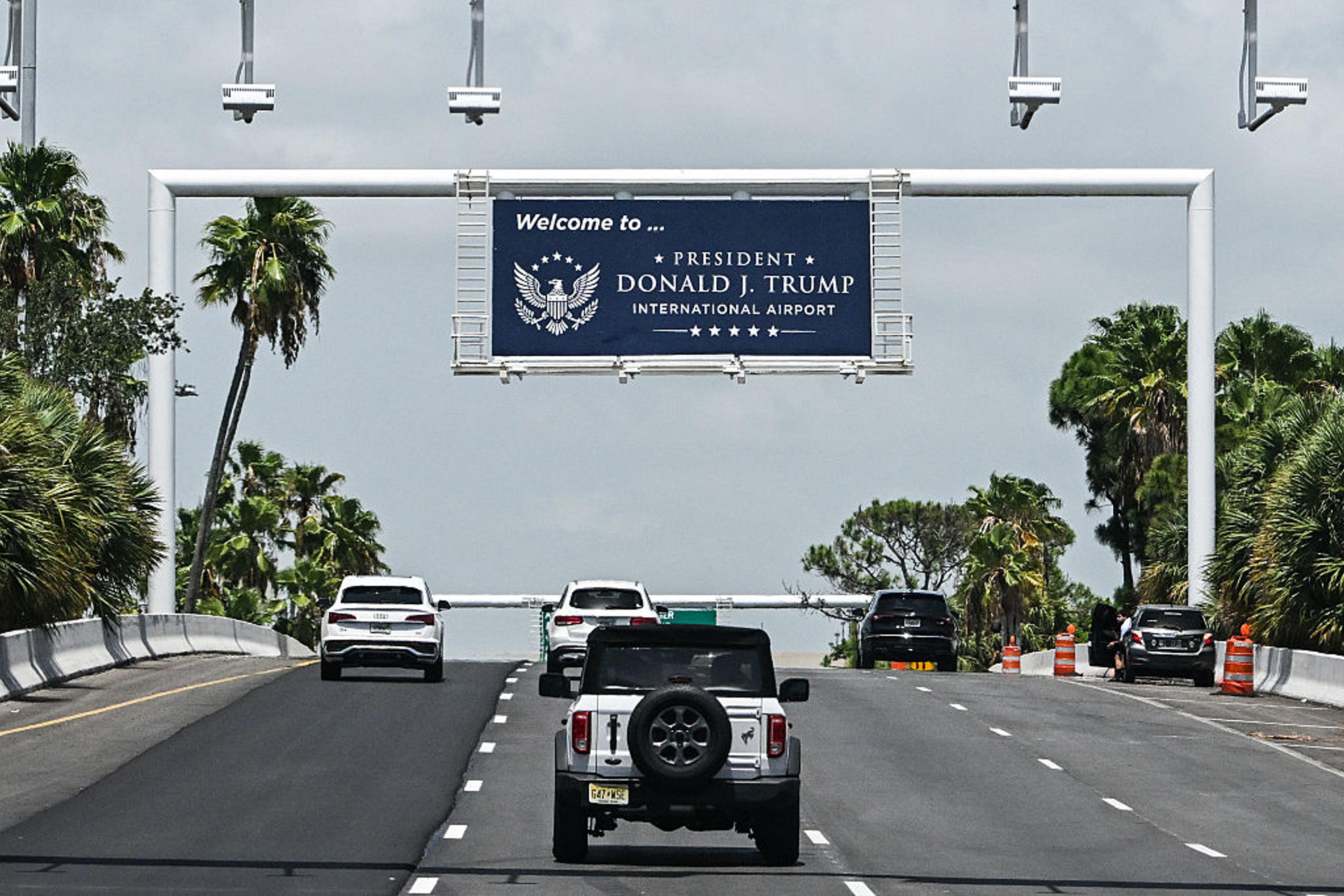
An airport name is not just lettering above a terminal entrance. It is a data label repeated across booking engines, check-in systems, baggage tags, flight-information displays, websites and operational records. That systems footprint explains why Palm Beach International Airport’s transition to President Donald J. Trump International Airport is expected to cost $5.5 million and why airlines had to prepare safeguards against routing errors.
The new name took effect July 9 under a Florida law signed March 30. The airport’s passenger-facing three-letter code then changed from PBI to DJT on August 18. The airport’s name-change guidance says the code change followed notification from the International Air Transport Association. Travelers should now use DJT when booking flights, checking reservations or tracking baggage.
The financial split makes this more than a cosmetic rebranding exercise. Florida appropriated $2.75 million toward the work. The balance is being funded through the Palm Beach County Department of Airports’ operating budget and capital-improvement program. The total covers signs, branding, technology systems and operational materials.
Why three letters require coordinated systems work
The International Air Transport Association code is the identifier most passengers encounter. Airlines use it for reservations, ticketing, check-in and baggage processing, while travel-search services and flight-information systems also depend on it. Changing that code means updating many connected databases without allowing the former and new identifiers to direct a person or bag to different places.
Airline analyst Henry Harteveldt said carriers added “hard coding” to reservation and passenger-service systems to keep passengers and baggage routed to Palm Beach during the transition. In practical terms, that creates an explicit association between the old and new labels while databases, interfaces and customer records are updated. Such handling is particularly important for reservations made before August 18 but used afterward.
This is a data-consistency problem as much as a branding project. A traveler may interact with an airline app, a third-party search site, a check-in kiosk and a printed baggage tag during one trip. Those systems do not necessarily update at the same instant. A controlled transition therefore has to accommodate old reservations, new searches and the possibility that customers will continue entering the familiar PBI code.
The airport said routes, schedules, customer services and passenger operations were unaffected. Ownership and governance also remain with Palm Beach County. That distinction matters: the $5.5 million changes how the airport is identified, not where aircraft fly or who operates the facility.
One airport can have several identifiers
The confirmed change concerns the IATA code used by airlines and passengers. Airports can also have separate identifiers associated with federal aviation records, international civil-aviation systems, weather products and flight planning. Those codes serve different users and do not automatically have to match.
A federal bill introduced in March proposed directing the Federal Aviation Administration to work with multiple organizations to change identifying letters to DJT, but an introduced bill is not proof that every identifier has changed. Publicly confirmed information here does not fully reconcile the airport’s IATA, FAA and International Civil Aviation Organization identifiers. Claims that all aviation codes changed together should therefore be treated cautiously unless the responsible authorities publish the corresponding records.
That boundary is operationally important. Passenger booking and baggage systems use the IATA code, while pilots, dispatchers, regulators and weather services may rely on other identifiers. Treating every code as interchangeable can create confusion even when each individual system is functioning correctly.
The public cost extends beyond terminal signs
Approximately eight million travelers use the airport, so continuity has a broad service consequence. The affected groups include passengers learning a new search term, airlines maintaining reservations across the changeover, airport employees updating materials and public agencies paying for the transition.
The funding arrangement also creates an accountability question. Half of the reported cost comes from a state appropriation, while airport operating and capital-improvement funds cover the remainder. Those accounts support a functioning public aviation facility, making the scope, procurement and final cost of the transition legitimate subjects for public review. The available figures do not show that any scheduled flight, customer service or specific improvement project lost funding.
Airport-code changes are uncommon precisely because established identifiers become embedded across organizations that no single airport controls. Palm Beach’s transition shows the engineering-policy cost of altering a mature public-system label: the visible signs may change first, but success depends on databases, baggage processes and traveler-facing tools continuing to point to the same airport throughout the handoff.
| More aerospace and engineering stories, right in your MSN feed. Follow AMI on MSN |
By Thomas Caldwell — AMI’s senior editor for mechanical and mobility engineering, covering vehicle electronics, systems integration, electrification, chassis systems, propulsion, and safety policy.